

Sign up for the Today newsletter
Get everything you need to know to start your day, delivered right to your inbox every morning.
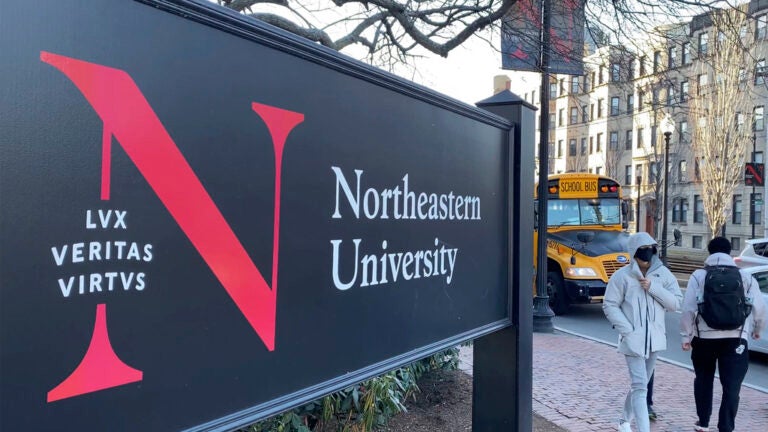
Northeastern University’s acceptance rate dropped to a record low of 5.2% for the fall admissions cycle, the latest development in a yearslong transformation that has turned the former commuter school into an increasingly competitive global powerhouse.
The 2024 rate marks a notable dip from just four years ago, when Northeastern admitted 20.5% of applicants for the fall of 2020, data from the university shows. Flash back to the fall of 2010, and Northeastern’s acceptance rate was an even loftier 37.9%.
Now in the single digits, Northeastern is among some of the most competitive schools in the country; by comparison, Harvard College accepted 3.6% of applicants this year, while Brown University matched Northeastern at 5.2%, The Boston Globe previously reported.
Northeastern’s undergraduate applicants also hit a record high this year, with the university taking in 98,373 applications for the fall — a 53% increase from 2020, according to Northeastern Global News. Speaking to the university news site, Satyajit Dattagupta, Northeastern’s chief enrollment officer and senior vice chancellor, pointed to the college’s unique programming as a factor.
“The Northeastern education is unparalleled — the ability to study at a premier R1 research institution that has the ability to send students all over the world to gather professional experiences before they graduate,” Dattagupta told NGN. “This unique value proposition leads to clear and measurable outcomes for families.”
Northeastern has also worked to expand its global footprint in recent years; back in May, the university announced a merger agreement that will add New York City’s Marymount Manhattan College to its network of 13 campuses.
However, the 2024 acceptance rate reflects only the students admitted to Northeastern’s Boston campus, college spokesperson Renata Nyul said in a statement. That practice, she explained, is standard in higher education and “consistent with federal reporting guidelines – and the practice of other universities with alternative entry programs.”
As an example of Northeastern’s “first-year pathway” options, Nyul cited the university’s N.U.in program, which gives students the opportunity to study abroad their first semester before joining the Boston campus in January.
“As we continue to build the global university system, we are able to provide first-year students with even more opportunities to enter Northeastern,” Nyul said.
But the cornerstone of Northeastern’s brand is its co-op model, which allows students to explore potential career paths and pick up full-time work experience before they graduate. Proponents say the experiential learning gives graduates a boost in the job market, and Northeastern reports that 93% of its alumni are employed or enrolled in graduate school nine months after graduation, per a multi-year average.
“You leave Northeastern with a diploma and a resume, and typically a really good job option,” Rob Swisher, the father of a Northeastern student, recently told the Globe. “As a parent paying tuition, it’s a nice deal.”

Get everything you need to know to start your day, delivered right to your inbox every morning.





To comment, please create a screen name in your profile
To comment, please verify your email address
Conversation
This discussion has ended. Please join elsewhere on Boston.com