
Extra News Alerts
Get breaking updates as they happen.
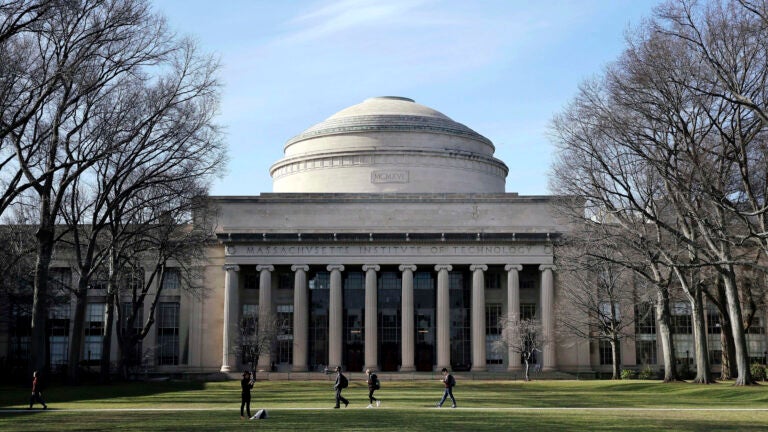
The Massachusetts Institute of Technology said Monday that it would no longer require candidates applying for faculty positions to write diversity statements, which have been denounced by conservatives and free-speech advocates as forcing a kind of ideological conformity.
In their statements, generally a page long, candidates were required to explain how they would enhance the university’s commitment to diversity.
Such statements have become enshrined in faculty hiring at many elite public and private universities, as well as in corporate life. Academics have defended them as necessary in judging whether a faculty member can reach out to an increasingly diverse student body.
In announcing the change, MIT’s President Sally Kornbluth said diversity statements constituted a form of compelled speech that do not work.
“My goals are to tap into the full scope of human talent, to bring the very best to MIT and to make sure they thrive once here,” Kornbluth said in a statement. “We can build an inclusive environment in many ways, but compelled statements impinge on freedom of expression, and they don’t work.”
MIT and Kornbluth have been under scrutiny by House Republicans for the university’s handling of antisemitism accusations. In December, Kornbluth testified alongside two other presidents, Claudine Gay of Harvard University and Elizabeth Magill of the University of Pennsylvania, in a congressional hearing on antisemitism, which helped lead to Gay and Magill’s resignations. And MIT, like many other campuses, has struggled to handle an increasingly intense pro-Palestinian encampment.
Diversity statements have long been opposed by conservatives and many academics as enforcing a kind of ideological conformity. MIT’s decision to drop them could embolden other universities to take a second look. A 2021 study by the American Enterprise Institute found that selective universities were more likely than less selective ones to require such statements.
MIT, whose students are required to immerse themselves in science and technology courses, has been in the forefront of pushing back against measures that some say could dilute the rigor of its education. After the pandemic, it was among the first universities to restore standardized testing in admissions, saying that it helped predict academic success.
The practice of screening candidates for their diversity statements, sometimes before considering their academic qualifications, has been attacked as particularly corrosive in the sciences, where maintaining academic rigor in research projects can actually be a matter of life and death. Kornbluth is a research cell biologist.
Kornbluth made the move to remove diversity statements with the support of other top officials, including the provost, chancellor, all six academic deans and the vice president for equity and inclusion, according to her statement.
MIT spokesperson Sarah McDonnell said diversity statements were never a university-wide requirement for faculty hiring, but some departments had chosen to ask for them. The statements “are not a part of the standard MIT application for other staff positions,” she said.
McDonnell said that MIT’s Institute Community and Equity Office would remain intact and had been supportive of the change.
To supporters, diversity statements are an important tool, now that the Supreme Court has banned race-conscious admissions, in creating a more welcoming environment for students of every background and ethnicity, and bringing in different life experiences to the classroom.
But diversity, equity and inclusion programs have come under concerted attack by conservatives, as well as free-speech advocates and some academics who say they stifle open inquiry.
“They require faculty to endorse or apply specific positions on race, gender and related issues as if they are beyond question, and as if a professor who disputes them is ipso facto incompetent,” the Foundation for Individual Rights and Expression says on its website.
This article originally appeared in The New York Times.
Get breaking updates as they happen.





To comment, please create a screen name in your profile
To comment, please verify your email address
Conversation
This discussion has ended. Please join elsewhere on Boston.com