
Newsletter Signup
Stay up to date on all the latest news from Boston.com
Tufts University is investigating reports of antisemitism and Islamophobia following a volatile student senate meeting marked by allegations of spitting, “stomach churning” jeers, and “racialized attacks.”
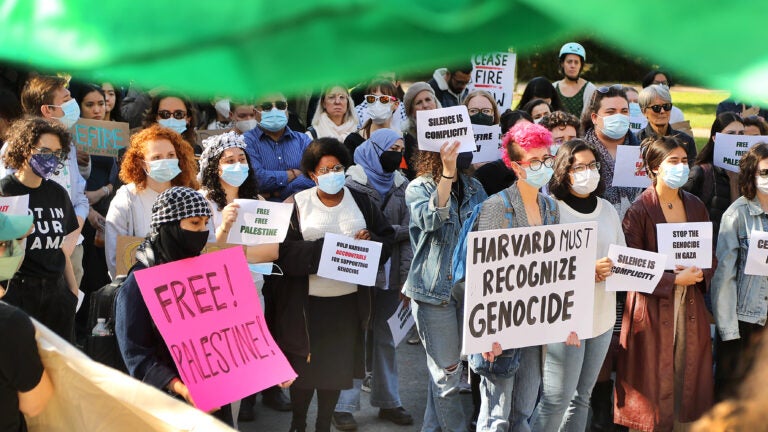
The alleged aggression came during a Sunday meeting of the Tufts Community Union Senate, which took up a series of resolutions critical of Israel amid its ongoing war against Hamas. The resolutions included calls to end the sale of Israeli products on campus and divest Tufts’ finances from businesses linked to Israel — proposals that fall within the BDS movement, which seeks economic sanctions against Israel over its treatment of Palestinians.
According to Rabbi Naftali Brawer, executive director of Tufts Hillel, Jewish students who attended the meeting were spat on and “subjected to stomach churning antisemitic taunts and jeering from their peers,” including cries of “go back to Israel, we don’t want you here!” and “Israel controls the entire world.”
In a letter to Tufts students Monday, Brawer described the reports of antisemitism as “particularly disturbing.”
The Anti-Defamation League also jumped into the fray Monday, condemning what it described as “reports of vile antisemitism.”
“In addition to confronting the passage of pro-BDS resolutions on campus, Jewish students were reportedly told they smelled, were spat on, and overheard blatantly antisemitic comments from their peers,” ADL New England wrote in a statement posted to X, formerly Twitter.
The organization called on Tufts to “immediately investigate these allegations & take concrete steps to address the antisemitic hostility on campus that has only escalated” following Hamas’s Oct. 7 attack on Israel.
Meanwhile, the Coalition for Palestinian Liberation at Tufts (CPLT), the group behind the BDS resolutions, alleged that students who supported the proposals were “harassed and targeted by zionist students.”
A facilitated debate during Sunday’s meeting “devolved into racialized attacks and blatant threats to senators,” the group asserted in a statement posted to Instagram Monday.
CPLT alleged that a student wearing a keffiyeh — a traditional scarf worn in the Middle East, and a pro-Palestinian symbol — was spat on outside the building, and another student was “lunged at and nearly punched during a heated argument.”
The group also said a Palestinian student who spoke during the meeting was called a “terrorist,” and “Palestinian students were forced to relive the trauma inflicted on them by the zionist occupation and prove their humanity to peers who responded to this painful emotional labor with mocking gestures like kisses, spitting at students, and minimizing their experiences by claiming to ‘feel [their] pain.’”
In a message Monday, Tufts President Sunil Kumar and fellow administrators acknowledged that while much of Sunday’s debate was “civil and respectful,” the university had received reports of “some extremely disturbing antisemitic words and conduct,” as well as “Islamophobic actions.”
“Let us be entirely clear: antisemitic and Islamophobic words and actions are entirely unacceptable and should be met with condemnation from the entire community, regardless of your perspective on the resolutions,” the administration declared. “We are actively investigating these accusations thoroughly and will hold accountable any student found to have engaged in these behaviors.”
The university’s response was met with pushback from CPLT, which accused Tufts leaders of creating “a false dichotomy between Islamophobia and anti-Semitism as a failed attempt to erase the interconnected web of institutional racism and hatred” that resulted in Sunday’s alleged attacks on students of color who supported the resolutions.
In their letter, the Tufts leaders called on community members to treat each other with respect and empathy, acknowledging campus efforts to increase training on antisemitism; Islamophobia; and anti-Arab, anti-Israeli, and anti-Palestinian bias.
The university’s administration also expressed disappointment with the recent BDS resolutions.
“To be clear: as we have done in the past, we reject the Boycott Divestment Sanctions movement, we wholeheartedly support academic freedom and all our academic and exchange programs, and we will continue to work with all companies that we engage with and do business with now,” the administrators said.
The Tufts leaders asserted that BDS proposals are divisive and “do not promote nuanced understanding through broader dialogue.”
They added: “The immense loss of life in Gaza is tragic. We mourn with the Palestinians, but we also feel for the Israelis grieving over those they have lost and share their desire for the safe return of the hostages.”
Brawer shared a similar message in his own letter.
“One can be fully supportive of Israel’s right to exist, and not just to exist, but to flourish as the Jewish homeland, … while at the same time being deeply concerned, not just about the suffering Gazans but about the Palestinian people and their national aspirations more broadly,” he wrote.
But the BDS resolutions “do nothing to bridge difference on campus, nor do they invite a critical exchange of ideas regarding the complexity of the Israeli-Palestinian situation,” Brawer argued. “Instead, they caricaturize and demonize Israel and only further marginalize so many in the Jewish community at Tufts.”

Stay up to date on all the latest news from Boston.com





To comment, please create a screen name in your profile
To comment, please verify your email address
Conversation
This discussion has ended. Please join elsewhere on Boston.com