

Newsletter Signup
Stay up to date on all the latest news from Boston.com
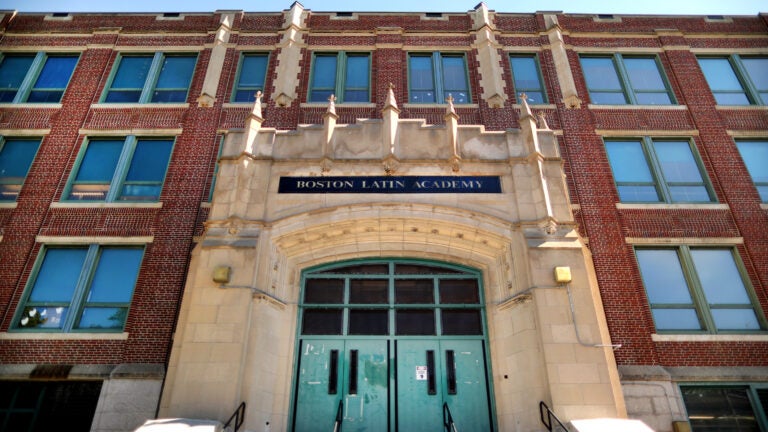
A group of Boston parents is taking legal action in an attempt to have at least five students admitted to various exam schools, The Boston Globe reported. Under a temporary admission policy last year, those students were not able to find spots at Boston Latin School, Boston Latin Academy, and the O’Bryant School of Math and Science.
The Parent Coalition for Academic Excellence filed documents in the federal appeals court Tuesday, contending that the students met requirements for admission but were denied because the schools did not allot enough seats to their ZIP codes.
The policy in question aimed to increase diversity by limiting the exam school seats for each Boston ZIP code, the Globe reported. It is no longer in use, but a new policy put in place this year also divides exam school spots geographically. Areas with similar socio-economic profiles are now grouped together.
The Boston parents that filed these documents are part of a larger movement intent on having the First Circuit Court of Appeals reverse a ruling by a lower court judge last year that upheld the legality of an admission policy that allotted seats by grades and student ZIP codes.
The policy allowed more Black and Latino students to secure spots. Fewer Asian and white applicants were accepted, the Globe reported.
“Because these students were deprived of seats at the Exam Schools because of their race, the judgment . . . should be reversed,” the plaintiff brief said.
The debate over exam school seats in Boston echoes conversations surrounding affirmative action nationwide.
The US Supreme Court is expected to hear two cases later this year regarding the use of race in selective college admissions. A case focused on the admissions policies at Harvard could impact how K-12 admissions are conducted as well.
With these cases going to the Supreme Court as it shifts right, colleges and universities are already formulating ways to keep diversifying their student bodies without taking into account race as a factor, the Globe reported.
This spring, the Supreme Court weighed in on a lawsuit centering on admissions to a magnet school in Fairfax, VA. The court did not intervene, sending the case back to the Fourth Circuit Court of Appeals. The number of similar lawsuits are growing around the country.
In the Fairfax case, a federal district court judge already ruled in favor of parents who said the admission policy unfairly discriminated against Asian Americans. The judge ruled that Fairfax schools stop using the policy, but it remains in place while an appeal is pursued, the Globe reported.
Matt Cregor, a staff attorney at Mental Health Legal Advisors Committee and an expert on school desegregation cases, told the Globe that there are key differences between the two cases. Most notably, a judge last year in Boston ruled that the admissions plan was constitutional, and the appeals court indicated in another decision that the plaintiffs’ appeal would be unsuccessful.
“It’s a long way from where this case is now to the US Supreme Court potentially saying something different than what our federal courts have already said about it,” Cregor told the Globe.
The Boston parents behind the recent appeal are hoping that new evidence not present when the court first made its ruling will help make their case that the School Committee intended to discriminate against Asian and white applicants.
The evidence includes text messages between two School Committee members who made racially insensitive remarks about white parents from West Roxbury, the Globe reported.
Lisa Green, a member of the Boston Coalition for Education Equity, said the plaintiffs’ desire to pursue this lawsuit is tied to a nationwide effort to undermine affirmative action, the Globe reported.
“Given the recent actions of this Supreme Court, many [in Boston] who initially considered the plaintiff’s lawsuit to be a joke now see the very real potential for a national regression on civil rights that it presents,” Green told the Globe. “Maybe another lawsuit will get there first, but it would be a tragedy if such a stain on this country were to be triggered by a handful of people here in Boston. It would drag us right back to the days of Louise Day Hicks.”
Stay up to date on all the latest news from Boston.com




To comment, please create a screen name in your profile
To comment, please verify your email address
Conversation
This discussion has ended. Please join elsewhere on Boston.com