
The White House released a ‘Scorecard’ to help students pick the right college
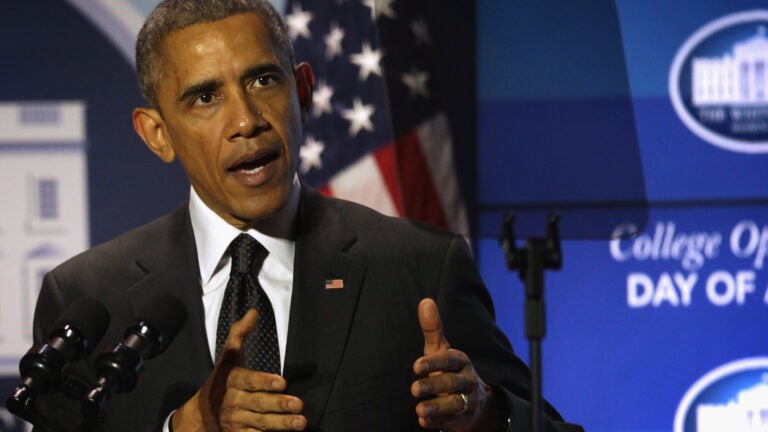
Two years ago, President Obama said his administration would release a tool that scored colleges based on their federal aid and academic success. That didn’t happen. In December, the administration said that instead of ranking schools, it would release a tool that would allow users to compare higher education institutions to one another.
On Saturday, the White House released its much anticipated “College Scorecard.’’
“You’ll be able to see how much each school’s graduates earn, how much debt they graduate with, and what percentage of a school’s students can pay back their loans,’’ the president said of the software in his weekly address.
The Scorecard doesn’t rank colleges from best to worst like some other lists, but instead lets users filter results based on location, size and degree program. You can type in the name of a specific school to learn about its average annual cost, graduation rate, and alumni earnings post-graduation. Users can also learn how many students at the school receive federal loans and how much students earn on average 10 years after graduation, which can influence whether they’ll be able to repay those loans.
The Scorecard is based off 171 megabytes of data from about 7,000 institutions and the IRS, but still doesn’t provide a complete picture of the college landscape. The graduation rates are only based on students who attend college full-time.
Another caveat: the post-college earnings are only calculated based on the 70 percent of students who received federal aid to attend college. There’s also only one number to reflect post-grad earnings, which can vary based on the field the graduate enters.
The Scorecard debut comes just days after the National Center for Education Statistics provided an updated report on “non-traditional students in higher education.’’ About three-quarters of students have one “non-traditional’’ characteristic, such as being independent for financial aid purposes, having one or more dependents, attending school part-time or working full-time, according to the report. Because of these factors, the report said non-traditional students often take longer to graduate, which further complicates the Scorecard’s data.
The Department of Education also outlined three additional programs that use the Scorecard data and will allow students to further compare colleges. ScholarMatch is designed for students whose families earn less than $50,000 annually and allows them to search for schools they’re likely to get into based on their standardized test scores and GPA. College Abacus compares the financial aid at different institutions.Start Class allows users to compare schools based on post-grad salary, tuition and acceptance rate.
The press release for the Scorecard said the software was designed to increase transparency in the data surrounding higher education. In his weekly address, Obama said the administration will improve the Scorecard to “help everybody who’s willing to work for a higher education search for and select the college that fits their goals.’’
Related gallery: 15 most expensive colleges in New England
[bdc-gallery bgmp-legacy-id=”52b016d4-41f8-11e5-9cfe-38a0e2e653e3″ id=””]





To comment, please create a screen name in your profile
To comment, please verify your email address
Conversation
This discussion has ended. Please join elsewhere on Boston.com