
Is it time to help inmates earn college degrees?
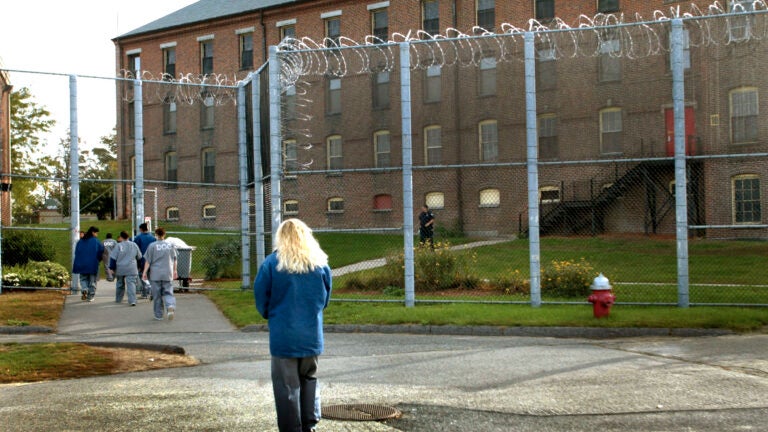
To get to the building where he teaches, Jamie Hillman must pass by barbed wire fences and high, concrete walls before taking off his belt and shoes to go through a metal detector. Inside his dark classroom, he’ll shake hands with each of his 20 or so students before they circle up and make music using only their bodies and their voices. No other instruments are allowed inside the maximum-security prison.
For the past two years, Hillman has taught music classes as part of Boston University’s Prison Education Program, which allows inmates in two Massachusetts prisons to take classes to earn a bachelor’s degree.
On Friday, Obama’s administration announced the “Second Chance Pell Pilot Program,’’ which will allow prison inmates to use Pell Grants to pay for college courses like the ones Hillman teaches. Prison inmates can start receiving the grants as early as the Fall 2016 school year.
Unlike loans, Pell Grants don’t have to be repaid. They cover up to $5,775 a year in tuition, fees, books, and other education-related expenses, and those eligible can receive grants for up to 12 semesters.
Inmates could receive Pell Grants up until 1994, when Congress banned them as part of broad anti-crime legislation. When Sen. Kay Bailey Hutchison introduced the amendment that would ban Pell Grants, she told the Senate: “Because prisoners have zero income, they have been able to step to the front of the line and push law-abiding citizens out of the way. It is not fair to taxpayers. It is not fair to law-abiding citizens. It is not fair to the victims of crime.’’
Even though supporters of the ban were concerned inmates were stealing all of the funding, data shows that wasn’t true. In 1993, the last year Pell Grants were offered, prisoners received $34 million, according to the Department of Education. That means less than one percent of all the grants offered went to incarcerated students.
Once the government took away funding for Pell Grants, prison education programs collapsed. By 2005, 90 percent of the programs were shuttered. In the meantime, the number of inmates has dramatically increased. Since the mid-’90s, the number of inmates in federal and state prisons has doubled.
There used to be a number of prison education programs in Massachusetts, but Boston University’s Prison Education Program is the only one that survived. Founded in 1972, the program is funded by the university’s own operating budget.
“Despite cuts in funding, it was always important to the social mission of BU to keep the program going to help an underserved population,’’ said Jim Matesanz, field coordinator for the program.

A prison inmate class in Naples, Florida in May 2013.
Matesanz is a former prison superintendent, and said he knows firsthand that prison education works.
The data backs him up. In the largest-ever analysis of correctional education, the RAND Corporation found that inmates who participated in a correctional education program were 43 percent less likely to return to prison than those who didn’t. They were also more likely to be employed when they left prison.
And, the analysis showed the programs are cost effective for communities. The study found that every dollar spent on prison education saved $4 to $5 in incarceration costs during the next three years because the inmates were less likely to be reincarcerated.
“The people in the program seemed much better adjusted, and were much better at interacting with staff,’’ Matesanz said. “They could be positive role models for other inmates, so it’s worthwhile when they were enrolled and later for reintegration.’’
No matter how limited Obama’s Pell Grant pilot program is, it can only help inmates, Matesanz said. More resources might mean other schools can develop their own education programs or devote more resources to preparing inmates for jobs in science and technology fields.
“From a historical perspective, 150 years ago, correctional facilities taught trades to inmates,’’ he said. “We can’t just do that anymore. We have to up our game to keep current and give inmates the best chance to succeed when they get out.’’
Hillman agrees, and has seen his students go on to have success once they leave prison. One student started his time in prison reading at a fourth or fifth–grade level. He went on to be a straight-A honors student who graduated with a master’s degree.
“He was so proud of transcripts, and he showed them to his children as a way to inspire them,’’ he said. “It was a way for him to connect with them, but also to show how he was able to accomplish this and get another chance.’’
Related gallery: 2016 presidential candidates
[bdc-gallery id=”140212″]





To comment, please create a screen name in your profile
To comment, please verify your email address
Conversation
This discussion has ended. Please join elsewhere on Boston.com