
Students in Financial Aid Limbo After Acceptance
For many students, April 1 no longer marks the end of a stressful journey. It’s the beginning.
“Money is always on my mind,’’ said Colton Bergal, a senior at Barnstable High School. “I want to come out with as little debt as possible. I’ll end up applying for grants or whatever, but at this point financial aid is the biggest factor on where I go.’’
Bergal is graduating in 2015 with a ranking in the top 15 percent of his class. He captained his high school football and track teams and was an officer in the drama club; he’s an impressive candidate who has the acceptance letters to show it.
When Bergal’s father lost his job two years ago, his college fund became a family life raft. He will putting himself through college. He works three jobs: year-round as a “petroleum transport technician’’ (read: he pumps gas at a local station); and over the summer he parks cars and valets.
Out of the six schools he applied to, Bergal received healthy financial aid packages from five. He was accepted into all six. Bergal is still waiting to hear back from Villanova on financial aid, however, and said that the school’s response will determine where he goes.
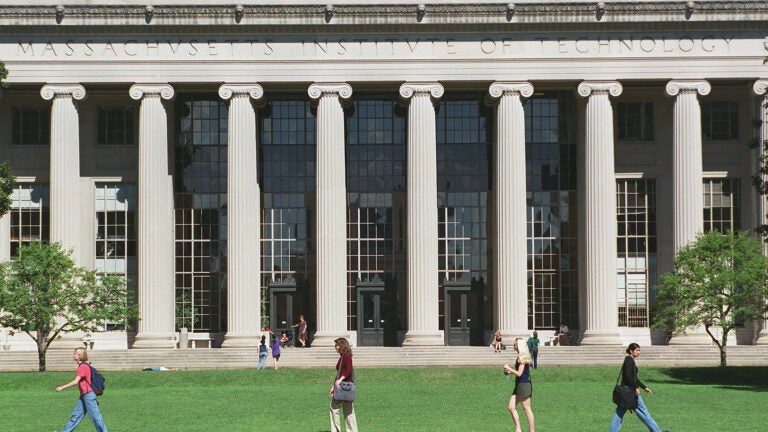
While some schools notify students earlier (MIT favors a March 14 date, in honor of pi day), April 1 has traditionally been the final date of admission letter delivery, giving students the information needed to choose a college.
Or, at least, that used to be the case.
For many students, April 1 no longer marks the end of a stressful journey. It’s the beginning. Financial aid packages don’t always come with acceptance letters, meaning that students have to endure agonizing days—or weeks—in which they know the university wants them, but don’t yet know if they can afford to attend. When they finally receive some answers, students then have until May 1 to put down a deposit and secure their spot.
“It goes in periods of fast and slow. You apply and just wait. Then you get a decision, and you just wait,’’ said Bergal. “It’s definitely tricky to adjust to. There’s that one week where you’re like ‘I have to get all this stuff in!’ and then you sit back like, ‘Now what?’’’
This makes it tough to answer questions about plans for next year, to fully commit to purchasing that bumper sticker from the university bookstore.
“Luckily, it’s usually a question of ‘Which school is giving me the best package?’ But finances definitely complicate the decision,’’ said Shawn Ahern, director of guidance at Boston College High School.
Ahern said that a large part of college advising means ensuring that students have financial safety schools, as well as academic ones.
“The minute we’re talking about college in the spring of junior year, we’re always talking about financial aid. The financial reality is that they may not go to the top choice school that they get into,’’ said Ahern.
Students may not attend the best school they get into, they attend the best school they can afford.
Catherine Chiu, director of guidance services at Boston Public Schools, said managing expectations is a critical part of her job.
“If we’ve done our guidance well, the students have a range of schools they are excited about. We celebrate the acceptance letters, but we always couple it with a message to wait and look forward to getting the full financial aid packages, then make a careful comparison of the next cost,’’ said Chiu.
With one month to go until the May 1 reply deadline, high school seniors have to decide which college to attend, and how best to shoulder the resulting financial burden.
Back in Barnstable, Bergal said he has a figure in mind that would enable him to actually consider attending Villanova, where tuition and fees average $45,966. If the aid package doesn’t hit the mark, he can’t go.
“It’s a cutoff, definitely,’’ said Bergal.
He has approached the decision practically. He’s visited each campus multiple times. He aims to study nursing, and said that St. Anselm’s, which offered him around $27,000 in scholarships that cover half of his tuition, has a great program.
Not all students are so open-minded, however.
“I had a case last year, where the student really wanted to attend UMass Amherst,’’ said Ahern. “He got accepted to a number of private schools that gave him great packages, but he had his mind set.’’
This student ended up taking on $70,000 in loans, according to Ahern, despite his and the student’s parents’ advice against it.
The financial realities can be harsh, especially when butting up against the excitement of a 17-year-old looking to leave home and start fresh.
“It’s heartbreaking to see, especially if these conversations about financial realities are happening spring of senior year. We want that to be happening February of junior year,’’ said Ahern. “You can’t ignore the fact that someone has to pay for college, and it’s super expensive.’’
Parents should discuss financial barriers before starting the college search, said Ahern. But if a student has his or her heart absolutely set on a school and doesn’t receive enough aid, is there anything to be done?
“We get students calling, asking questions about their package, or they might ask if that’s all we can do for them. And we call that an appeal,’’ said Elizabeth Hicks, Director of Student Financial Services at MIT.
But according to Hicks, they are willing to listen to any additional information that a student can provide
.
“When you’re making an initial award, you’re not talking to them, you’re looking at numbers on a piece of paper,’’ said Hicks. “Sometimes having a conversation, exploring in greater depth, gives us an understanding.’’
Hicks emphasized, however, that MIT does not negotiate or match awards from other schools. She said that looking into loans, different meal or housing plans, deferring payment, and student jobs can help alleviate the strain.
Chiu also noted the outside-the-box solutions at the high-school level that can assist students struggling to pay for college. Boston Public Schools’ partnership with local organizations has helped many students attend college, including Sociedad Latina and Hyde Square Task Force.
“It really takes a city,’’ said Chiu.





To comment, please create a screen name in your profile
To comment, please verify your email address
Conversation
This discussion has ended. Please join elsewhere on Boston.com