
Sign up for the Today newsletter
Get everything you need to know to start your day, delivered right to your inbox every morning.
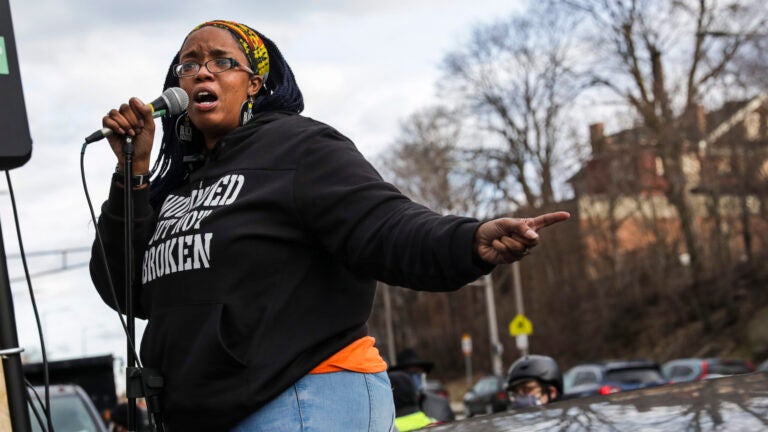
Once-celebrated community organizer Monica Cannon-Grant has been ordered to pay back more than $224,000 in ill-gotten pandemic relief funds and rerouted donations from her now-defunct nonprofit.
The Violence in Boston founder pleaded guilty last fall to a slate of fraud charges and was sentenced to six months of home confinement, 100 hours of community service, and four years of probation.
Federal Judge Angel Kelley also ordered Cannon-Grant to pay $106,003 in restitution, upping the ante Monday by setting her forfeiture at $224,063. That sum includes about $181,000 in donations that Cannon-Grant diverted for her own personal use, plus tens of thousands in fraudulent pandemic unemployment benefits and rental assistance, according to Kelley’s order.
Cannon-Grant’s defense attorneys previously sought a smaller amount of forfeiture, writing in a court filing that the disgraced activist has “limited financial resources.”
Cannon-Grant “agrees that forfeiture is appropriate here,” the defense wrote. “She does not seek to avoid her forfeiture obligation. The only issue is the amount of forfeiture she should be ordered to pay.”
Lauded for her protests against police brutality and her efforts to keep neighbors fed during the pandemic, Cannon-Grant was named Boston magazine’s “best social advocate justice” in 2020, the same year Boston Globe Magazine named her one of its Bostonians of the Year.
In 2022, however, federal prosecutors accused Cannon-Grant and her husband, Clark Grant, of funneling donations away from their nonprofit and spending the money on hotels, gas, restaurants, nail salons, and personal travel. Additional fraud charges brought in 2023 alleged the couple leveraged the nonprofit for pandemic assistance and lied to obtain rent relief funds meant for Boston residents facing housing insecurity.
Clark Grant was killed in a motorcycle crash later that year.
“Monica Cannon-Grant’s crimes were not a momentary lapse in judgment — they were a calculated pattern of deception that spanned years,” U. S. Attorney Leah B. Foley said in the statement following January’s sentencing. “She repeatedly lied to donors, government agencies, and the public, even after being caught — all while presenting herself as a champion for others. Fraud disguised as activism or charity is still fraud.”

Get everything you need to know to start your day, delivered right to your inbox every morning.


Be civil. Be kind.
Read our full community guidelines.To comment, please create a screen name in your profile
To comment, please verify your email address