
Sign up for the Today newsletter
Get everything you need to know to start your day, delivered right to your inbox every morning.
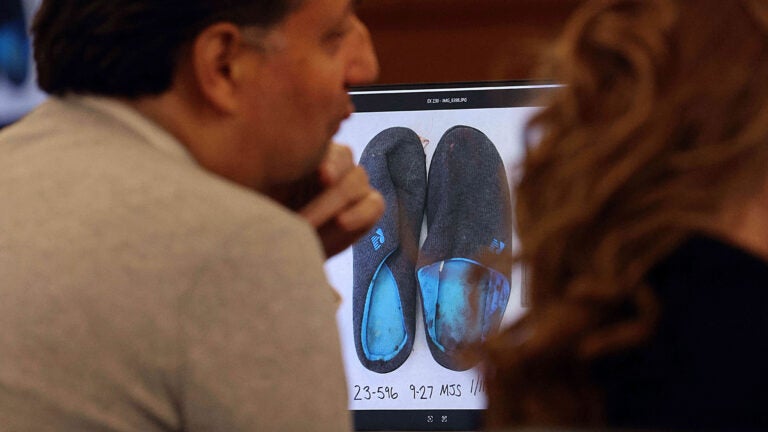
A Massachusetts State Police DNA analyst walked jurors through the genetic evidence Tuesday, explaining how she tested samples from critical items to determine whether they matched Brian or Ana Walshe.
DNA analyst Saman Saleem said forensic scientists can analyze DNA from blood cells, white blood cells, skin, hair, saliva — any cell with a nucleus that contains DNA.
Here is the list of items on which Saleem found DNA that was more likely than not to belong to Brian or Ana Walshe:
During cross-examination, Larry Tipton argued that the biological material on the objects could have been transferred from other items in the trash bag or during the compaction process.
Brian Walshe continued his shopping spree in the days after Ana Walshe’s death
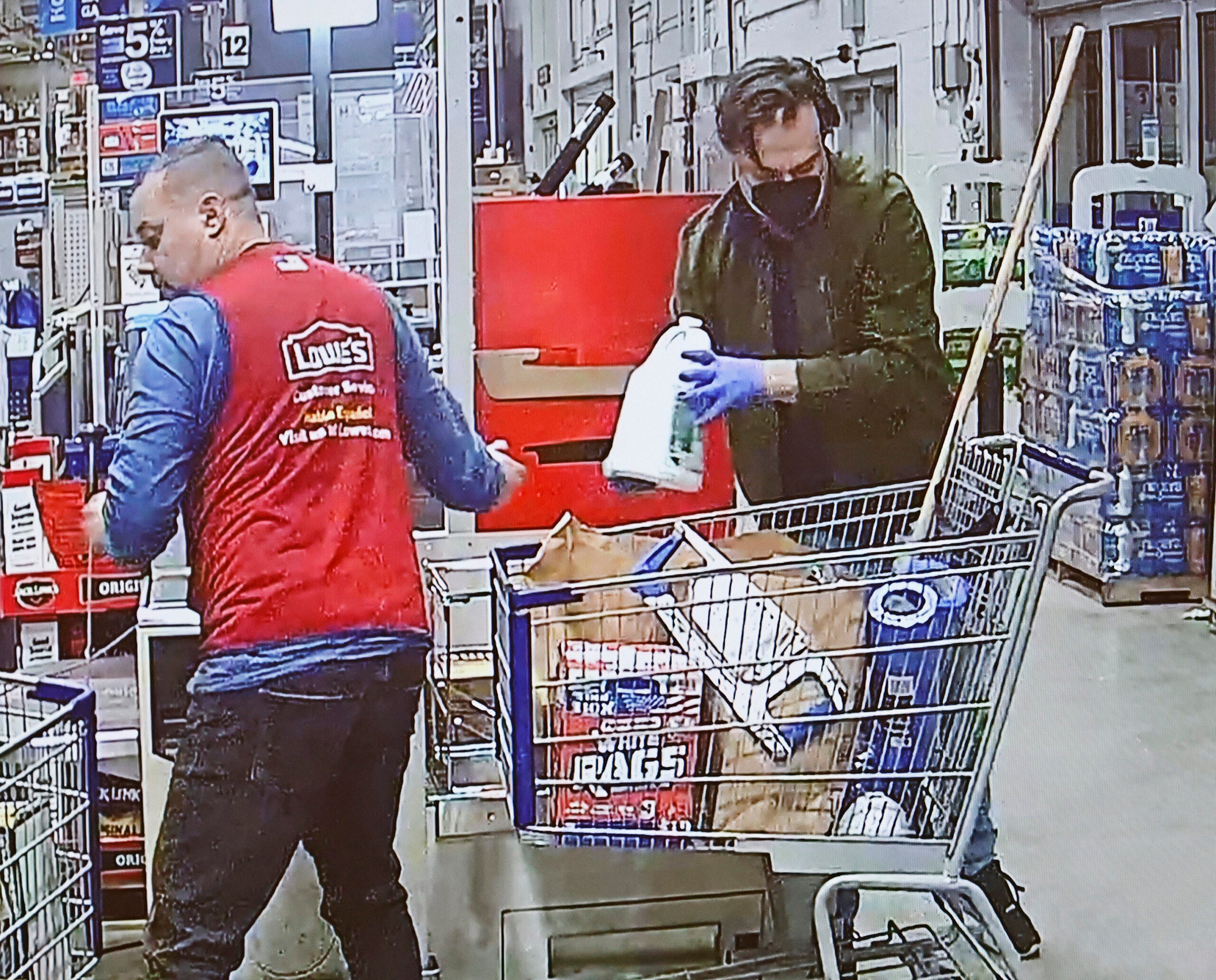
Testimony on Monday showed surveillance footage charting Brian Walshe’s movements on the afternoon of Jan. 1, 2023 — the day Ana disappeared. Beginning at 3:39 p.m., cameras captured him stopping at a Walgreens in Cohasset, heading to a dumpster behind Vinnin Liquors in Swampscott, and spending more than $400 on cleaning supplies at a Lowe’s in Danvers.
He then bought five bottles of hydrogen peroxide at a nearby CVS before making one last stop at a Swampscott Stop & Shop at 6:56 p.m. for ammonia.
On Tuesday, prosecutors introduced new video surveillance of Walshe visiting the HomeGoods in Norwell on Jan. 2.
A video showed him entering the store at 9:43 a.m. and then heading to checkout with three rolled-up rugs. A receipt showed that he also bought multiple scented candles for a total of $245.35.
The next video wasn’t until Jan. 4 at 9:57 a.m. The footage showed Walshe entering the HomeGoods and grabbing a basket. He checked out at 10:07 a.m., buying towels and bath mats.
On Monday, prosecutors showed Brian Walshe and one of his sons in Lowe’s in Weymouth later that same day at 4:24 p.m. The self-checkout footage showed Walshe buying a trash bin, squeegee, and other home items.
Family friend Gem Mutlu up Wednesday
Norfolk Superior Court Judge Diane Freniere said the court will start later for jurors on Wednesday. Lawyers told the judge they plan on holding a voir dire for Gem Mutlu, a close family friend of the Walshes and the last person besides Brian to see Ana alive during New Year’s Eve.
A voir dire is a preliminary questioning of a prospective juror or witness by a judge or attorneys to determine their suitability, impartiality, and potential biases for a case to ensure a fair trial.
Prosecutors called on a total of nine forensic scientists from the Massachusetts State Crime Lab, detailing everyone who touched, handled, and tested the DNA samples provided to them.
Samples submitted for DNA testing included:
Norfolk Superior Court Judge Diane Freniere read a stipulation to jurors stating that the FBI collected DNA samples from Brian and Ana Walshe on May 9, 2018, and placed them in evidence storage.
The samples appear to be connected to the federal art-fraud case in which Brian Walshe was charged in 2018 and pleaded guilty in 2021.
The stipulation said that on Jan. 10, 2023, a special agent retrieved those samples from the FBI’s Boston headquarters and delivered them directly to the Massachusetts State Police Crime Lab. The samples remained in FBI custody until the moment a special agent submitted them for testing.
Katarina Stashyn, a former forensic scientist for the Massachusetts State Police Crime Lab, said she was able to create DNA profiles for both Brian and Ana Walshe, which were compatible for comparison.
Forensic scientists can use the profiles to compare one from a crime scene and another from the subject to see if the unique DNA markers match.
The court adjourned for lunch.
After a late start Tuesday morning in Norfolk Superior Court, defense attorney Larry Tipton began his cross-examination of State Police forensic scientist Matthew Sheehan, pressing him on the blood screening tests conducted at the Walshe home on Jan. 8 and 9 and on items pulled from the trash bin and compactor in Swampscott.
Tipton asked Sheehan whether he found any evidence of “blood splatter” — the kind created, for example, by a stabbing — inside the house. Sheehan said he did not. Tipton then highlighted the sensitivity of the screening test, which can detect blood at a microscopic level of 20 nanograms per milliliter, and argued that, even with that sensitivity, Sheehan detected blood only in the basement, not elsewhere in the home.
Tipton also revisited the knife found in the kitchen. Sheehan performed a screening test that came back positive for blood, but Tipton noted the knife never underwent additional testing to confirm the result.
Turning to the gray slippers, which appeared to have bloodstains and attached hairs, Tipton argued that cross-contamination could have happened in the trash bin or compactor. He suggested the same risk applied to the tools recovered from the trash bags. He also questioned why Sheehan didn’t further test the “greasy oily substance” found on the hatchet.
During re-direct, prosecutors countered by emphasizing that cleaning supplies can make blood harder to detect. “Virtually any cleaning product, such as bleach, alcohol, ammonia, or even water, can dilute samples to an extensive amount,” Sheehan said. He added that hydrogen peroxide can also interfere with the test’s ability to detect blood.
Prosecutors then displayed a photo from Jan. 8 showing that a different carpet had been placed in the living room of the Cohasset home, covering the floors.
Prosecutors highlight DNA evidence
Prosecutors called on Bryce Raymond, a forensic scientist with Massachusetts State Police. He described the process of extracting DNA from evidence collected at a crime scene. He did not say who the DNA belonged to, saying he was not the one to analyze the data further after extraction.
Livestream via NBC10 Boston.
State Police forensic scientist Matthew Sheehan spent Monday afternoon walking jurors through blood and bloody items he said stretched from the basement of the Walshe home in Cohasset to a trash bin outside Brian Walshe’s mother’s home in Swampscott.
Walshe is standing trial for allegedly killing his wife, Ana, on New Year’s Day 2023. Prosecutors say he then dismembered her body and tossed her remains in dumpsters around the region, including one near his mother’s home. Investigators never found her body.
In the days after her disappearance, they say Walshe repeatedly misled police as searches stretched from the couple’s Cohasset neighborhood to Washington, D.C., where Ana worked.
During opening statements, Walshe’s attorney, Larry Tipton, argued that Walshe found Ana suddenly dead after a night of New Year’s celebrations — and then spiraled into a panic.
On Nov. 18, just before jury selection began, Walshe pleaded guilty to two charges — misleading police and improperly removing or concealing a body. He still faces a first-degree murder charge. Sentencing on the lesser charges will come after the trial.
Testimony from Sheehan on Monday outlined blood splatters on the cement basement floor, traces on a knife stashed above the kitchen refrigerator, and more found on items pulled from the garbage.
Prosecutors paired that evidence with surveillance footage charting Brian Walshe’s movements on the afternoon of Jan. 1, 2023 — the day Ana disappeared.
Beginning at 3:39 p.m., cameras captured him stopping at a Walgreens in Cohasset, heading to a dumpster behind Vinnin Liquors in Swampscott, and spending more than $400 on cleaning supplies at a Lowe’s in Danvers.
He then bought five bottles of hydrogen peroxide at a nearby CVS before making one last stop at a Swampscott Stop & Shop for ammonia.

Get everything you need to know to start your day, delivered right to your inbox every morning.




To comment, please create a screen name in your profile
To comment, please verify your email address
Conversation
This discussion has ended. Please join elsewhere on Boston.com