

The latest on the Karen Read murder case
Sign up for our Extra newsletter to get updates from the retrial and other breaking news alerts delivered to your inbox.
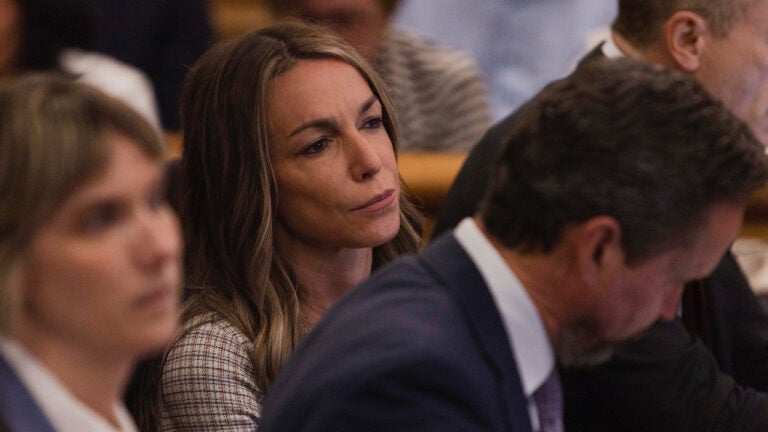
On the stand Tuesday:
The right taillight on Karen Read’s SUV was missing a piece but “was not completely damaged” when police arrived at her parents’ home to tow the vehicle, Dighton Police Sgt. Nicholas Barros told jurors.
Barros testified about meeting Massachusetts State Police in Dighton to assist with the tow the afternoon of Jan. 29, 2022. Prior to that day, Barros said he’d never met or spoken with the two State Police officials who responded, ex-Trooper Michael Proctor and Sgt. Yuriy Bukhenik.
Barros also denied any personal relationship with the Canton Police Department or witnesses involved in the investigation into the death of Read’s boyfriend, John O’Keefe — including Brian Albert and Brian Higgins.
He suggested the piece missing from the plastic cover on Read’s taillight was about six inches long and three inches wide. Defense attorney Alan Jackson displayed a photo of the SUV’s taillight missing a large portion of its plastic as it sat in police custody.
“Is this the condition of the right rear taillight when you showed up at the Read household at around 3, 3:15 in the afternoon on Jan. 29, 2022?” he asked Barros.
“Absolutely not,” Barros replied.
“What’s different about this photo, sir?” Jackson pressed.
“That taillight is completely smashed out,” Barros said.
He confirmed he observed the SUV for about 20 minutes and memorialized his observations in a report. On cross-examination, however, special prosecutor Hank Brennan pointed out Barros only wrote a single line about the damage in his report, offering minimal detail.
Responding to another series of questions from Brennan, Barros said he didn’t see anyone from State Police approach and touch the taillight or manipulate it “in any way.”
“Did you see them do anything that was suspicious, unordinary, or … remarkable relative to that car?” Brennan asked.
“I did not,” Barros replied. He also denied seeing anyone from State Police tamper with the vehicle in the time he was at the Reads’ home in Dighton.
Brennan repeatedly pressed Barros on the reliability of his memory, given O’Keefe died more than three years ago.
“Would you agree that your memory that day was probably much more accurate than it is today?” he asked.
“I would not,” Barros replied.
Barros also confirmed he met with Jackson, defense attorney Elizabeth Little, and a third person from the defense team in a hotel conference room in Boston since testifying in Read’s first trial last summer. Barros told jurors he didn’t find it unusual that Jackson, who is based in Los Angeles, asked to meet at a hotel.
Elsewhere in his cross-examination, Brennan furnished a copy of Barros’s testimony from Read’s first trial, indicating Barros had misremembered testifying about the difference he purportedly observed in the damaged taillight.
Brennan also asked Barros about his exposure to Read’s highly publicized case since Jan. 29, 2022.
“With all due respect, sir, I don’t live under a rock,” Barros testified. “It’s all over social media and the news. You can’t avoid it.”
While Barros repeatedly defended his recollection, Brennan suggested otherwise.
“You would agree that your memory has changed since the last time you testified in this courthouse,” Brennan offered in a later line of questioning.
“Yes,” Barros conceded.
Judge Beverly Cannone dismissed jurors for the day around 3:45 p.m. She said Wednesday will be a half day in court, finishing by 1 p.m.
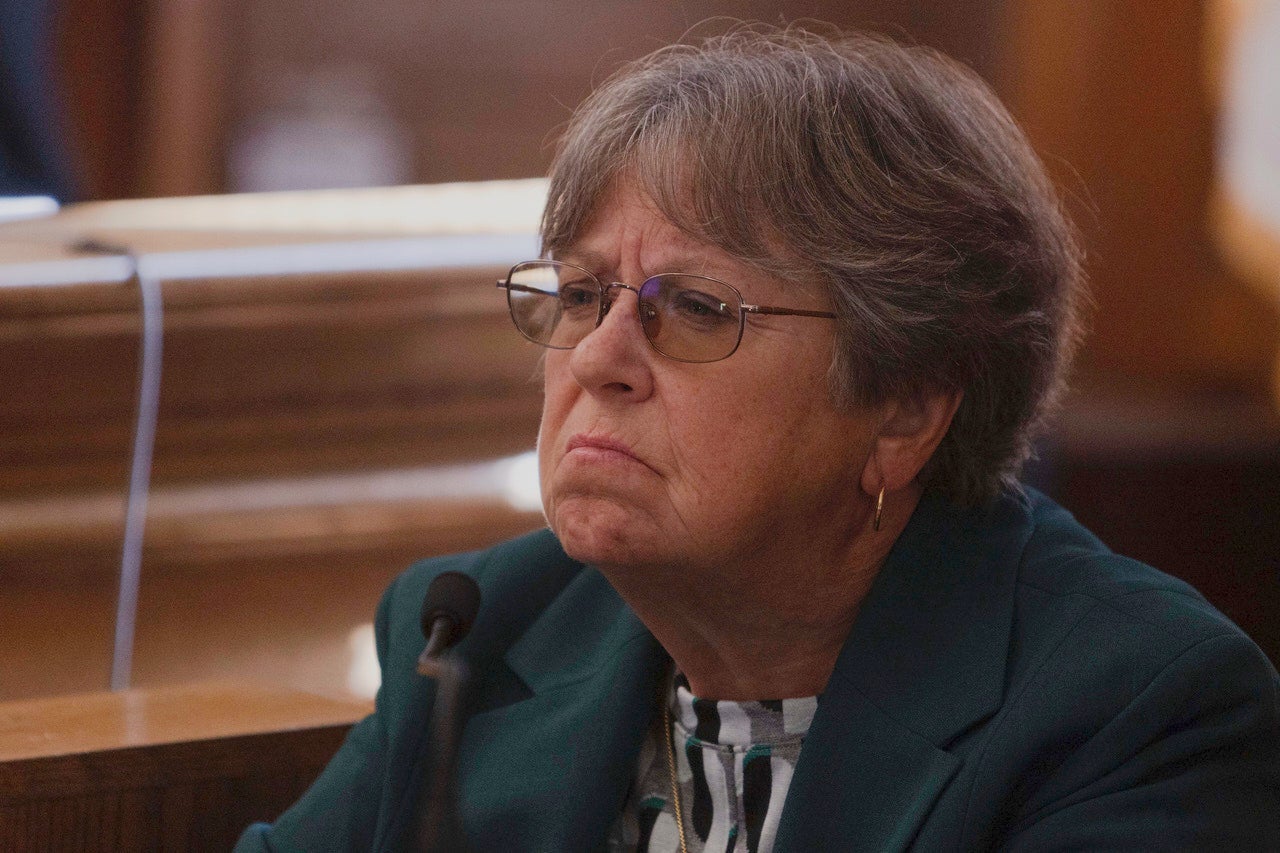
Reflecting on her analysis, defense dog bite expert Dr. Marie Russell confirmed she considered a report from a deputy medical examiner with the United States Armed Forces who concluded John O’Keefe’s arm wounds were “highly unlikely” to have come from an animal bite.
“I read that report, yes,” Russell said of the findings offered by deputy medical examiner John C. Walsh of the Armed Forces forensic pathology investigations division.
Per the Defense Health Agency’s website, the Armed Forces Medical Examiner System provides “comprehensive forensic investigative services” to the federal government. Special prosecutor Hank Brennan did not specify how Walsh came to study O’Keefe’s injuries, though federal prosecutors previously probed O’Keefe’s death as part of a secretive investigation into the state’s handling of the Karen Read case. Lawyers on both sides are limited in the information they’re able to tell jurors about the federal probe.
Russell suggested Walsh’s medical practice may be limited in scope, given his work with the Armed Forces. Pressed by Brennan, however, she acknowledged she has no knowledge of Walsh’s scope.
According to Brennan, Walsh reviewed materials in O’Keefe’s death investigation and found O’Keefe’s arm injuries “do not photographically appear to be, nor are described as puncture bite wounds, and thus are highly unlikely to be the result of an animal bite attack.”
Russell said she considered Walsh’s report during her own analysis but did not know whether Walsh had any experience with dog bites.
Elsewhere in his cross-examination, Brennan questioned the peer-reviewed articles Russell cited when describing her methodology and suggested Russell was giving opinions “on behalf of” defense attorney Robert Alessi, earning an objection from the defense.
Without expertise in accident reconstruction, “would you agree it’s fair to say that you are not in an informed position to give an opinion as to how the injuries could or would have happened in this case?” Brennan asked.
“I disagree,” Russell replied.
Stepping back up to question Russell, Alessi read another section of Walsh’s report that indicated O’Keefe’s injuries were “non-specific and may be the result of a variety of different mechanisms.”
“No additional information was provided regarding the possible circumstances or events surrounding the death,” Walsh wrote, according to Alessi. “The absence of additional information prohibits the attribution of injuries and contribution of findings to a specific underlying cause of death.”
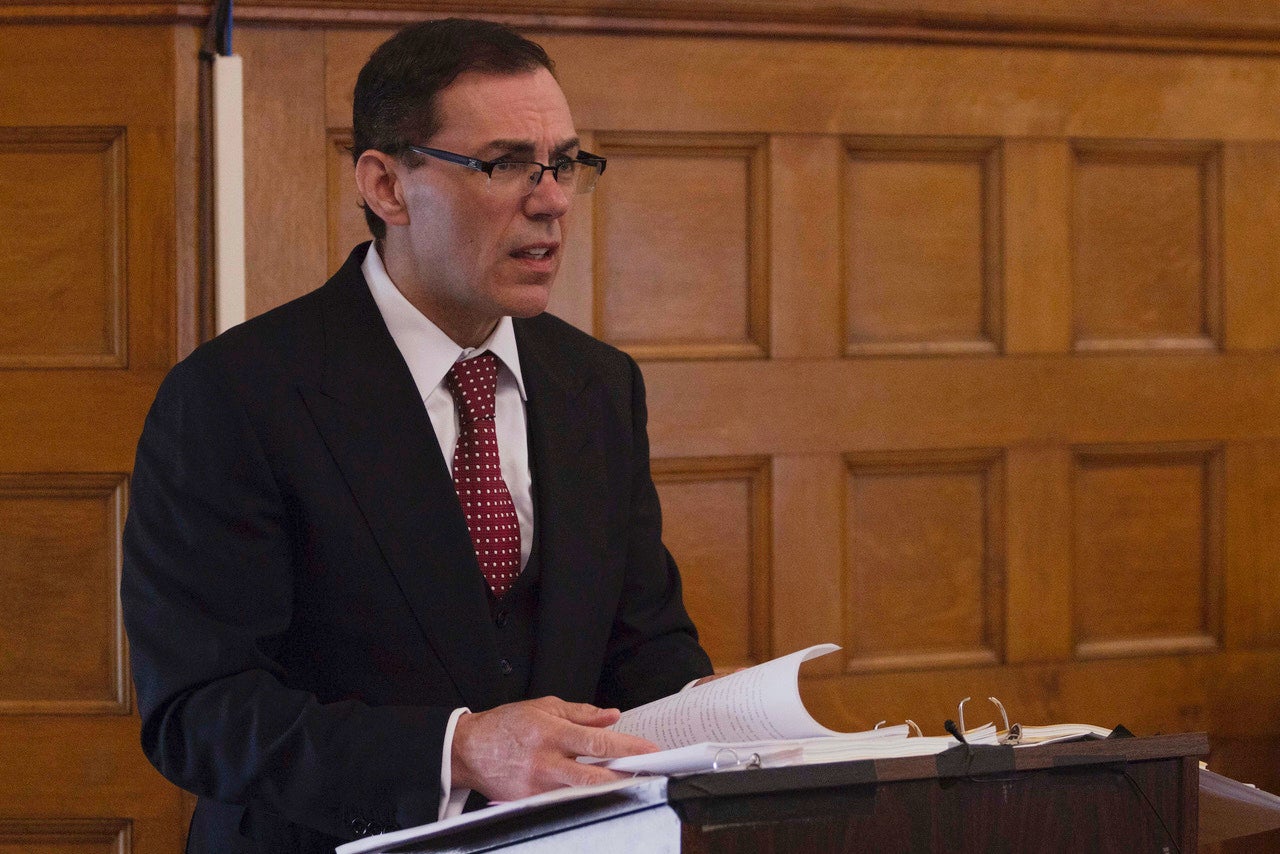
Special prosecutor Hank Brennan went on the attack Tuesday as defense dog bite expert Dr. Marie Russell returned to the stand, highlighting inconsistencies in her previous testimony and pressing her to cite a standard methodology for identifying dog bite wounds.
Brennan argued there is no methodology for looking at a photograph of a wound and determining whether it’s consistent with a dog bite, as Russell purportedly did in analyzing John O’Keefe’s arm injuries.
“I disagree,” Russell replied.
“There are no specific points that … are published by an organization, for instance, on how to determine something is a dog bite,” she added. “However, I did use different methodologies, including … the differential diagnosis, the pattern recognition.”
Brennan probed Russell’s earlier testimony that someone from Karen Read’s defense helped her with the “organization” of her December 2024 report. At Brennan’s prompting, Russell confirmed defense attorney Robert Alessi “may have helped organize and make a suggestion about what is training versus what is experience.”
However, she denied Alessi had helped her write the report.
Russell also confirmed she spoke with Alessi Tuesday morning and said the defense attorney advised her to ask for a transcript of prior testimony during Brennan’s cross-examination. Brennan reminded Russell there is a witness sequestration order in place.
“Did you know that’s a violation of the sequestration order to speak with the attorneys overnight?” Brennan asked.
“No, I didn’t,” Russell replied. “I did not know that that particular conversation would be a violation.”
She maintained the conversation she had with Alessi en route to the courthouse largely touched on issues not related to Read’s case.
“There must have been some context. He didn’t just turn to you, talking about the weather, and say, ‘Hey, you should ask for a transcript,’” Brennan fired back. “You must have been talking about something.”
Russell testified she didn’t know how the transcripts came up in her conversation with Alessi.
“Do you have any memory issues?” Brennan pushed.
Russell let out a shocked gasp before answering, “No.” She also denied that anyone else had spoken to her about her testimony.
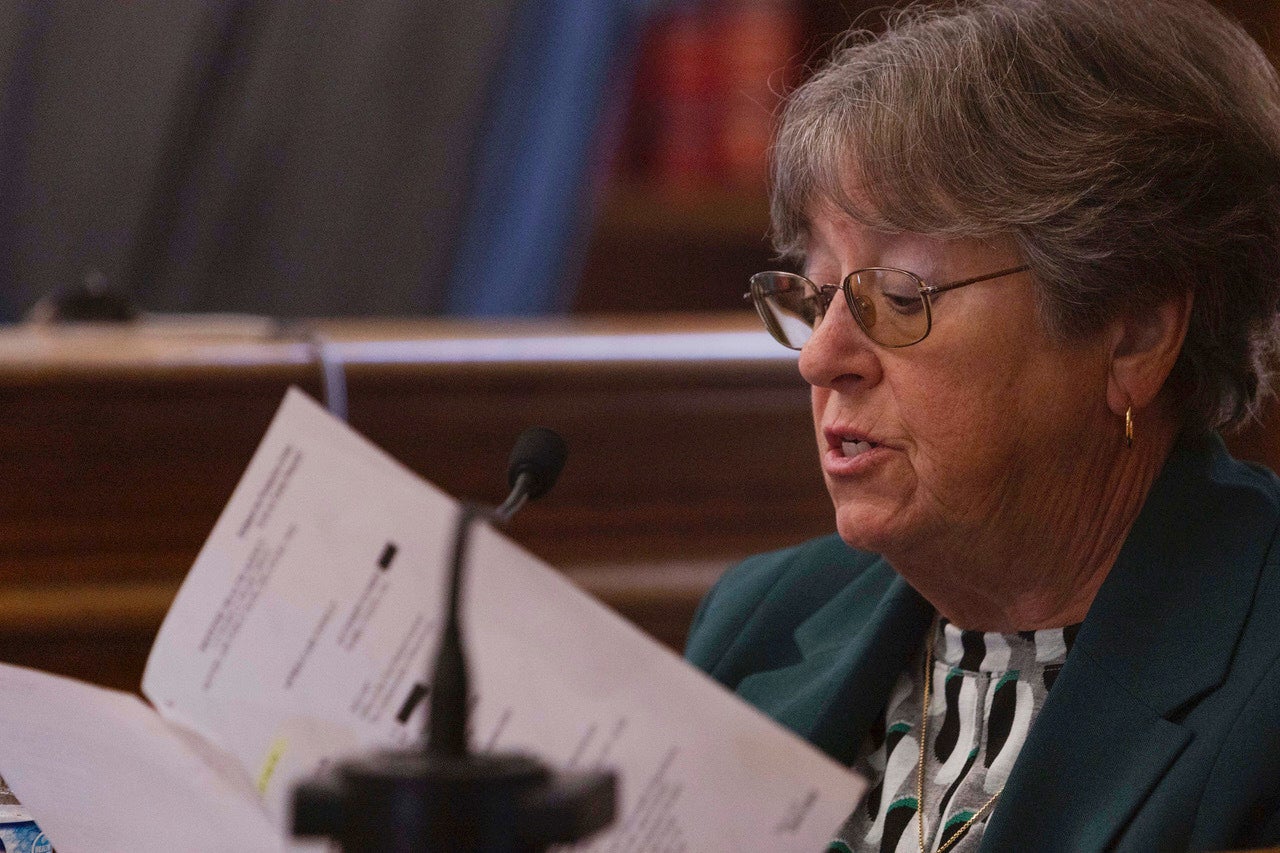
Is there a standard?
During his cross-examination, Brennan repeatedly pressed Russell to point to a standard “in the dog bite community” for methodology on how to identify a dog bite wound.
Russell explained there are peer-reviewed articles from “esteemed physicians” offering recommendations on identifying dog-inflicted wounds. She further testified that there are many areas of medicine with no established standards, which forces medical practitioners to rely on their training and best practices.
“There is no standard in the medical community relative to differential diagnosis and pattern recognition as it relates to dog bites,” Brennan alleged. “Not other areas of medicine — dog bites. There is no accepted methodology, is there?”
“That’s true,” Russell acknowledged.
Elsewhere in his questioning, Brennan emphasized Russell’s uncertainty at whether certain wounds on O’Keefe’s right arm could have been caused by a dog’s teeth or claws. Brennan pointed back to Russell’s 2024 testimony that O’Keefe’s arm injuries “were inflicted by either teeth or claw marks.” Russell explained a dog’s nails and canine teeth both have a pointed shape, which can cause similar abrasions and “makes some wounds indistinguishable.”
While Brennan noted dog’s claws are often shaped like a horseshoe, Russell described the shape as “conical” and said the frequency of a dog’s grooming also affects the nails. Brennan accused Russell of changing her opinions on O’Keefe’s wounds over the course of her involvement in Read’s case, but Russell explained she “became more certain” of her stance.
Pointing to the wounds on O’Keefe’s arm, Brennan had Russell confirm that if each were taken individually, she would not be able to say whether it was consistent with a dog bite. However, Russell testified there were some characteristics of O’Keefe’s wounds “suggestive” of a dog bite or claw mark, including parallel lesions running “in the same general direction” and punctate, or “point-like,” abrasions.
“So they’re consistent with being inflicted by a dog,” she added.
Brennan confirmed Russell examined photos of the underside of O’Keefe’s arm, asking whether she found anything “conspicuously absent.”
“Yes,” Russell replied. “There was an absence of wounds.”
Answering a follow-up question from Brennan, she confirmed a dog’s mouth can act like a lever, though she added there are “many times” when only the dog’s upper jaw strikes the skin during a bite.
Brennan asked Russell if she was suggesting “that these are a number of different dog strikes, and coincidentally every single one of them lacks any wounds to the underside of his arm.”
Russell confirmed she was, also highlighting some marks on O’Keefe’s arm that she said “could be” from a dog’s lower jaw. Brennan argued Russell was merely speculating, questioning whether she could say to a reasonable degree of medical certainty whether the arm wounds were caused by teeth or claws.
“Individually? No,” Russell answered.
‘A broken taillight could not have done that’
In another line of questioning, Brennan highlighted Russell’s lack of expertise in accident reconstruction as he sought to undermine her testimony that O’Keefe’s wounds were inconsistent with what she’s seen in victims of motor vehicle collisions.
“Wounds are definitely within my area of expertise,” Russell contended. At Brennan’s prompting, she confirmed the taillight on Read’s SUV was a “close” match in height for O’Keefe’s elbow.
Russell also confirmed she looked at photographs of O’Keefe’s clothing and saw a photo indicating there was grass, not snow, beneath O’Keefe’s body as he lay in the yard outside 34 Fairview Road. Asked if she had information on the angle of O’Keefe’s body at the time of any vehicle impact, she answered, “I don’t see any medical evidence that there was impact with a vehicle.”
Russell noted O’Keefe had “no significant injuries below the neck” — that is, fractures, bruises, lacerated organs, or fluid in the abdominal cavity or around the lungs.
Brennan asked Russell if she considered whether O’Keefe could have collided with the side of a car in a “clip-type event,” rather than being run over. Russell testified that she considered several scenarios. Responding to another question from Brennan, the onetime police officer also confirmed debris is often left behind at the scene of a car collision, including broken glass or plastic.
However, “the injuries here were so characteristic, and they were so parallel to one another, that I couldn’t even imagine pieces of glass or plastic or even metal lining up to cause those injuries, lining up in a certain fashion to cause those regular striations,” Russell testified.
Brennan displayed images of two shards of purported taillight plastic found at the scene, and Russell told jurors she did not specifically consider those pieces of evidence. She confirmed she knew Read’s taillight was broken and missing pieces as she weighed potential causes for O’Keefe’s wounds.
“A broken taillight, in and of itself, could not cause those injuries,” Russell opined, adding, “A broken taillight could not have done that.”
And while Read has mentioned in several media interviews that she speculated about her potential involvement in O’Keefe’s death, Russell said Read’s comments did not change her analysis.
“Because she — the defendant — had undergone a very stressful event of finding her loved one in the snow. And so after a stressful event, many people suffer from what’s called an acute grief reaction. It’s very common,” Russell explained. “They do things that seem to be irrational. They ramble, they act bizarrely, they make statements that are irrational, that don’t make sense, and they oftentimes tend to blame themselves for whatever has happened.”
Expert weighs in on dog DNA testing, plastic debris
Brennan also displayed a photo of O’Keefe’s sweatshirt, the outermost layer O’Keefe was wearing when mortally wounded. He asked Russell whether she was aware the sweatshirt’s sleeve had been swabbed for dog DNA, prompting a lengthy sidebar with Judge Beverly Cannone.
With jurors out of the courtroom for a morning recess, Alessi alleged Brennan had not laid the proper foundation to ask Russell about dog DNA, as prosecutors did not call Teri Kun, a forensic scientist with the University of California, Davis Veterinary Genetics Laboratory Forensic Unit.
Last year, Kun testified in Read’s first trial that swabs from O’Keefe’s sweatshirt turned up no signs of canine DNA. Without Kun’s testimony during the retrial, Alessi argued, prosecutors had no basis to ask Russell about dog DNA. Following the morning recess, however, Cannone rejected the defense request for a mistrial without further explanation.
Returning to the DNA testing later in his questioning, Brennan noted a dog can “froth” or drool excessively during a bite. He asked Russell whether she was aware a criminologist swabbed the holes in the sleeve of O’Keefe’s sweatshirt, and Russell pointed out the swabs were collected some time after O’Keefe’s death, and that the clothing had lain on the floor of the emergency room.
“Is that gratuitous answer part of your advocacy, or part of your medical opinion?” Brennan quipped sneeringly, prompting Cannone to sustain an objection from the defense.
Russell testified there are “many reasons” why testing had not detected canine DNA on the swabs. If an expected test result doesn’t materialize, she added, investigators need to probe further to ensure the test was conducted correctly and the specimen handled properly.
When Brennan alleged Russell was unwilling to reconsider her opinions after learning of the DNA testing, Russell retorted that her stance did not change after reconsideration. She also disputed Brennan’s claim that she was attempting to undermine the strength of the test results.
“When a dog bites a sweater, would you expect that it would leave DNA?” Brennan asked.
“Yes,” Russell confirmed.
“When a dog … bites a sweater, you would not expect it would leave little fragments of taillight shards in clothes, would you?” Brennan pressed.
“Correct,” Russell acknowledged.
Brennan asked Russell whether she considered the fact that debris from O’Keefe’s clothing contained fragments of plastic consistent with Read’s broken taillight, as a Massachusetts State Police Crime Lab forensic scientist previously testified. Russell said she became aware of the plastic in the clothing debris after coming to her conclusion that O’Keefe’s arm wounds were not caused by a vehicle collision or impact.
Asked if she was offering an opinion that the plastic fragments found in O’Keefe’s clothing could not have caused his arm wounds, Russell replied, “They can cause superficial abrasions, but not in that pattern that we saw on the arm.”
“Are you saying to a reasonable degree of medical certainty that these fragments did not cause the superficial abrasions to John O’Keefe’s right arm?” Brennan asked.
“Correct,” Russell replied.
Returning for redirect examination, Alessi highlighted the miniscule size of the plastic in the debris from O’Keefe’s clothing. He asked Russell for the thought process that led her to conclude the plastic fragments did not cause O’Keefe’s arm abrasions, and she said the pieces would have to be lined up and oriented in nearly the same direction to cause the wound pattern she observed.
Answering another question from Alessi, Russell emphasized the importance of looking at the entire wound pattern when determining whether a wound is inflicted by a dog, rather than taking a piecemeal approach to each cut or scrape.
Alessi hammered at the peer-reviewed articles Russell said supported her pattern recognition methodology. Russell was also adamant that she considered all possibilities to explain what could have caused O’Keefe’s arm injuries.
Alessi displayed photos of prosecution accident reconstructionist Judson Welcher’s testing on an exemplar vehicle closely matching Read’s SUV, which saw Welcher dressed in clothing identical to what O’Keefe wore the night he died. Noting he is of a similar height and build to O’Keefe, Welcher testified last week about using grease paint to determine where his arm would make contact with the SUV’s taillight during a potential collision.
Looking at images from Welcher’s testing, Russell said she would expect “at least” significant bruising and possibly fractures or dislocations from the contact depicted.
Cannone sent jurors for their lunch recess shortly before 1 p.m. Russell will resume her testimony at 2 p.m.
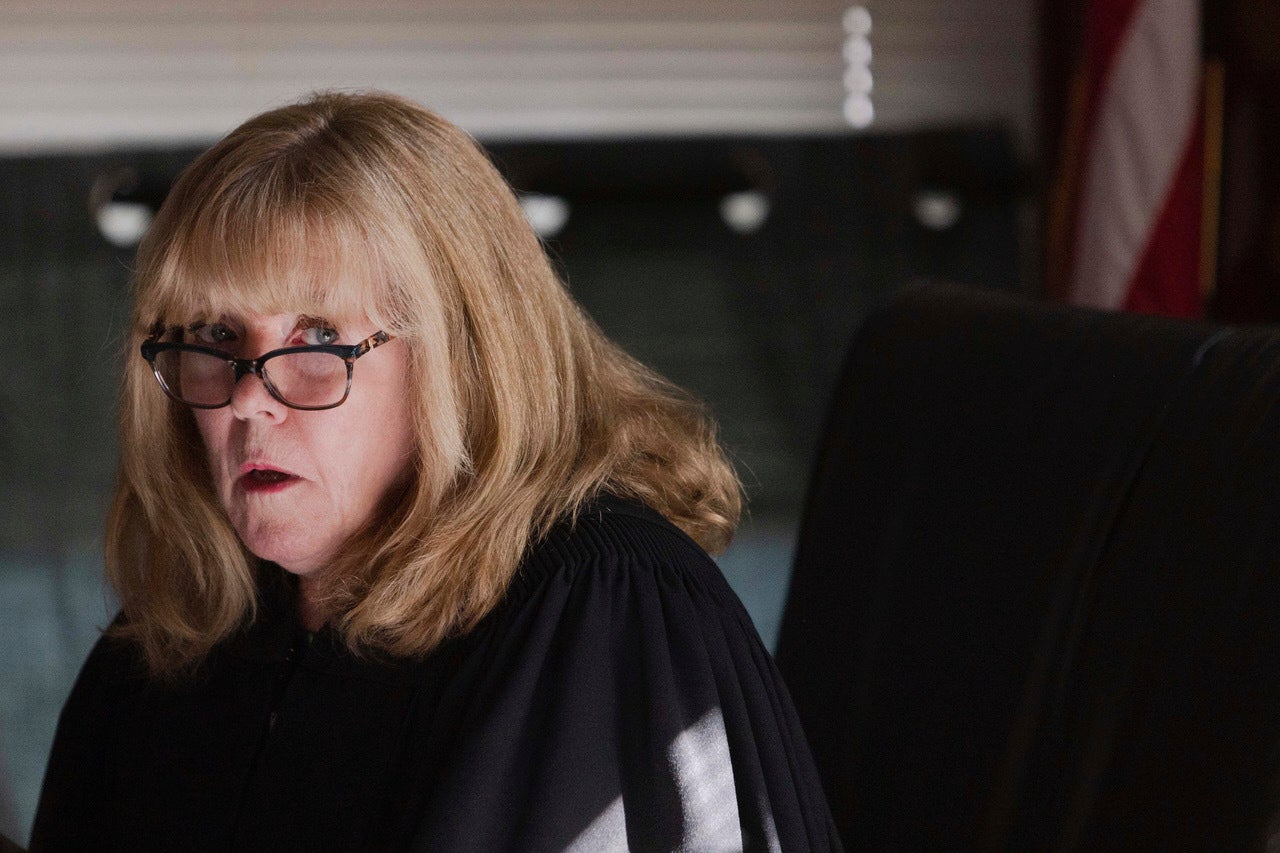
Following the morning recess, Judge Beverly Cannone swiftly rejected the request from Karen Read’s lawyers for a mistrial with prejudice.
The judge also allowed special prosecutor Hank Brennan to continue his line of questioning about the testing for canine DNA on swabs from John O’Keefe’s sweatshirt. Before the break, Brennan had asked defense dog bite expert Dr. Marie Russell whether she was aware O’Keefe’s sleeve had been swabbed for dog DNA.
Cannone did not offer any explanation for her ruling.

Karen Read’s lawyers pushed “strongly, vigorously” for a mistrial with prejudice after special prosecutor Hank Brennan asked defense dog bite expert Dr. Marie Russell about past testing for canine DNA on the arm of John O’Keefe’s sweatshirt.
While cross-examining Russell Tuesday morning, Brennan displayed a photo of the sweatshirt, the outermost layer O’Keefe was wearing when mortally wounded on Jan. 29, 2022. He asked Russell whether she was aware the sleeve had been swabbed for dog DNA, prompting a lengthy sidebar between attorneys and Judge Beverly Cannone.
Cannone ultimately sent jurors out of the courtroom for their morning recess while the lawyers continued to argue.
Defense attorney Robert Alessi alleged Brennan laid the grounds for a mistrial by referencing the testing for canine DNA, as prosecutors chose not to call Teri Kun, a forensic scientist with the University of California, Davis Veterinary Genetics Laboratory Forensic Unit.
Kun testified in Read’s first trial last year that swabs from O’Keefe’s shirt turned up no signs of canine DNA. Yet without Kun’s testimony during the retrial, Alessi argued, prosecutors have no basis to ask Russell about dog DNA.
“Because of the conduct of the prosecution, and specifically the intentional mention of DNA, the prosecution has put in the jury’s mind that topic,” Alessi asserted, voice raised and fist pounding on the lectern to emphasize his point. “That is irremediable. That cannot be reversed. That cannot be cured.”
Prosecutors, he added, have to “suffer the consequences” for raising the topic, a move Alessi claimed was “antithetical” and “abhorrent” to the notion of a fair trial.
Brennan retorted that asking Russell about the testing for dog DNA was not only proper and permissible, but essential. He said the defense is already “on notice” about the results of Kun’s testing, and Russell herself testified in December that she was aware of the results.
Brennan acknowledged the lack of canine DNA detected on the swabs might be “inconvenient” for Read’s defense, but he argued it’s relevant and “powerful evidence” for prosecutors. He also asserted Russell’s dismissal of the DNA testing shows the “inherent bias” in her opinions.
Returning to the lectern, Alessi said Brennan “needs to have a good faith basis to ask the question” about DNA testing. He also noted the swabs Kun tested were from O’Keefe’s sweatshirt, not his wounds, and alleged “horrible, tremendous” chain of custody issues with the clothing.
“This trial must be declared a mistrial with prejudice,” Alessi urged.
Cannone did not immediately issue a ruling before calling a 30-minute recess.
Livestream via NBC10 Boston.
Karen Read’s dog bite expert returns to the stand in Read’s murder retrial Tuesday following an action-packed day in court.
In addition to testimony from Dr. Marie Russell, jurors Monday heard from a childhood friend of ex-Massachusetts State Police Trooper Michael Proctor, who offered jurors a glimpse into Proctor’s vulgar messages about Read. Jonathan Diamandis verified the texts Proctor sent friends during the early stages of his investigation into the death of Read’s boyfriend, Boston Police Officer John O’Keefe.
However, Diamandis expressed his discomfort when asked to read some of Proctor’s more graphic messages.
“These are not my words. I’m not really comfortable reading these,” he explained. “Do I have to say these words out loud?”
Special prosecutor Hank Brennan offered to read the texts instead.
“She’s a whack job [c***],” Proctor said of Read, according to Brennan. “Yeah, she’s a babe. Weird Fall River accent, though. No ass.”
In other texts, Proctor suggested there was “zero chance she’s skating. She’s f***ed.” He also called Read a “nutbag,” adding, “She’s got a leaky balloon knot. Leaks poo.”
Read’s lawyers have argued the texts indicate Proctor, who led the investigation into O’Keefe’s January 2022 death, was biased against Read. While prosecutors allege Read, 45, drunkenly and deliberately backed her SUV into O’Keefe while dropping him off at an afterparty in Canton, her lawyers contend she was framed in a massive law enforcement conspiracy. They’ve suggested O’Keefe entered the party at 34 Fairview Road — owned at the time by a fellow Boston police officer — and was beaten, attacked by the homeowner’s dog, and dumped outside in a blizzard.
Proctor, they claim, lied and fabricated evidence in a bid to protect the homeowner’s family and friends by framing Read, a “convenient outsider.”
A key defense witness, Russell testified Monday that she believes O’Keefe’s arm injuries “were inflicted as the result of a dog attack,” pointing to multiple “groupings” of wounds she felt were “inflicted by the teeth and claws of a dog.”
As he began his cross-examination of Russell, Brennan accused the retired emergency room physician and forensic pathologist of using her involvement in Read’s case to market her services as an expert witness. He pointed out it was Russell who approached the defense, not vice versa.
“You wanted to get involved in this high-profile case, didn’t you?” Brennan alleged.
Russell explained she felt she had the “unique skills or knowledge set” to weigh in on the dispute over O’Keefe’s injuries.
“I thought I could help clarify the issues as to whether or not this could be a dog bite, and maybe they could move on to something else if it wasn’t,” she testified.
Earlier Monday, jurors heard from Kelly Dever, a former Canton police officer who alleged Read’s lawyers threatened her with a perjury charge if she did not testify she saw witness Brian Higgins and former Canton Police Chief Kenneth Berkowitz in the police station’s garage with Read’s SUV. Now a police officer in Boston, Dever confirmed she previously offered that statement to law enforcement, though she recanted after she was reminded she left the station before Read’s vehicle arrived on Jan. 29, 2022.
Defense attorney Alan Jackson sparred with Dever throughout the heated exchange, confirming she initially told the agents she saw Higgins and Berkowitz enter the sallyport together “for a wildly long time” while Read’s SUV was in the garage. Dever also confirmed she had a conversation with Boston Police Commissioner Michael Cox at some point, though she denied Cox discussed Read’s case with her or attempted to influence her testimony.
Speaking with reporters as she left the courthouse Monday, Read took a question about whether she was suggesting Dever could have been coaxed into changing her testimony.
“I didn’t suggest it; she did,” Read replied. “She was called into the [Boston police] commissioner’s office, and her story completely changed; she recanted.”
The ongoing trial is Read’s second, after a hung jury in her first trial prompted a mistrial last summer.


Sign up for our Extra newsletter to get updates from the retrial and other breaking news alerts delivered to your inbox.




To comment, please create a screen name in your profile
To comment, please verify your email address
Conversation
This discussion has ended. Please join elsewhere on Boston.com