
The latest on the Karen Read murder case
Sign up for our Extra newsletter to get updates from the retrial and other breaking news alerts delivered to your inbox.

On the stand Friday:

With jurors gone for the day, defense attorney David Yannetti called Jonathan Diamandis, a childhood friend of former Massachusetts State Police Trooper Michael Proctor.
Proctor led the investigation into the death of Karen Read’s boyfriend, Boston Police Officer John O’Keefe, and his vulgar texts about Read cast a pall over her case and ultimately contributed to Proctor’s firing. Diamandis confirmed he was on a group text chain with Proctor and verified the thread during a brief voir dire, though he testified he had no independent memory of the actual conversations.
Prosecutors did not call Proctor to testify during their case in chief, and the defense is seeking to introduce the ex-trooper’s messages through several people who received them. Yannetti pushed back on prosecutors’ claim that the texts include hearsay, arguing the defense is not offering the messages for the truth of their content.
“Even the statement when Michael Proctor says that the homeowner’s not going to catch any grief because he’s a Boston cop. We don’t know if that’s true or not true,” Yannetti acknowledged. “It’s offered to show that Michael Proctor believes it’s true. He’s the lead investigator in the case. He has input into the case. He can decide who’s investigated or not investigated — at least, that’s our argument. It’s all consistent with our defense.”
Yet special prosecutor Hank Brennan asserted Proctor is the best witness to authenticate the texts.
“If there is an investigator in a case that makes derogatory remarks about an accused, I can’t say that doesn’t go to bias, nor do I reject the idea that it shows an unfairness or a motivation,” Brennan told Judge Beverly Cannone. “But really, you need to put that in context.”
He added: “To explore the state of mind and put it in context, you need to ask the person that you’re accusing of having the bias.”
Yannetti retorted that it’s “solely the province of the defense” to decide which witnesses it will call. “That’s our choice, and we should not be deprived of that choice,” he argued.
He suggested prosecutors only objected because they want to see the defense “call a witness that they do not have confidence in to call themselves.”
“We should not be forced to call Michael Proctor so that Mr. Brennan can then cross-examine him and lead him through basically his entire closing argument,” Yannetti asserted.
Asked why the defense wouldn’t want to call Proctor, Read echoed Yannetti’s arguments.
“It’s about the dynamics of direct versus cross,” she told reporters outside the courthouse Friday.
Cannone did not immediately issue a ruling on the texts Friday afternoon. Read’s retrial will resume Monday with a full day of testimony.
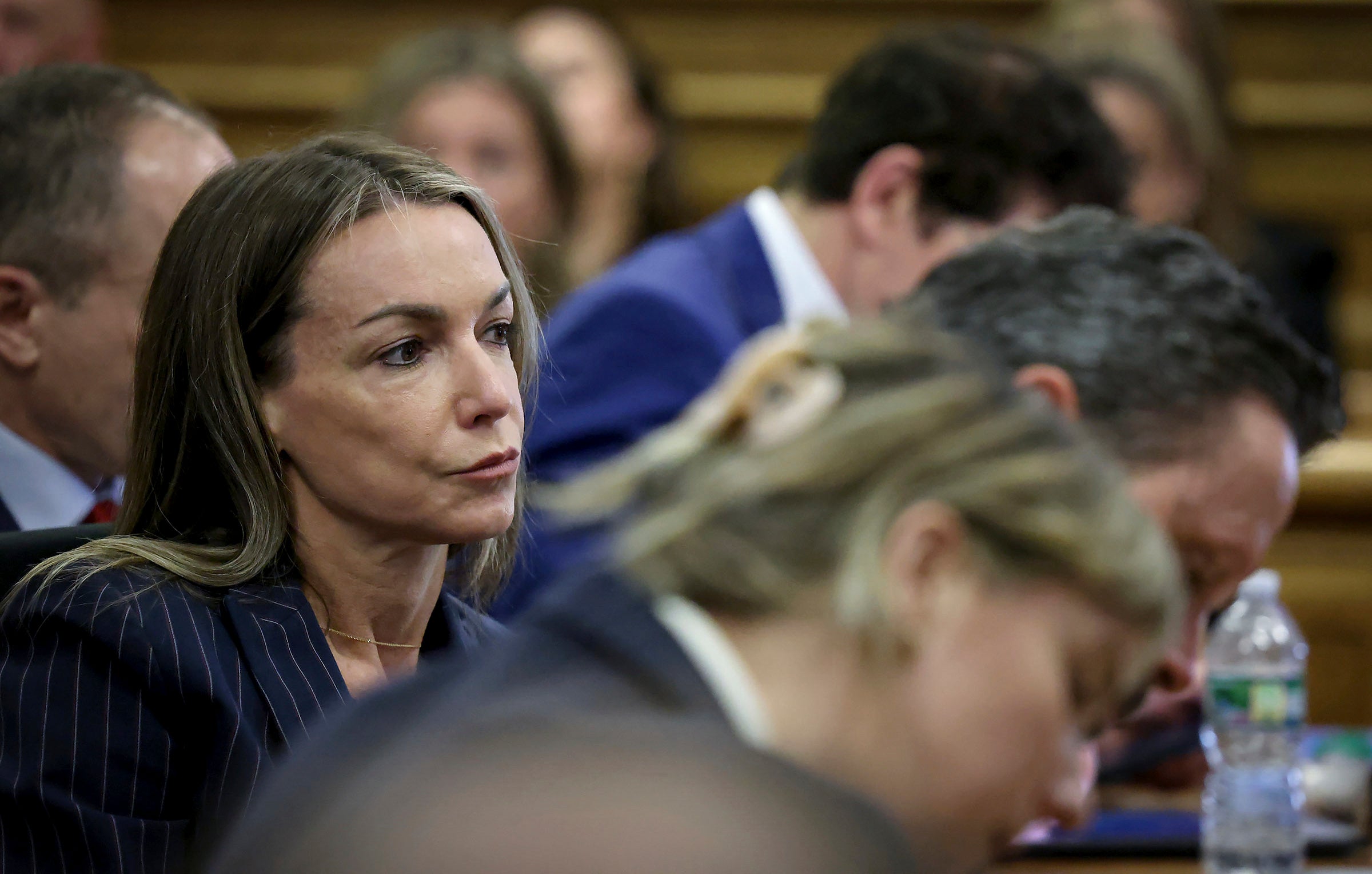
Special prosecutor Hank Brennan continued to hammer defense vehicle data expert Matthew DiSogra on clock variances and timestamps following the lunch break Friday.
DiSogra denied Brennan’s claim that he was “double dipping” in adding a three-second adjustment to timestamps from Karen Read’s SUV infotainment system, which corrects for the delay between the vehicle powering on and its infotainment system booting up. The three-second delay came to light during testing prosecution experts from Aperture LLC performed on an exemplar vehicle closely matching Read’s.
DiSogra said he ran his calculations with and without the three-second adjustment.
Throughout his cross-examination, Brennan emphasized that DiSogra largely based his analysis on data from Aperture expert Shanon Burgess, who testified last week. Aperture initially looked at the call log from Read’s SUV — particularly calls from Read to John O’Keefe — in an attempt to reconcile the clock variance between the vehicle and O’Keefe’s cellphone.
However, as Burgess previously testified and Brennan reminded jurors Friday, Read’s SUV was powered off during some of the phone calls included in the log.
“The assumption is, if the vehicle has a timestamp and the phone wasn’t connected, it would have been synchronized after the fact,” DiSogra acknowledged. “But that wasn’t tested [by Aperture].”
DiSogra said he relied on Burgess’s explanation that those call times were synchronized the next time Read’s phone connected to her SUV. He said without further testing, it’s uncertain whether the SUV’s infotainment system would adjust the call timestamps on its own after synchronizing or simply adopt the timestamps from Read’s phone.
With that in mind, Brennan questioned whether DiSogra’s conclusions would be inaccurate if the first calls in the log didn’t go through the SUV’s infotainment system, as initially believed.
“If those first five calls were iPhone to iPhone rather than infotainment to iPhone, would you agree they should not have been considered in your analysis?” he asked.
“Yes, with the caveat that because this is a novel analysis with this SD card [from Read’s SUV] and this infotainment, that it was demonstrated that that’s the behavior,” DiSogra replied. “My opinions on things like that are based on testing and research and literature. … But under the assumption, then yes.”
“And if it was iPhone to iPhone, your analysis would be wrong,” Brennan suggested later in his cross-examination.
“Certain lines would go away. So if you want to call the whole analysis wrong because of that, it might be your characterization,” DiSogra replied. “It would change the total number of possibilities.”
He confirmed he read Burgess’s supplemental May 8 report, which explained that Aperture ultimately used a three-point turn Read’s SUV made — rather than the call log — to identify a clock variance of 21 to 29 seconds. As Brennan reasoned, the three-point turn was closer in time to the backing trigger the SUV recorded when Read allegedly struck O’Keefe.
“And thus more reliable, wouldn’t you say?” Brennan asked.
“Generally,” DiSogra replied. He also confirmed he’s aware Read’s SUV made contact with O’Keefe’s parked car as she slowly reversed out of his driveway to search for him at about 5:07 a.m. on Jan. 29, 2022, though he didn’t remember seeing the incident reflected in Read’s “Techstream” data.
“You’re not testifying or offering an opinion that there was no collision with this car that night, are you?” Brennan asked.
“No,” DiSogra replied.
“Because if you were implying that or suggesting that or insinuating that, that would be misleading, wouldn’t it?” Brennan pressed. Judge Beverly Cannone sustained an objection from the defense before DiSogra could answer.
Returning for redirect examination, defense attorney Alan Jackson asked about the steps O’Keefe’s phone logged at 12:32 a.m. and 16 seconds. DiSogra testified that if the last interaction with O’Keefe’s phone occurred then, and not when O’Keefe locked the device at 12:32 a.m. and nine seconds, then each of the 30 possible scenarios he outlined in his presentation would have happened after the SUV’s backing trigger.
“When you presented your analysis, your math, based on Mr. Burgess’s January 2025 report, how many of the scenarios indicated, based on his data, his analysis, that the lock event occurred after the ‘Techstream’ event?” Jackson asked.
“All of them,” DiSogra replied.
Brennan stepped up for a few additional questions, asking DiSogra, “This demonstrates the difficulty in giving opinions when you don’t actually study the data itself, isn’t that fair to say?”
“What are you referring to with ‘this’?” the expert shot back.
“Well, you’re giving opinions, but you can’t verify any of the data because you’re not relying on your study of the data, are you?” Brennan asked.
“I’m relying on expert reports,” DiSogra pointed out.
“You’re criticizing somebody’s report, but you yourself can’t defend data that you haven’t actually analyzed and broken down yourself,” Brennan pressed.
“I don’t think that’s true,” DiSogra replied.
Answering another series of questions from Brennan, he confirmed he didn’t know whether O’Keefe was walking, crawling, or falling in the seconds before his phone logged those steps at 12:32 a.m. and 16 seconds.
Jackson asked one last pointed question, confirming that if the expert data DiSogra reviewed were wrong, then DiSogra’s analysis would also be wrong — in other words, he suggested, “garbage in, garbage out.”
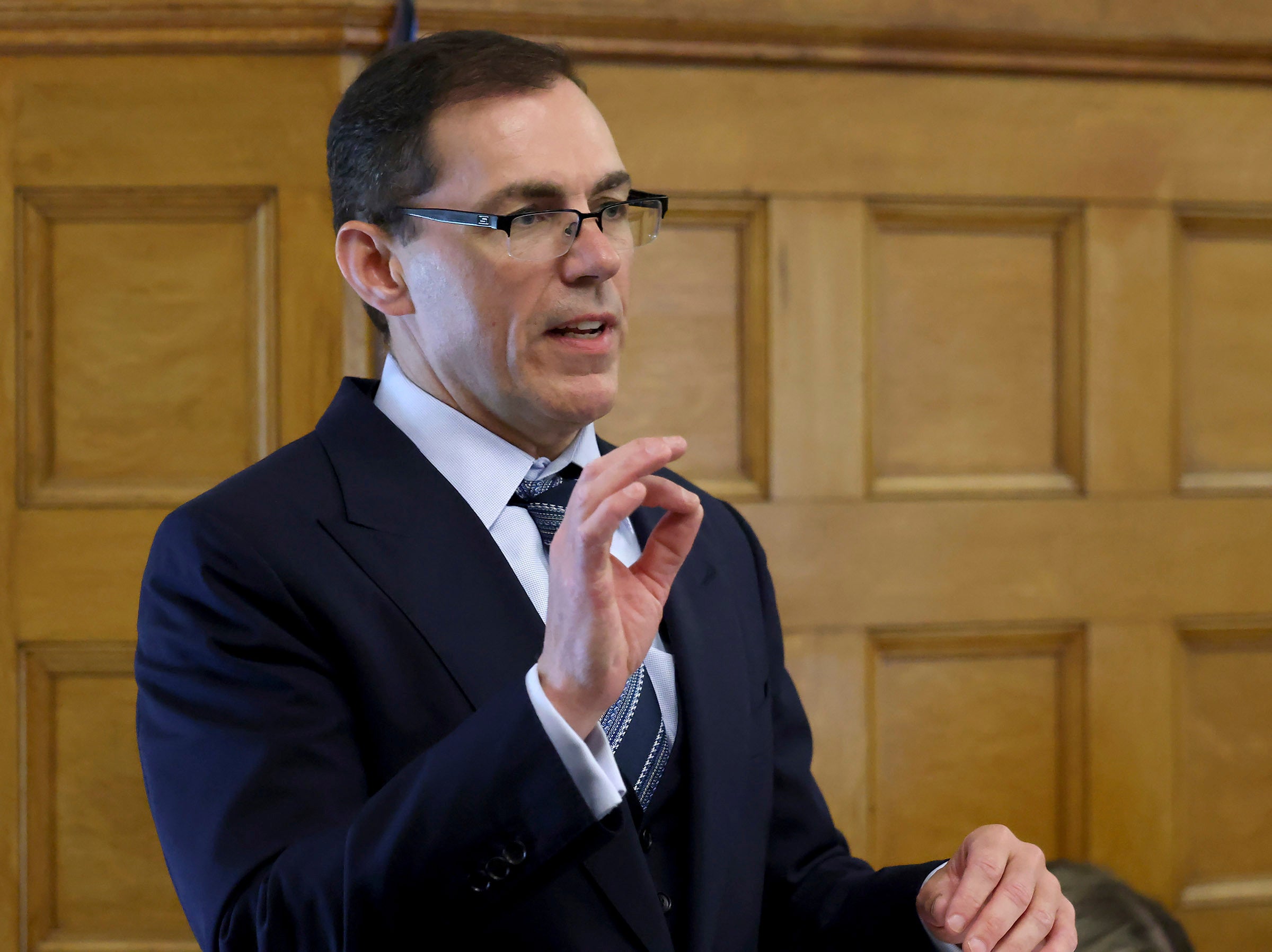
Jurors’ heads snapped back and forth as special prosecutor Hank Brennan began cross-examining the defense team’s first witness, vehicle data expert Matthew DiSogra.
Brennan asked DiSogra if he was offering an opinion on whether Karen Read’s Lexus had ever gotten into a collision. DiSogra clarified that his testimony was actually that none of the SUV’s “Techstream” events were triggered by a collision.
“Are you offering that Ms. Read’s Lexus never got into a collision before Jan. 29, 2022, or on that day?” Brennan asked.
“No,” DiSogra answered.
“You are not suggesting to this jury that Ms. Read’s Lexus did not ever get into a collision?” Brennan asked in a subsequent question.
“No,” DiSogra replied.
Brennan also asked DiSogra whether accelerating at more than 30% throttle would trigger a “Techstream” event — something prosecution accident reconstructionist Judson Welcher testified to earlier this week.
“Yeah, there’s a lot of triggers,” some of them tied to acceleration, DiSogra confirmed. He didn’t know off the top of his head the exact percentage needed to trigger a “Techstream” event.
Brennan asked whether it would be abnormal for a sideswipe pedestrian collision to register in vehicle event data, and DiSogra said pedestrian impacts generally wouldn’t meet the necessary criteria for a triggering event.
Pivoting to DiSogra’s credentials, Brennan confirmed DiSogra is not a specialist in iPhones or mobile forensics, nor has he ever taken a class on variances between vehicle infotainment systems and mobile forensics.
DiSogra acknowledged he did not download or obtain data himself while working on Read’s case, nor did he test Read’s SUV or purchase an exemplar vehicle for testing — something prosecution experts from Aperture LLC did.
“And so your role is to look at other people’s work and offer opinions and criticisms, basically?” Brennan asked.
“And provide some clarity to the work,” DiSogra replied. “But generally, yes.”
Brennan asked DiSogra why he waited to include new information from Aperture expert Shanon Burgess’s supplemental May 8 report in his own presentation until May 25. DiSogra explained defense attorney Alan Jackson didn’t ask him to do so until the 25th. He confirmed he sent his updated presentation to the defense after finishing it, and Brennan asked if that meant the defense had a copy of the updated PowerPoint on May 25.
“Don’t be shy,” he quipped when DiSogra stuttered and took a beat to answer.
“Yeah, if it wasn’t the 25th, it would have been maybe the day after,” DiSogra answered at last, adding, “I’m almost positive I provided it on the 25th.”
Brennan turned his attention to a microSD card Burgess discovered in Read’s SUV that had been overlooked during the initial data download. DiSogra said he didn’t think anyone knew “this particular Lexus infotainment system” stored “key on” and “key off” times on that card prior to Burgess’s discovery.
“Right. The only person that found this out was Shanon Burgess,” Brennan shot back.
“He found it in the process, but I don’t think anybody knew in advance of this case. There was nothing out there about it,” DiSogra replied. “So to my knowledge, this is the first time that this specific data has ever been released into the wild.”
Brennan asked DiSogra about Burgess’s process for downloading the additional vehicle data, which DiSogra observed. DiSogra said Burgess didn’t specify anything about the SD card in his initial protocol, which focused “on a number of other chips.”
“I was a little confused, because I went into it with an expectation,” DiSogra explained. “Generally, if we write a protocol, we adhere to the protocol. If we’re going to deviate, we have a discussion about deviations. So I was just surprised; it’s not customary to sort of shift out of nowhere.”
Brennan pitted DiSogra and Burgess against one another throughout his cross-examination, pointing out DiSogra never wrote a report on his observations of Burgess.
Burgess “demonstrated great proficiency, wouldn’t you say?” Brennan asked at one point.
“He ended up with a successful acquisition of the [SD] card at the end of the process,” DiSogra said after a moment of thought.
Asked about acceptable clock variances between devices, DiSogra said he’s done analyses with variances that range from a matter of seconds to as much as 25 years.
“No amount of variance would shock me,” he added.
DiSogra testified on direct examination that Aperture’s reports included calculations based on the ends of the trigger events, rather than the triggers themselves. Noting DiSogra’s preference for working off of the actual trigger, Brennan asked, “That’s not a standard practice or a protocol that is supported by any type of literature, is it?”
DiSogra explained that’s the methodology he teaches, especially in the class he leads on the analysis of heavy vehicle data.
“The way we all teach it is, we generally start the analysis at the trigger, which is not to suggest you have to do that,” he added. “It’s not wrong to do it a different way. But that would be the, let’s call it the default methodology.”
Pressed by Brennan, he acknowledged that his preference is based in his opinion that this methodology “introduces the least amount of variables.” However, DiSogra also noted he adopted Aperture’s convention in his own analysis for consistency.
Judge Beverly Cannone dismissed jurors for the lunch recess at 12:53 p.m. DiSogra will continue his testimony on cross-examination after the break.
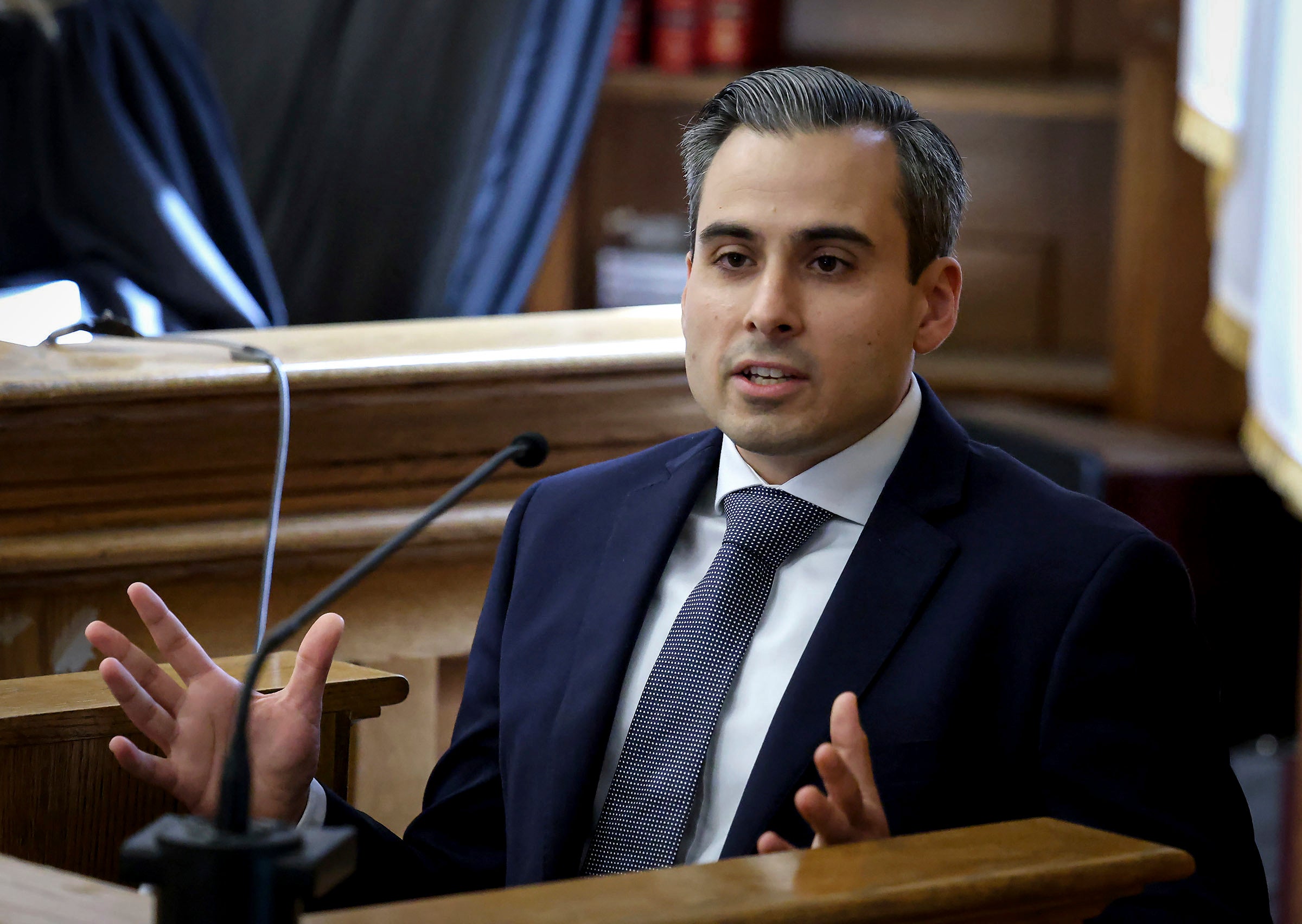
Neither of the two “Techstream” events Karen Read’s SUV recorded after midnight on Jan. 29, 2022, were triggered by a collision, defense vehicle data expert Matthew DiSogra opined Friday.
The defense team’s first witness, DiSogra offered jurors an alternate view on the information gleaned from Read’s Lexus SUV following the death of her boyfriend, Boston Police Officer John O’Keefe.
Defense attorney Alan Jackson opened his questioning by covering DiSogra’s credentials and professional background, and DiSogra explained his company, DELTA |v|, specializes in “all parts of accident reconstruction.” He also confirmed he published a paper earlier this year on event data recorded in Toyota systems, an umbrella that includes Lexuses.
DiSogra testified he was asked to review the work of prosecution expert Shanon Burgess, who testified last week that data from Read’s SUV showed two “Techstream,” or “triggering,” events on the 29th: a three-point turn and a “backing maneuver.”
Burgess told jurors he found a variance of 21 to 29 seconds between the clocks on Read’s SUV and O’Keefe’s cellphone. Using that variance, he said he determined the backing maneuver ended between 12:32 a.m. and four seconds and 12:32 a.m. and 12 seconds.
But as DiSogra noted, Aperture’s initial reports didn’t include that variance and actually put the “backing maneuver” several seconds earlier; Burgess only offered the new timestamps in a supplemental May 8 report. Jackson paid particular attention to data from O’Keefe’s phone indicating he last locked the device at 12:32 a.m. and nine seconds on the 29th.
According to DiSogra, based on the data in Aperture’s original reports, “regardless of what adjustment is made, which two points are used to try to correct the clock, the phone lock event always occurs after the end of the [backing trigger] event.”
He explained Aperture initially used phone calls shared between the SUV and O’Keefe’s phone to align the clocks in both devices, but Burgess’s supplemental report instead used the three-point turn, as O’Keefe’s phone was tracking location data through Waze at the time.
Burgess explained last week he made the switch because some of the calls happened while the SUV was powered off, meaning the timestamps with a smaller variance actually reflected Read’s phone syncing with her car.
With Burgess’s additional analysis, there are now some scenarios in which O’Keefe’s phone locked simultaneously or even before the backing trigger, DiSogra noted. He walked jurors through the various methods Aperture used to align the two clocks, and Jackson asked for his opinion on best practices for those kinds of calculations.
In this case, DiSogra said he’s not aware of any literature that would point to one particular path for aligning the clocks. He said the best practice, then, would be to look at all available paths and see where the data leads.
Jackson asked if DiSogra had an opinion on whether the new offset offered in Burgess’s supplemental report is more likely or reasonable than other previously proposed offsets.
“I don’t think it is more or less likely. I think it is a valid approach, certainly,” DiSogra replied. “And so I think the results from the additional analysis should be included with the analysis of all of the results so far.”
He outlined 30 possible offsets, 25 of which resulted in O’Keefe’s phone locking after the backing trigger ended. Two of the offsets suggested the two events happened simultaneously, and three indicated O’Keefe’s phone locked before the trigger ended.
Later in his testimony, DiSogra confirmed he received a copy of the data downloaded from the SUV’s airbag control module, but there were “no recorded events, whatsoever,” on that system.
“Did the vehicle control history record whether there was any history of a collision on that car, ever?” Jackson asked.
“No,” DiSogra replied.
“What does the vehicle control history record, specifically?” Jackson asked in a follow-up.
“It records a lot of operational parameters about the vehicle,” DiSogra explained. “What I mean by that is it records things like what the driver is doing. For example, steering wheel angle, accelerator pedal position, whether the brake is being pressed. It also records what the vehicle is doing. For example, speed, or the engine RPM, or the accelerations of it.”
Jackson asked if the SUV’s “Techstream” data indicates whether there was a collision on the car, and DiSogra answered “no.” He also testified the vehicle recorded 19 triggers prior to the backing maneuver early on Jan. 29, 2022.
“And how many collisions were clocked by any recorder on that car?” Jackson asked.
“None of the events were triggered by a collision,” DiSogra replied.
For Jan. 29, 2022, “what did you find in terms of any data regarding a collision?” Jackson pressed.
“Neither of the events that occurred on that date were triggered by a collision,” DiSogra reiterated.
With that, Jackson finished his direct examination and Judge Beverly Cannone called the morning recess.
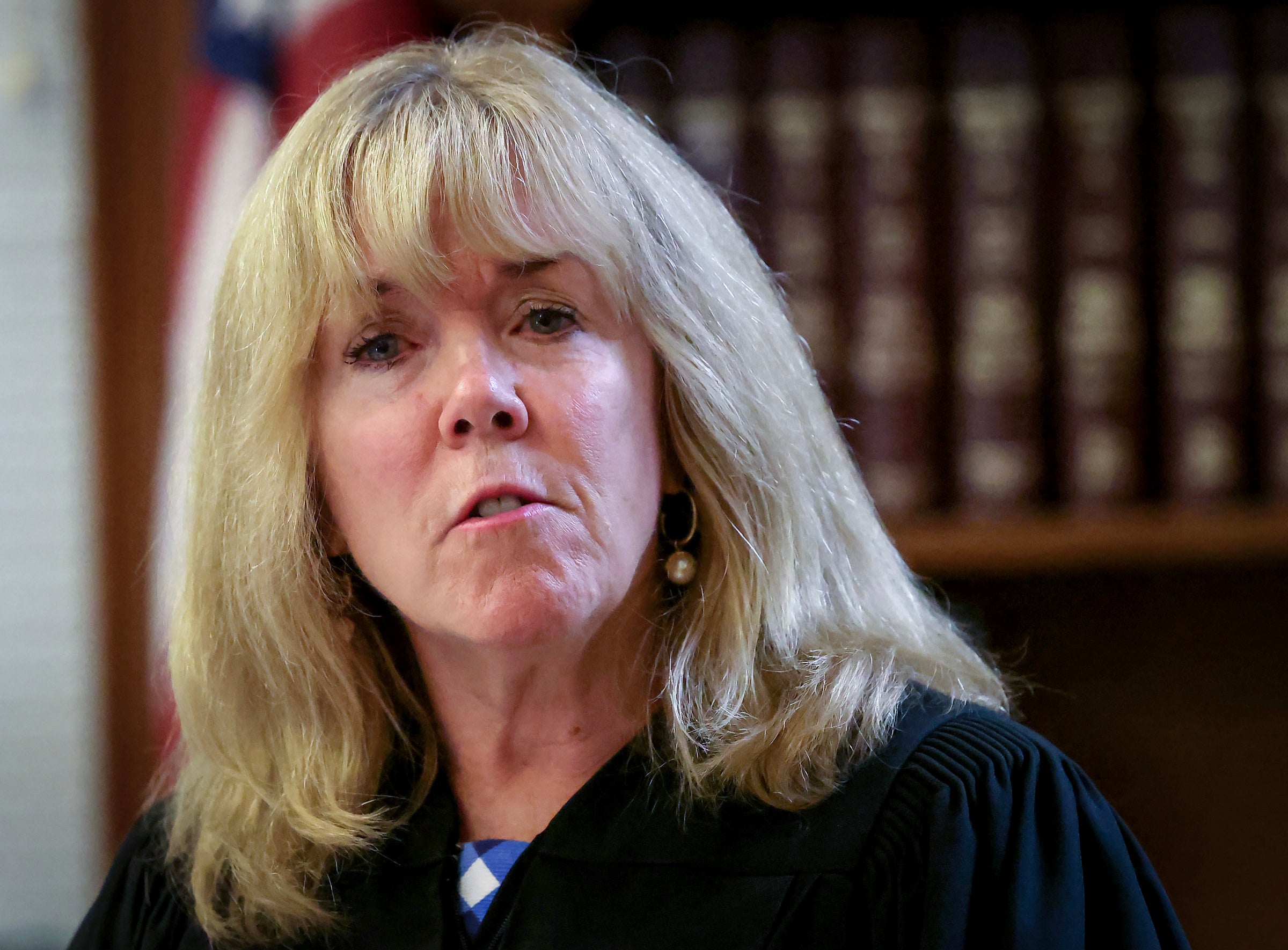
Prosecutors have not proven a collision occurred when Karen Read supposedly murdered her boyfriend, Boston Police Officer John O’Keefe, defense attorney Alan Jackson argued Friday morning.
He asserted no reasonable jury could find Read guilty of the three charges she’s facing — second-degree murder, manslaughter while operating a motor vehicle under the influence, and leaving the scene of a fatal collision — and called on Judge Beverly Cannone to intervene and find Read not guilty.
A motion for a required finding of not guilty is a routine request in criminal trials and one Jackson previously made during Read’s first trial last summer. As she did last year, Cannone rejected the defense team’s latest request.
“There was no collision proven to have occurred,” Jackson had argued, noting the alleged collision was not observed by eyewitnesses or captured on video.
He suggested prosecution experts “said, at best, that the car went into reverse” but did not prove that the backup maneuver Read’s SUV made was actually associated with a collision.
Jackson pointed to the testimony of medical examiner Dr. Irini Scordi-Bello, who told jurors she examined O’Keefe’s lower extremities and did not see evidence of an “impact site.” Scordi-Bello also confirmed O’Keefe’s nose abrasion could be consistent with a punch, among other possible explanations.
“There is evidence, however, that [witnesses] Brian Higgins and Brian Albert were sparring at 34 Fairview,” Jackson alleged Friday. “There is evidence, however, that that was just minutes — not hours, not days — minutes before John O’Keefe ultimately met his fate at 34 Fairview.”
He also suggested Higgins, who had exchanged flirty texts with Read during her relationship with O’Keefe, was “lovestruck” and jealous. According to Jackson, Higgins was “aggressively coaxing” O’Keefe out of a Canton bar shortly before O’Keefe died and “passive aggressively” coaxed Read to date him instead.
Prosecutors offered no evidence that Read intended to run over and harm O’Keefe “in any way, shape, form, or fashion,” Jackson said. Read and O’Keefe were loving, caring, and affectionate the night O’Keefe died, he added.
Prosecutors have “done their best,” Jackson said. “Some would say they’ve done their worst. And their case has failed.” He called Read’s prosecution “vindictive.”
Yet special prosecutor Hank Brennan argued the evidence of a collision is “overwhelming.”
“Any reasonable person could find that her conduct that night created a plain and strong likelihood of death,” Brennan added, pointing to evidence that Read had been drinking and driving, and that her relationship with O’Keefe was on the rocks.
After allegedly backing her SUV into O’Keefe in a drunken rage, Read “never goes back to help him and leaves him to die,” Brennan suggested.
Cannone swiftly rejected the defense team’s motion and called the jury into the courtroom.
Livestream via NBC10 Boston.
Prosecutors in the Karen Read murder retrial rested their case Thursday after nearly six weeks of testimony and dozens of witnesses. Now, Read’s lawyers will begin making their case for her innocence.
Answering reporters’ questions outside the courthouse Thursday, Read offered a one-word assessment of prosecutors’ case: “Unjust.”
She said the first defense witness will be Matthew DiSogra from DELTA |v|, a company with experts specializing in accident reconstruction, biomechanics, event data recorders, and digital media, per its website. DiSogra works in EDR services and even teaches a course on accessing and interpreting vehicle event data, according to his staff biography.
Jurors earlier this week heard from prosecution accident reconstructionist Judson Welcher, who opined that the data from Read’s SUV indicates she accelerated in reverse around the same time she’s alleged to have struck her boyfriend, Boston Police Officer John O’Keefe.
A biomechanical engineer, Welcher also testified that damage to Read’s SUV was consistent with a collision with O’Keefe around 12:32 a.m. on Jan. 29, 2022, as prosecutors claim. O’Keefe’s injuries, he added, were consistent with being struck by a Lexus identical to Read’s SUV “and ultimately contacting a hard surface, such as frozen ground.”
Prosecutors allege Read, 45, drunkenly and deliberately backed her SUV into O’Keefe while dropping him off at an afterparty in Canton following a night of bar-hopping. Yet Read’s lawyers have suggested O’Keefe was actually beaten inside the home, attacked by the homeowner’s German shepherd, and dumped outside in a blizzard. They contend Read was framed in a widespread law enforcement conspiracy to protect the family and friends of the homeowner, a fellow Boston police officer.
Welcher previously agreed with prosecutors that O’Keefe’s injuries were consistent with Read’s SUV striking him in a sideswipe collision or clipping. But on cross-examination Thursday, defense attorney Robert Alessi dug further into the data gleaned from Read’s SUV. Pressed by Alessi, Welcher acknowledged the Lexus recorded 18 other “Techstream,” or trigger, events prior to Jan. 29, 2022.
He explained the “Techstream” system is triggered by factors such as excessive acceleration, steering, or braking. In other words, Alessi pointed out, the system doesn’t necessarily register when a collision occurs.
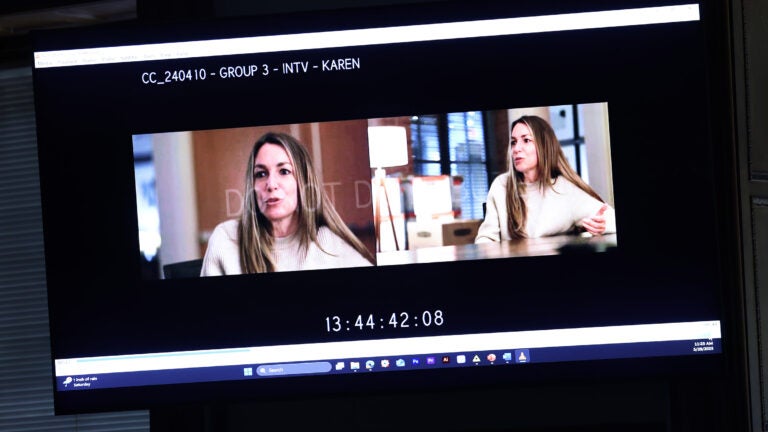
After Welcher left the stand, special prosecutor Hank Brennan played jurors a clip from Read’s April 2024 interview for an Investigation Discovery docuseries. In the video, Read recalled speculating with defense attorney David Yannetti about her potential culpability in the immediate aftermath of O’Keefe’s death.
“Like, ‘David, what if … I ran his foot over, or, or, what if I clipped him in the knee and he passed out or went to care for himself and he threw up or passed out?’” Read recalled in the video. “And David said, ‘Yeah, then you have some element of culpability.’”
The ongoing trial is Read’s second. Judge Beverly Cannone declared a mistrial last summer after jurors in the first trial returned deadlocked.


Sign up for our Extra newsletter to get updates from the retrial and other breaking news alerts delivered to your inbox.


To comment, please create a screen name in your profile
To comment, please verify your email address
Conversation
This discussion has ended. Please join elsewhere on Boston.com