
The latest on the Karen Read murder case
Sign up for our Extra newsletter to get updates from the retrial and other breaking news alerts delivered to your inbox.
On the stand Friday:
After dismissing jurors for the day, Cannone said she was “not persuaded” by the defense team’s arguments in favor of excluding a new report from prosecution expert Shanon Burgess of accident reconstruction and biomechanics company Aperture LLC.
While Cannone didn’t agree with Karen Read’s lawyers that prosecutors were delayed in turning over the May 8 report, she left the door open for “ample” cross-examination when Burgess takes the stand.
“And I will give you a lot of leeway with that, Mr. Alessi,” the judge added, pointing to Alessi’s “fullsome” cross-examination of past witnesses.

She also agreed to hear the defense on requests for additional preparation time, or to recall previous prosecution witnesses, should Alessi feel the need.
Aperture accident reconstructionist Judson Welcher is expected to testify for the prosecution in the coming days, and Cannone said she would allow Welcher to return for “limited rebuttal” to defense crash experts from ARCCA, Inc.
“We can define the scope after we hear the testimony of ARCCA,” she added.
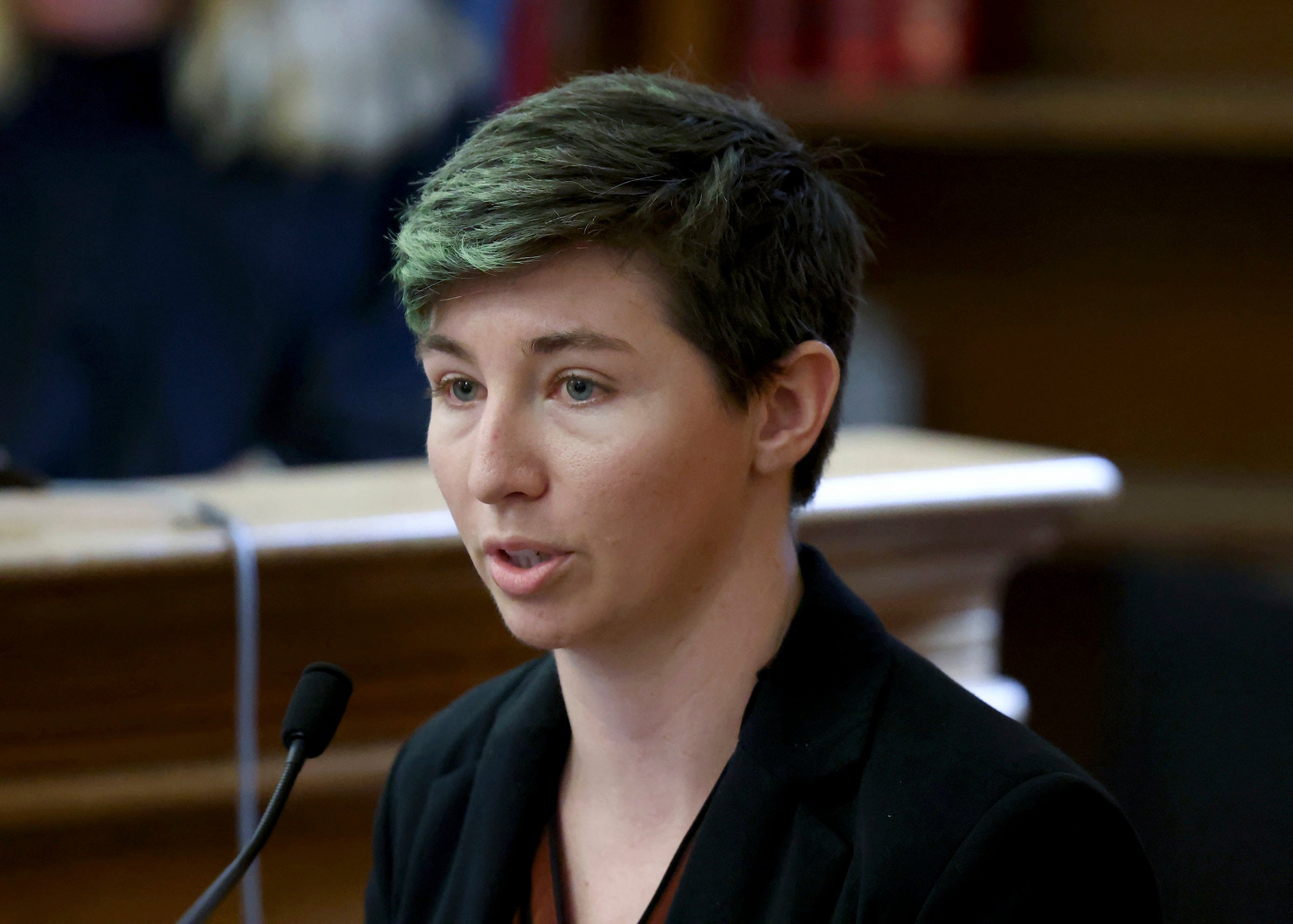
Minute pieces of apparent plastic were found in debris from John O’Keefe’s clothing, according to Ashley Vallier, a forensic scientist with the Massachusetts State Police Crime Lab.
Vallier was asked to sift through the debris and perform a physical match analysis on various pieces of evidence in Karen Read’s case, telling jurors the latter process involved “piecing broken things together to see if they were once a single item.”
“And then if it looks like there could potentially be a physical match, you would analyze them together and see if they have a mechanical fit,” meaning the broken edges align, Vallier added.
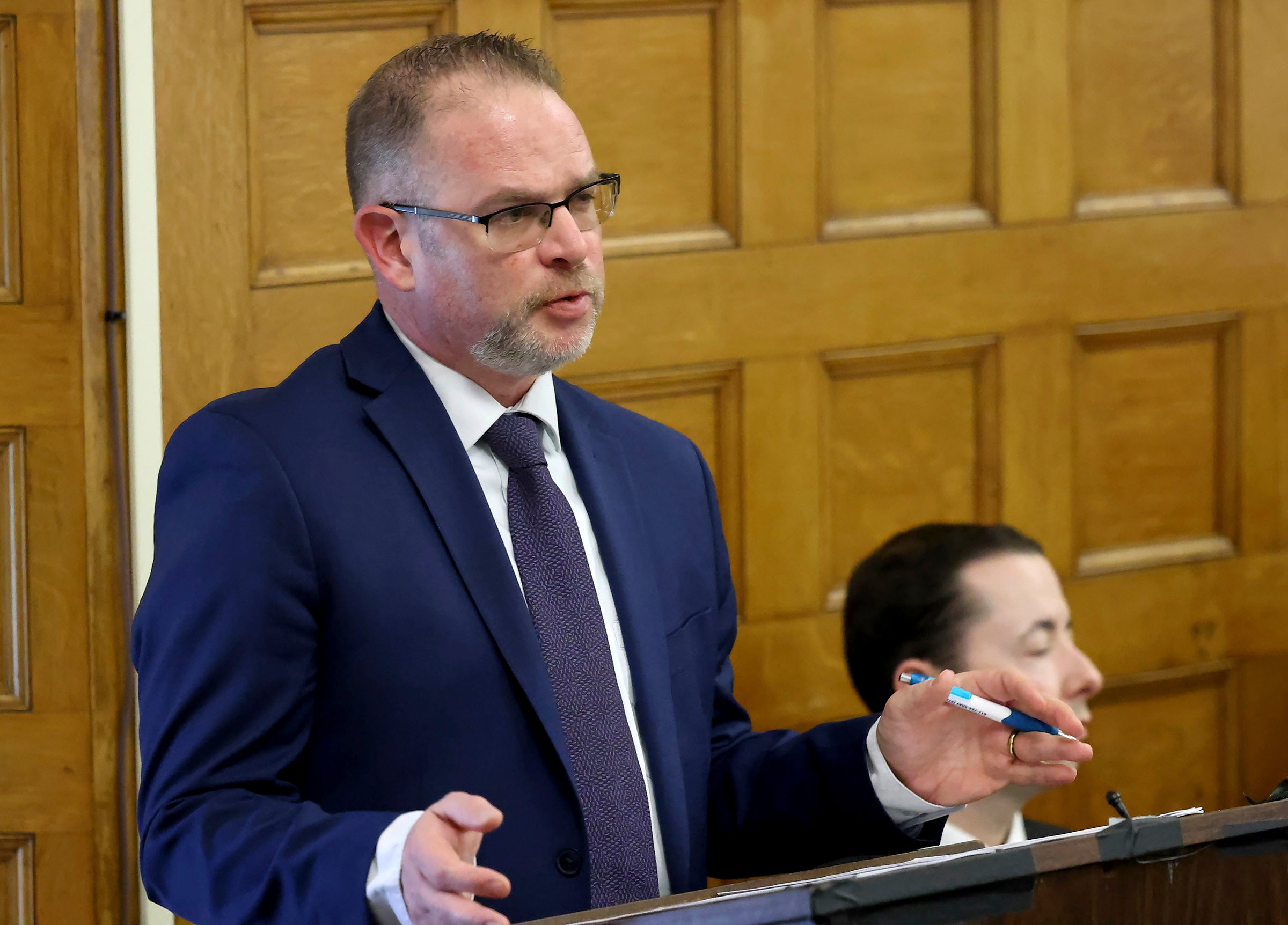
Assistant District Attorney Adam Lally displayed several photos of glass shards and pieces of red, clear, and black plastic recovered from the scene outside 34 Fairview Road, where O’Keefe had lain unresponsive in the snow.
Vallier testified about examining the various items and sorting them by color to look for possible matching edges. According to Vallier, several pieces of plastic fit together into a larger section that was a physical match for Read’s broken taillight. Lally displayed photos of the reconstructed taillight, its broken pieces fit together and held with tape as they overlaid the tailight housing.
Lally then turned his attention to the debris from O’Keefe’s clothing, and Vallier testified about examining the debris under a microscope and finding dirt and apparent pieces of plastic contained within.
On cross-examination, defense attorney David Yannetti confirmed Vallier’s reconstruction of the taillight was missing a piece.
“There was an empty spot … on the overall reconstruction, yes,” Vallier testified.
Yannetti asked whether Vallier ever received additional pieces of plastic that would fit the empty spot, and Vallier said no. At Yannetti’s prompting, Vallier also confirmed that the debris had already been collected and removed from O’Keefe’s clothing when Vallier examined it.
Answering a subsequent question from Yannetti, Vallier testified about having confidence in the State Police Crime Lab’s chain of custody.
“But you’ll agree that your lab cannot control who handled the clothing before it arrived at your lab, correct?” Yannetti pressed.
“Yes,” Vallier acknowledged.
Yannetti also noted the lab did not receive O’Keefe’s clothing from ex-Trooper Michael Proctor until March 14, 2022 — about six weeks after O’Keefe died and State Police took custody of his clothes. Yannetti confirmed Vallier did not know where the clothing was stored in the meantime.
Judge Beverly Cannone dismissed jurors for the day shortly before 12:30 p.m. She said next Thursday will be a half day for jurors, and court will not be in session Friday ahead of Memorial Day Weekend.
With jurors on morning break following initial testimony from forensic scientist Ashley Vaillier, Karen Read’s lawyers renewed their push for Judge Beverly Cannone to exclude a new report from one of the prosecution’s expert witnesses, Shanon Burgess of accident reconstruction and biomechanics firm Aperture LLC.
According to defense attorney Robert Alessi, Burgess shifted a crucial timestamp in his new report for a “trigger” event that occurred at about the time prosecutors allege Read backed her SUV into John O’Keefe.
“The timing of what’s alleged by the commonwealth is very important,” he argued. “The seconds are very important.”
He said a difference in timestamp affects the defense team’s strategy, and Read’s lawyers would need four days to adapt to the revised findings. However, Alessi cautioned, “We will not ever be able to recover strategically or substantively from it.”
Special prosecutor Hank Brennan adamantly refuted Alessi’s allegations of malfeasance.
“Respectfully, your honor, the defense is very confused,” he said.
Other discovery material filed in the case “shows that time, 12:31:43 [a.m.], has never changed,” Brennan argued. “This does not change the testimony of anybody.”
Alessi demanded, at a minimum, a voir dire hearing to determine whether Burgess violated a witness sequestration order and reviewed the testimony or timeline provided by prosecution digital expert Ian Whiffin. Brennan argued there is no good-faith basis for a voir dire.
According to Brennan, Burgess’s new report just contains further analysis of information and opinions already provided to the defense.
“There’s nothing new here; nothing has changed,” Brennan argued.
“There is a change,” Alessi later fired back.
Cannone has not issued a ruling on the matter.
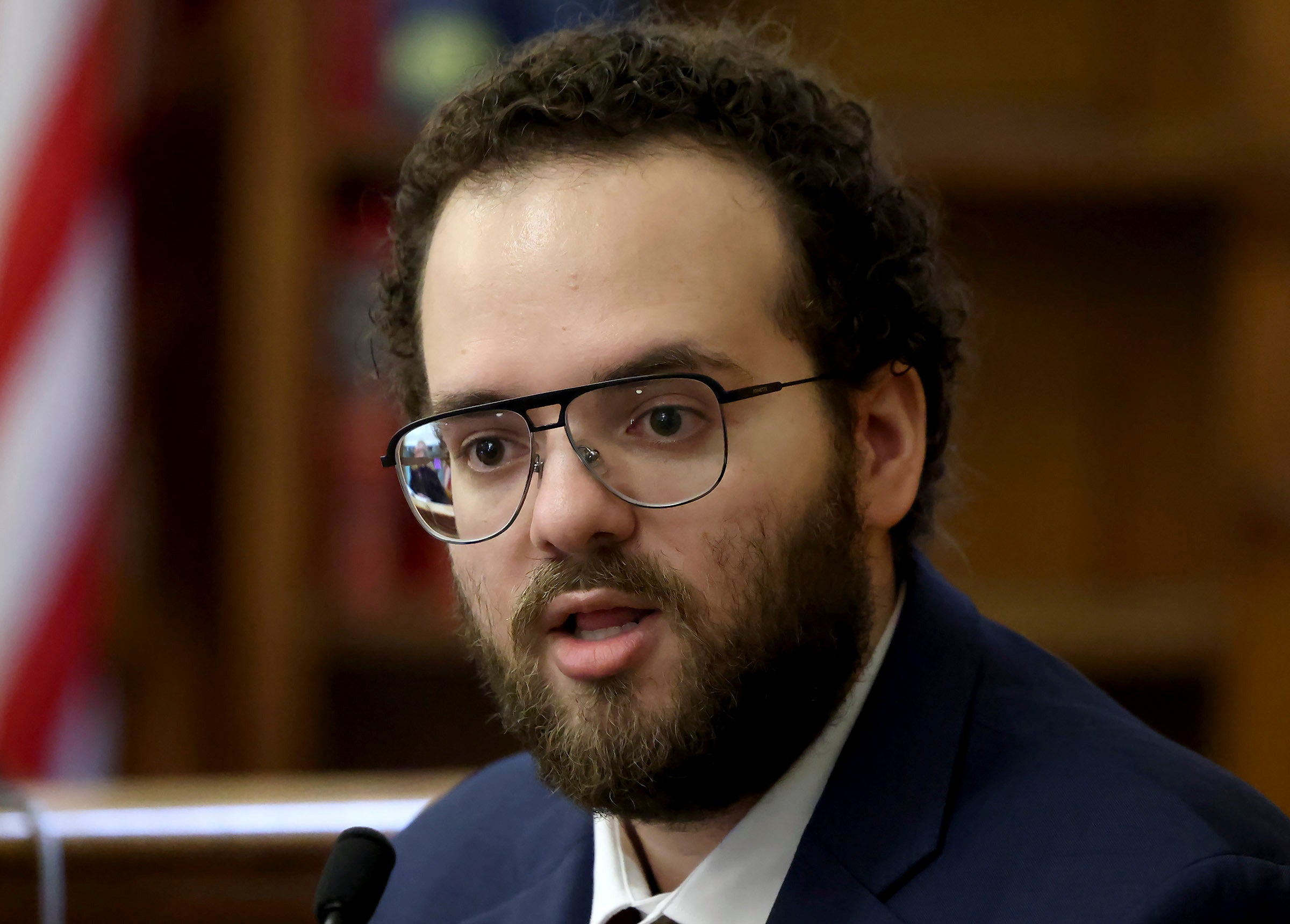
John O’Keefe was exponentially more likely than not to have contributed to a three-person mixture of DNA found on Karen Read’s taillight, according to Massachusetts State Police Crime Lab forensic scientist Andre Porto.
Porto testified about performing DNA analysis on several pieces of evidence in Read’s case, including the sample from her SUV’s taillight and an apparent hair found on the back of the vehicle. While Porto’s analysis detected no human DNA in the hair, he noted the State Police Crime Lab is not equipped for mitochondrial DNA testing, which looks for a different type of DNA inherited from the mother’s side.
“There might be DNA on there, but it was below what our instrumentation could detect,” he said of the hair, which was sent off to external lab Bode Technology for additional testing.
Porto testified he also found a mix of DNA from three people on a broken drinking glass found outside 34 Fairview Road. Once again, O’Keefe was a substantially likely source, he said.
Porto spoke at length about testing samples taken from O’Keefe’s clothing, including the jeans, T-shirt, and sweatshirt he was wearing when he was found unresponsive on Jan. 29, 2022. Several of the samples were considerably more likely than not to include O’Keefe’s DNA, and some showed DNA from unknown contributors, he explained.
As for O’Keefe’s fingernail clippings, Porto said he identified a single source of DNA, naming O’Keefe as the likely contributor.
Defense attorney David Yannetti was up at bat for cross-examination, asking Porto to identify the two other sources of DNA found on Read’s taillight.
“They could be anybody,” Porto answered. Responding to a follow-up question, he said he was never asked to compare the taillight sample with DNA from then-Canton Police Chief Kenneth Berkowitz or Canton Police Detective Kevin Albert.
“Are you able to determine when that DNA was deposited on the passenger side taillight that was attached to the vehicle?” Yannetti asked at one point.
“No, I’m not,” Porto testified, confirming he could not say with any certainty that the DNA was deposited there on Jan. 28 or 29, 2022. He said he was unaware the vehicle belonged to O’Keefe’s girlfriend.
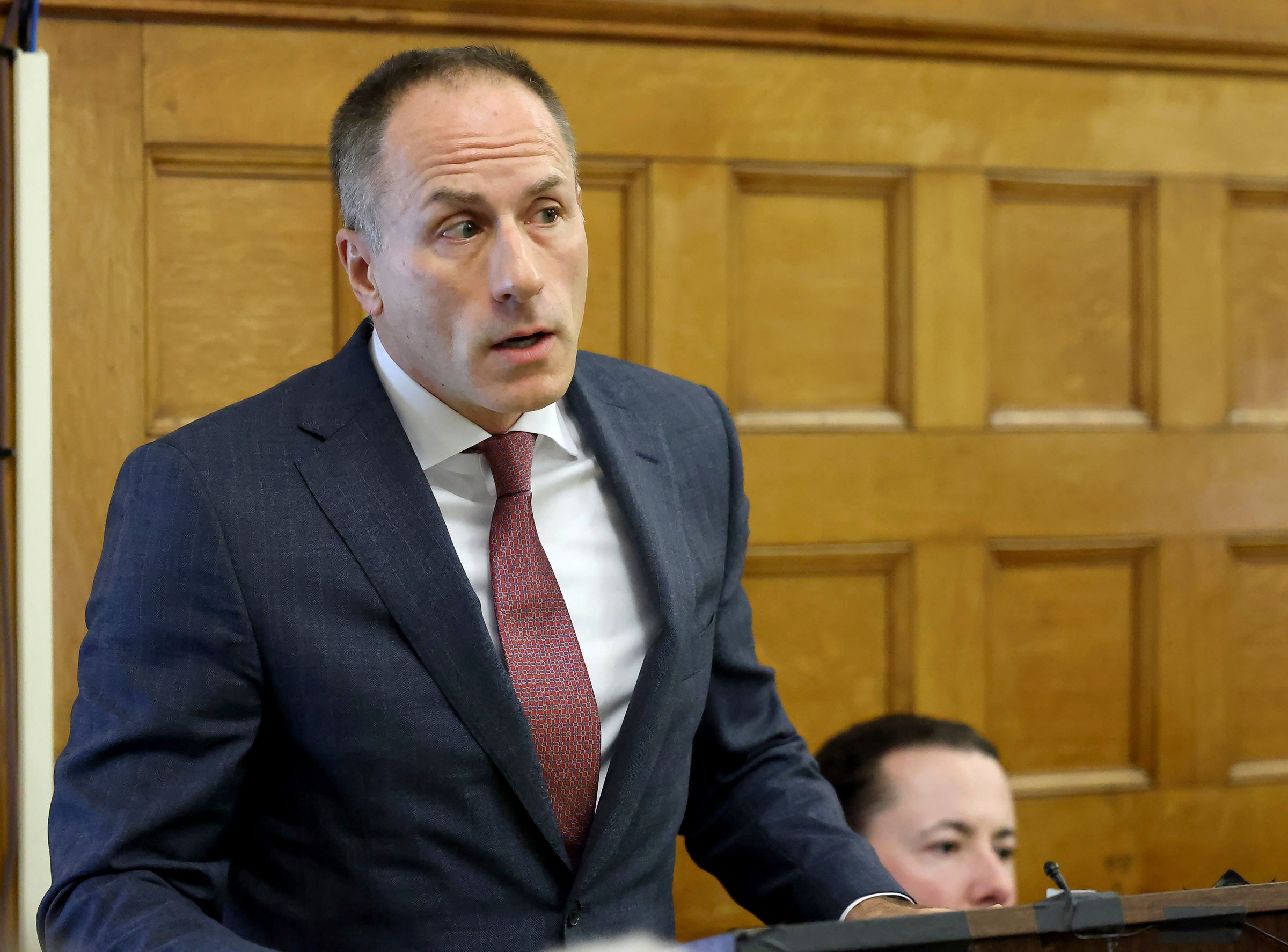
Porto also testified that anybody could have contributed to the DNA mixture found on the broken drinking glass recovered from Fairview Road, or to the stains on O’Keefe’s jeans. Yannetti noted multiple DNA contributors were identified on parts of O’Keefe’s sweatshirt, his outermost layer that night.
He later asked Porto whether he was ever asked to compare samples with DNA from 34 Fairview Road homeowner Brian Albert or witness Brian Higgins. Porto said he was not.
Returning for redirect examination, Assistant District Attorney Adam Lally asked Porto whether it was common or uncommon to find multiple DNA contributors on items of clothing.
“That depends,” Porto replied. “It’s possible, yes.”
“Is it something that’s a complete anomaly?” Lally pressed.
“I wouldn’t say so, no,” Porto testified.
Before Friday’s testimony got underway, Judge Beverly Cannone reminded jurors it’s crucial they hear, follow, and understand the evidence in Karen Read’s murder retrial. She cautioned them against visible or audible reactions to the evidence, including facial expressions or muttering.
With the defense team’s approval, special prosecutor Hank Brennan then offered jurors a clarification on medical examiner Dr. Irini Scordi-Bello’s prior testimony. He explained that former Massachusetts State Police Trooper Michael Proctor, a lead investigator on Read’s case, was not one of two troopers present during her boyfriend John O’Keefe’s autopsy.
Read’s lawyers have sought to implicate Proctor in their coverup claim, accusing him of lying and fabricating evidence to frame Read for murder. State Police fired Proctor earlier this year in light of his conduct during the investigation, particularly his vulgar personal texts about Read.
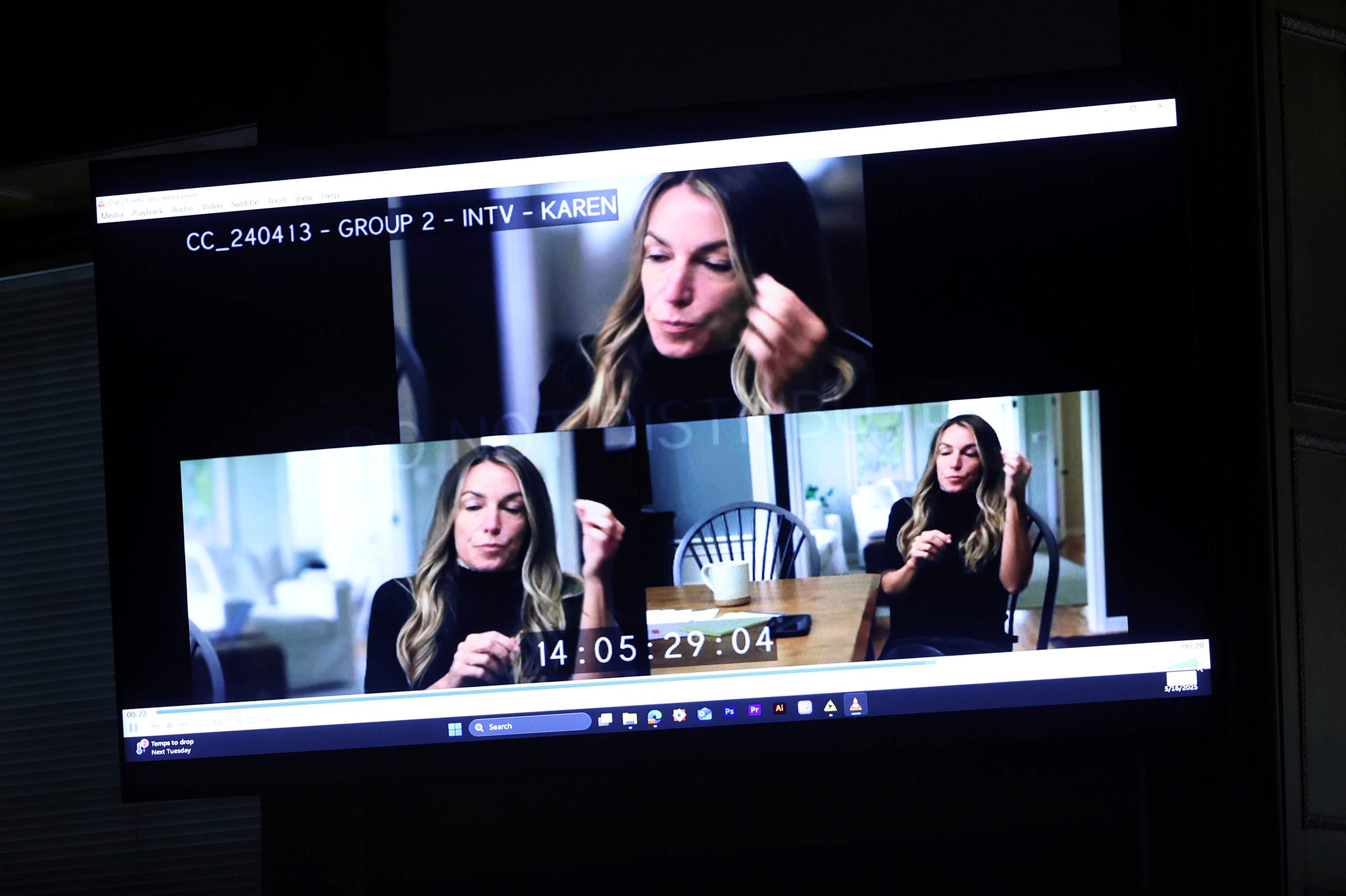
Jurors also watched a clip from a 2024 interview Read gave for Investigation Discovery’s docuseries on her case.
Speaking to an off-camera interviewer, Read said O’Keefe had a piece of glass “perched” on his nose when she found him unresponsive in the snow outside 34 Fairview Road on Jan. 29, 2022. The shard, she explained, was “wedged” in O’Keefe’s skin as though it were a splinter.
Livestream via NBC10 Boston.
Karen Read is back in Norfolk Superior Court Friday to close out the fourth week of testimony in her high-profile murder retrial.
Jurors on Thursday heard from medical examiner Dr. Irini Scordi-Bello, who testified about the autopsy she performed on Read’s boyfriend, Boston Police Officer John O’Keefe.
Prosecutors allege Read, 45, drunkenly and intentionally backed her SUV into O’Keefe as she was dropping him off at a home in Canton following a night of bar-hopping in January 2022. Read’s lawyers, meanwhile, allege law enforcement officials and afterparty guests conspired to frame Read for murder. They’ve suggested O’Keefe was actually beaten after entering the home at 34 Fairview Road, owned at the time by a fellow Boston police officer.
Scordi-Bello told jurors O’Keefe’s cause of death was blunt impact injuries to the head and hypothermia, though she was unable to determine the manner — that is, circumstances — of his death. She walked jurors through several graphic autopsy photos, describing various injuries that included swollen eyelids, skull fractures, and cuts along O’Keefe’s right arm.
Throughout his cross-examination, defense attorney Robert Alessi pressed Scordi-Bello on whether she’d considered alternative explanations for O’Keefe’s injuries. He also suggested the spots of hemorrhaging Scordi-Bello documented on O’Keefe’s stomach lining could be stomach ulcers due to alcohol consumption, noting O’Keefe had taken the antacid omeprazole before he died. Scordi-Bello said she believed the hemorrhaging was due to hypothermia, as O’Keefe had been found in the snow and his body temperature registered at 80.1 degrees Fahrenheit the morning he died.
“Did you consider whether Mr. O’Keefe could have died somewhere other than where the body was found and been moved and placed in the snow?” Alessi asked at one point, though Judge Beverly Cannone sustained an objection from prosecutors before Scordi-Bello could answer.
“What alternative scenarios did you look at, if any, for the cause or manner of death of Mr. O’Keefe?” Alessi tried again.
According to Scordi-Bello, the circumstances Alessi had asked about would fall under O’Keefe’s manner of death, which she wasn’t able to determine.
“That’s not how it works,” Scordi-Bello added. “I don’t come up with hypothetical scenarios on how those injuries occur.”
While she acknowledged at one point that an abrasion on the side of O’Keefe’s nose could be consistent with a punch, Scordi-Bello also confirmed other consistent scenarios included injuries from broken glass, sharp plastic shards, and first aid efforts.
“Anything is possible,” she added.
The ongoing trial is Read’s second, after her first murder trial ended with a deadlocked jury last July.


Sign up for our Extra newsletter to get updates from the retrial and other breaking news alerts delivered to your inbox.


To comment, please create a screen name in your profile
To comment, please verify your email address
Conversation
This discussion has ended. Please join elsewhere on Boston.com