
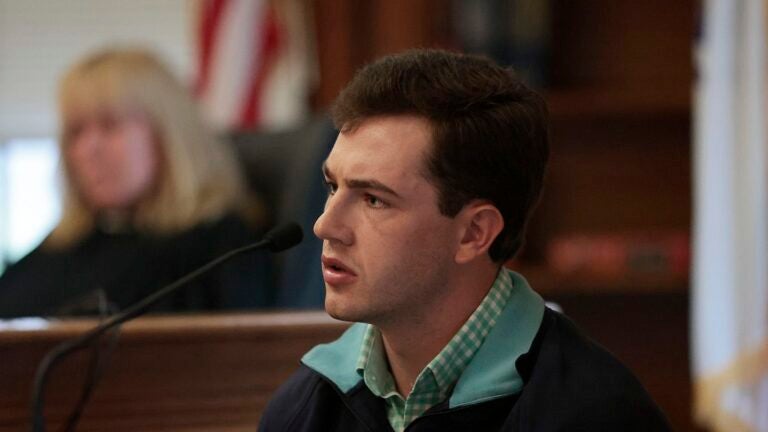
The latest on the Karen Read murder case
Sign up for our Extra newsletter to get updates from the retrial and other breaking news alerts delivered to your inbox.
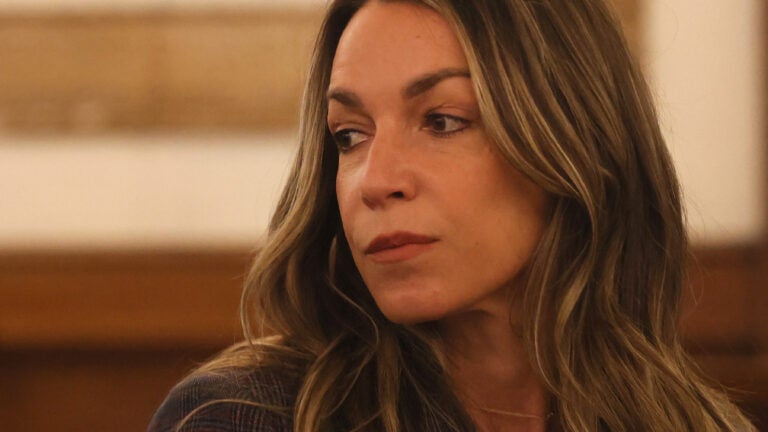
Stifling yawns, faces drawn, coffee cups in hand, prospective jurors in Karen Read’s murder trial sat patiently Tuesday morning as Judge Beverly Cannone offered a rundown of the case and preached the judicial gospel of John Adams.
Then Cannone asked the question of the hour: Have you seen, heard, or talked about this case?
A sea of hands shot up — of the 92 prospective jurors present, 78 had some familiarity with Read’s sprawling legal saga. And 40 of them had already formed an opinion.
Tuesday marked the start of jury selection for Read’s upcoming retrial, the painstaking process of whittling down the pool of potential jurors and charging a select few with the monumental task of deciding Read’s fate.
By day’s end, only two jurors had been seated. Earlier in the afternoon, Cannone excused dozens of other prospective jurors for the day, acknowledging the sluggish pace of individual screening. Jurors sent home early will be expected back at Norfolk Superior Court Wednesday morning.
Given the incomprehensible level of public interest surrounding Read’s case, legal experts told Boston.com it could be a while before the jury box is filled.
“Obviously you want to find a fair and impartial jury that hasn’t already come in with a preconception,” said veteran Boston criminal defense attorney Tracy Miner. “On the other hand, you can’t expect to find a jury that doesn’t know anything about the case — there’s just been too much media.”
She added: “You’re going to get people who know something about the case. The question is, how much do they know?”
Read, 45, is accused of striking her boyfriend, Boston Police Officer John O’Keefe, with her SUV following a night of bar-hopping in January 2022. Prosecutors allege Read drove drunk and left O’Keefe for dead while dropping him off at a fellow Boston officer’s home in Canton, but defense attorneys contend O’Keefe was attacked inside the house. Read, they say, was a “convenient outsider” framed in a vast conspiracy among law enforcement and witnesses.
The upcoming trial is Read’s second; her first trial ended with a hung jury last July.
Prosecutors and defense attorneys probed prospective jurors’ knowledge of the case in a questionnaire Tuesday, also asking about possible ties to Canton, biases for or against law enforcement, and experiences with drunk driving or domestic violence, among other topics. Jurors in Tuesday’s pool faced additional questioning during private sidebars with Cannone and the lawyers.
“You ask questions because you want to try to get a sense of who the person is,” explained Janice Bassil, a prominent Boston-based criminal defense attorney.
As a lawyer vetting potential jurors, she said, “You don’t have a lot of information about people, and they are making the decision for your client’s life, and you’d really like to have a better sense of who they are.”
Either side can challenge a potential juror for cause — for example, if the person has already formed an opinion on the case — but can also challenge a certain number of jurors without explanation, otherwise known as a peremptory challenge. Those challenges can’t be based on a prospective juror’s membership in a protected class, such as race, religion, or sex, though factors like age and employment are fair game.
Given Read is facing a life sentence in prison, she’s entitled to 16 peremptory challenges — one each for the 12 jurors and four alternates.

“You’re going to weed out easily the people that say they have strong opinions,” Miner said. “I mean, those will be struck for cause pretty easily. Then you’re going to get people that say, ‘Well, you know, I’ve heard something, but not very much, and I don’t really have an opinion.’”
Independent thinkers who can see both sides of an issue are a plus, she explained.
“I always want, in a criminal case, someone that can see shades of gray,” Miner said. “I mean, I never like accountants, for example, because … numbers are cut and dry, and criminal cases never are. You want people who can see the nuances.”
In a case like Read’s, where defense attorneys have made claims of biased investigators and shoddy police work, the lawyers may also be looking for jurors who don’t necessarily believe law enforcement, Miner said.
“There is a huge bias for the prosecution when you walk in as a defense lawyer with jurors, because they think the fact that you’re sitting here means you must have done something,” she said.
But is it possible some jurors may be totally unfamiliar with Read’s case? It’s not entirely far-fetched, according to Bassil.
“Surprisingly, you do have cases that have had a lot of publicity, and then you get people coming in and they just say, ‘I don’t watch the news these days. I don’t read the newspaper,’” she said.
Bassil added: “I think that you just kind of have to look people in the eye and get a sense of whether or not you think that when they say, ‘Oh yes, I can keep an open mind,’ that in fact they can.”
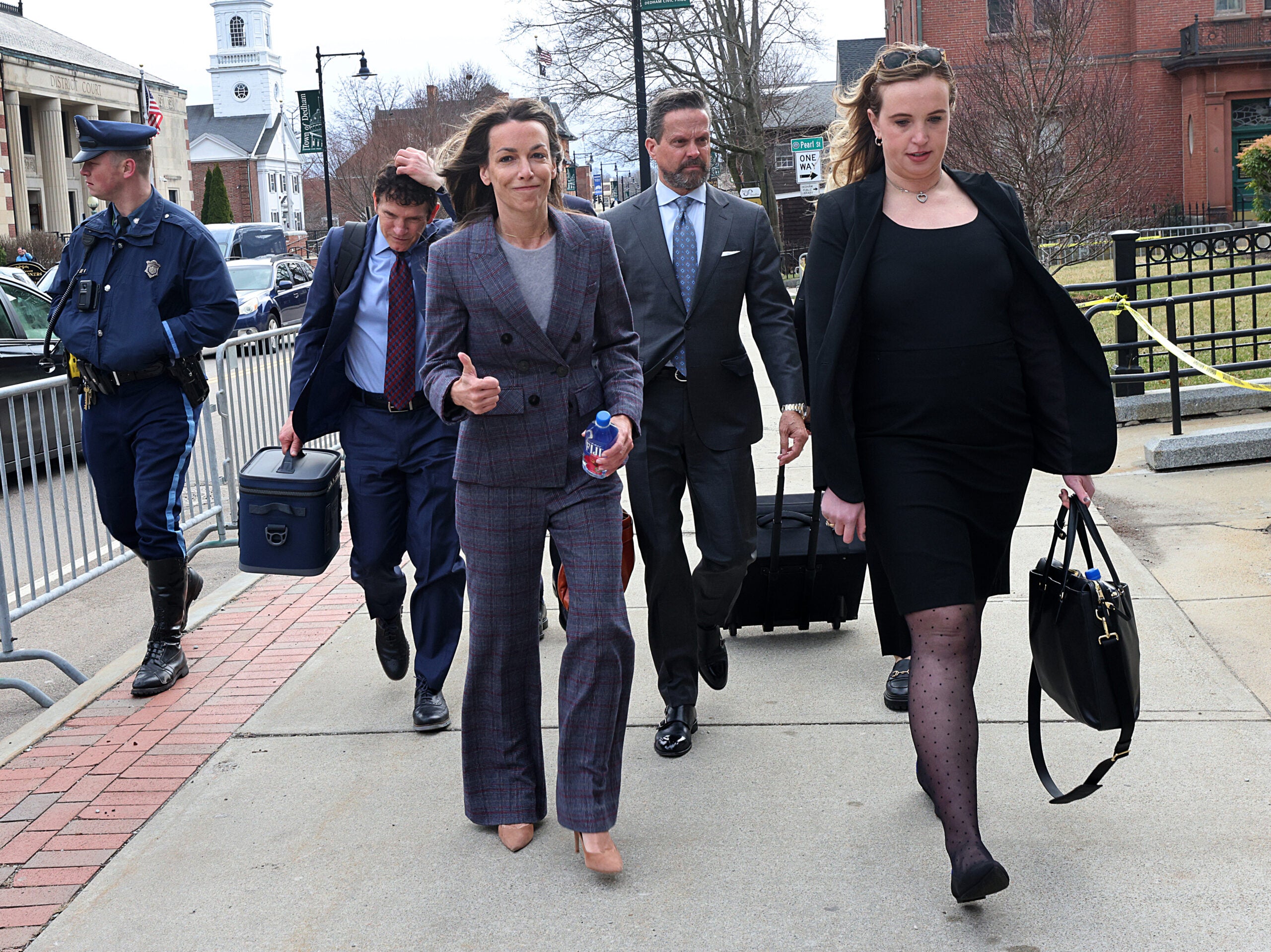
Miner estimated jury selection for Read’s retrial could take a couple of weeks, given the public interest in the case and the lengthy time commitment (Cannone estimated the trial may last six to eight weeks once a jury is seated).
“The more serious the crime, the harder it is to get a jury,” Miner explained.
But Bassil was confident the jury impanelment process will prove successful in the end.
“I can’t think of a case where they’ve sort of thrown in the towel saying, ‘You know, we can’t get a fair jury,’” she said, adding, “Look at it this way: In New York, where they get a lot more information about jurors, they were able to get a jury for the Trump criminal trial.”
In the end, she said, “I think it’s not really a question of whether people know information about the case; it’s really whether they have an opinion or whether they’re willing to be open-minded.”

Sign up for our Extra newsletter to get updates from the retrial and other breaking news alerts delivered to your inbox.





To comment, please create a screen name in your profile
To comment, please verify your email address
Conversation
This discussion has ended. Please join elsewhere on Boston.com