

Sign up for the Today newsletter
Get everything you need to know to start your day, delivered right to your inbox every morning.
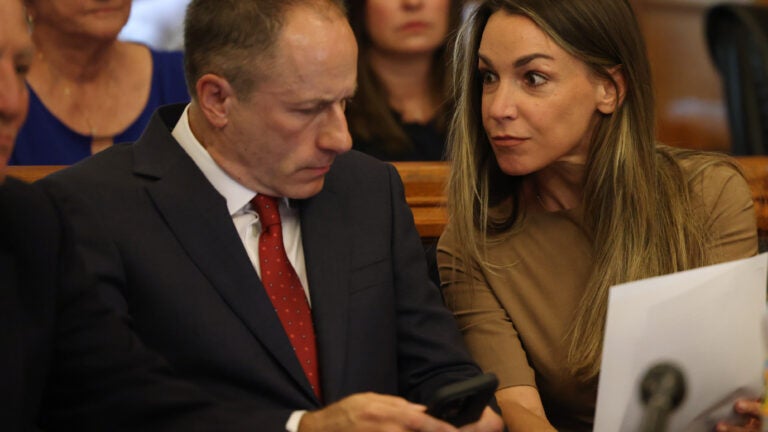
With jury selection just a week out, the judge overseeing Karen Read’s murder case has yet to decide whether Read can try to pin her boyfriend’s death on someone else when her case goes to trial.
Much of Tuesday’s hearing was dedicated to prosecutors’ motion to block the defense from suggesting someone other than Read was responsible for killing Boston Police Officer John O’Keefe on Jan. 29, 2022. Read is slated for retrial next month after her first trial ended with a hung jury last summer.
“We should not engage in a process where witnesses’ … character is attacked when it has no relationship whatsoever to this crime,” special prosecutor Hank Brennan argued.
While prosecutors allege Read intentionally backed her SUV into O’Keefe after a night of bar-hopping in Canton, her lawyers contend she was framed in a law enforcement coverup. They’ve suggested O’Keefe was attacked after walking into an afterparty hosted by a fellow Boston officer, Brian Albert.
Albert was one of three men defense attorney David Yannetti named in court last week when pressed to identify alleged third-party culprits. Witnesses Brian Higgins and Colin Albert — Brian Albert’s nephew — were the two others; all three men were present at 34 Fairview Road shortly after midnight on Jan. 29, 2022, though they denied seeing O’Keefe enter Brian Albert’s home.
Brennan criticized the defense’s evidence as “feeble,” arguing the three men had neither motive nor opportunity to kill O’Keefe. He also disputed the defense team’s claims of animosity between O’Keefe and his former neighbor, Colin Albert.
“There is no evidence that’s going to be admitted at this trial that shows there was a feud between Colin Albert and John O’Keefe,” he said. “There is no evidence that there was any hostility between Colin Albert and John O’Keefe. … There is no evidence of any motive, of any intention, or of any opportunity whatsoever.”
Yannetti countered that the defense has a “good faith basis” to claim Colin Albert once angered O’Keefe by throwing beer cans into his bushes — an allegation Brennan disputed.
Brennan also accused Read’s attorneys of attempting “character assassination” on Brian Albert, whom he described as a decorated police officer. That Albert is physically fit and trained in boxing doesn’t make him a third-party culprit, Brennan argued.
Yannetti pushed back, arguing the defense has “ample” evidence to support its claims.
“Brian Albert is a violent man,” he alleged. “He was not only a boxer who punched people in the ring, he was also a violent drunk who sucker punched other police officers. Those police officers are on our witness list.”
And on the night in question, Yannetti alleged, Albert was “liquored up.”
The former sergeant detective “had cause” to back up his friend Higgins, who had exchanged flirty texts with Read before she “ghosted” him, Yannetti suggested. Brennan, meanwhile, contended Higgins’s messages are “virtually all kind toward John O’Keefe.”
“It’s uncomfortable,” Brennan said of Higgins’s text exchange with Read. “It’s an awkward situation because both of them appear to be deceptive as it relates to John O’Keefe, but there is no vengeance, no anger.”
Yannetti argued Higgins’s subsequent actions point to consciousness of guilt, including his early-morning trip to the Canton Police Department, where he had a satellite office for his duties as an agent with the Bureau of Alcohol, Tobacco, Firearms, and Explosives. Higgins previously testified he’d gone to the station after leaving 34 Fairview Road on the 29th to move his work vehicles so snowplows could maneuver around them.
Yannetti further noted phone records indicate Higgins missed a call from Brian Albert early on the 29th and called him back soon after, though both men testified the calls were inadvertent, or “butt dials.”
“This notion that these two men are somehow able to butt-dial and butt-answer each other is just ridiculous,” Yannetti argued. He also questioned Higgins’s motive for trashing his cellphone and SIM card on a military base on Cape Cod months after O’Keefe died.
Brennan argued investigators ultimately had no reason to suspect another possible culprit in the early days of the investigation, as they purportedly found no red flags when they visited 34 Fairview Road.
“Now, they can be criticized for plastic cups or leaf blowers,” he said, alluding to investigators’ eyebrow-raising evidence collection methods. “But that’s different.”
Yannetti argued that questioning the adequacy of a police investigation is a “bedrock constitutional right.”
Authorities “were perfectly willing to jump to conclusions about Ms. Read, someone outside their law enforcement circle, on the wrong side of the blue wall, but very much unwilling to be curious about whether someone within their circle had the motive, opportunity, and means to hurt John O’Keefe,” he said.
Cannone did not immediately rule on the third-party culprit motion Tuesday. She did, however, summarily reject prosecutors’ request for messages Read exchanged with Yannetti in the early days of the investigation.
Brennan had argued Read partially waived her attorney-client privilege with Yannetti by speaking publicly about their conversations. He sought access to messages the pair sent each other in the days after Read allegedly killed O’Keefe.
Read confirmed last week in Investigation Discovery’s docuseries, “A Body in the Snow,” that she questioned her potential culpability for about three days after O’Keefe’s death, including in her early conversations with Yannetti.
“There can be no doubt that there was an intention to pierce … that attorney-client privilege for whatever benefit the defense thought it gained them,” Brennan argued.
He further suggested Cannone be the first to review the text messages and emails from Read’s phone to decide which communications might be fair play. The judge declined to do so, denying Brennan’s motion before defense attorney Robert Alessi had even finished his full-throated opposition.
“I don’t even think it’s appropriate for my eyes,” she said of the communications.
Jury selection in Read’s retrial is set to begin Tuesday, April 1, and Cannone said she expects it will take “a very long time” to impanel a jury.
“I think that we all know many, if not most — perhaps all — potential jurors have heard about this case,” the judge acknowledged.
Following Tuesday’s hearing, Cannone denied Read’s motion to dismiss the case, setting the stage for the retrial to continue as planned. The “extraordinary governmental misconduct” Read alleged does not “rise to a level that would justify the most draconian sanction of dismissal,” Cannone concluded in her decision.
Livestream via NBC10 Boston.

Get everything you need to know to start your day, delivered right to your inbox every morning.





To comment, please create a screen name in your profile
To comment, please verify your email address
Conversation
This discussion has ended. Please join elsewhere on Boston.com