
Sign up for the Today newsletter
Get everything you need to know to start your day, delivered right to your inbox every morning.

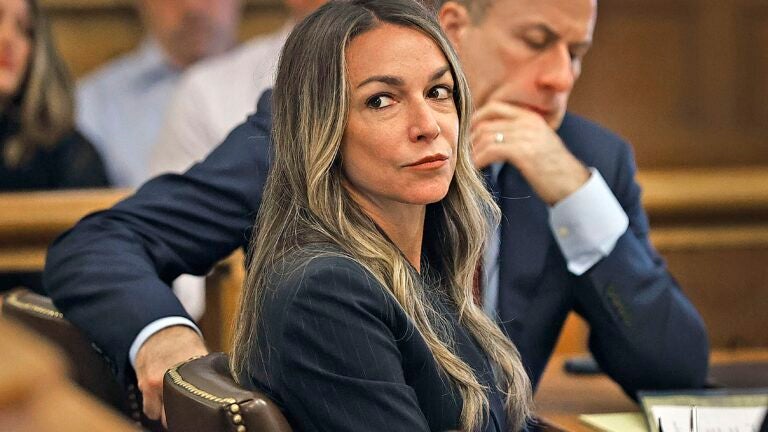
The state’s highest court weighed in on Karen Read’s case Tuesday, refusing to drop two of her charges after defense attorneys argued jurors in her first trial unofficially agreed to acquit her of murder and leaving the scene of a fatal accident in the death of her boyfriend, John O’Keefe.
“The jury clearly stated during deliberations that they had not reached a unanimous verdict on any of the charges and could not do so,” Justice Serge Georges Jr. wrote in the Supreme Judicial Court’s opinion. “Only after being discharged did some individual jurors communicate a different supposed outcome, contradicting their prior notes.”
He added: “Such posttrial disclosures cannot retroactively alter the trial’s outcome — either to acquit or to convict.”
Responding to the decision, defense attorney Martin G. Weinberg suggested Read’s team may take their case to federal court.
“While we have great respect for the Commonwealth’s highest court, Double Jeopardy is a federal constitutional right,” Weinberg said in a statement. “We are strongly considering whether to seek federal habeas relief from what we continue to contend are violations of Ms. Read’s federally guaranteed constitutional rights.”
The Norfolk Country District Attorney’s Office declined to comment.
Prosecutors allege that after a night of bar-hopping, 44-year-old Read backed her SUV into O’Keefe, a Boston police officer, and left him to die outside another officer’s home in Canton on Jan. 29, 2022. Read’s lawyers have alleged a law enforcement coverup, suggesting instead that O’Keefe entered the home for an afterparty and was beaten, attacked by the family’s dog, and ultimately dumped outside.
Read has pleaded not guilty to second-degree murder, manslaughter while operating a motor vehicle under the influence, and leaving the scene of a fatal accident. Her first trial ended with a hung jury last July, and she’s due to stand trial again in April.
However, Read’s lawyers said they began hearing from jurors the day after the mistrial, “indicating in no uncertain terms that the jury had a firm and unwavering 12-0 agreement that Ms. Read is not guilty of two of the three charges against her, including the charge of murder in the second degree.”
As one of the jurors allegedly told defense attorney David Yannetti after the mistrial, “No one thought she hit him on purpose or even knew that she had hit him.”
While the defense argued double jeopardy prohibits prosecutors from retrying Read on those counts, the judge overseeing the case wasn’t convinced and denied their motion to dismiss the charges. Read’s team argued their appeal before the SJC in November, also pushing for a post-trial hearing to confirm jurors’ reports.
Prosecutors, meanwhile, argued the lack of a public verdict meant Read was not acquitted on any charge. The SJC concurred, asserting Judge Beverly Cannone was correct in denying Read’s motion to dismiss and her lawyers’ request for a post-trial inquiry.
“The jury deliberated for five days, sending progressively insistent notes to the judge about their inability to reach a unanimous verdict,” Georges noted in the court’s opinion.
While Read’s team argued Cannone should have asked jurors whether they had reached agreement on any of the charges, the SJC found the jury’s notes offered “no indication that a partial verdict was imminent or possible” and instead suggested “complete deadlock.”
“Further still, these notes indicated that additional inquiry into the jury’s deliberations risked producing a coerced verdict,” Georges wrote. “Judges must carefully avoid actions that might pressure jurors into compromising their genuine views of the evidence.”
Had the jury found Read guilty in the event Cannone took it upon herself to ask about partial verdicts, “there is no question that this defendant would be making a strenuous — and potentially meritorious — argument that that guilty verdict was the product of coercive intrusion into the function of the jury,” Georges wrote, quoting from a 2002 Massachusetts case.
Further, he said, allowing a post-trial inquiry into the jury’s private agreements would go against Massachusetts case law, which prohibits inquiries into the substance of deliberations.
“The jury chose to report a deadlock, not a verdict, and no basis exists for further investigation into private discussions or subjective beliefs they declined to announce publicly in open court,” Georges wrote.
Read’s retrial is scheduled to begin April 1. In an interview with Boston 25 News reporter Ted Daniel that aired Sunday, she touched on the possibility her second trial could yield a guilty verdict.
“I think about it every day, about prison time, and it doesn’t frighten me the way it did three years ago,” she said.
Daniel asked Read whether she’d rather face Assistant District Attorney Adam Lally, who prosecuted her during her first trial, or special prosecutor Hank Brennan, who’s leading the retrial effort.
“I don’t care who I face,” Read replied. “I have the truth. I have the best attorneys. Do your worst.”

Get everything you need to know to start your day, delivered right to your inbox every morning.




To comment, please create a screen name in your profile
To comment, please verify your email address
Conversation
This discussion has ended. Please join elsewhere on Boston.com