
Sign up for the Today newsletter
Get everything you need to know to start your day, delivered right to your inbox every morning.
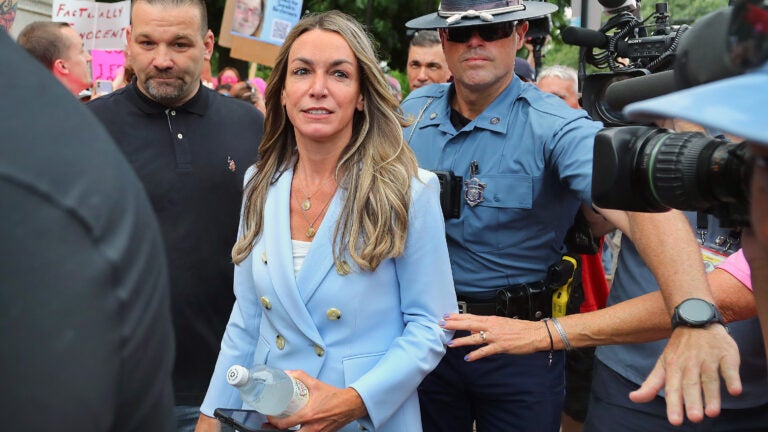
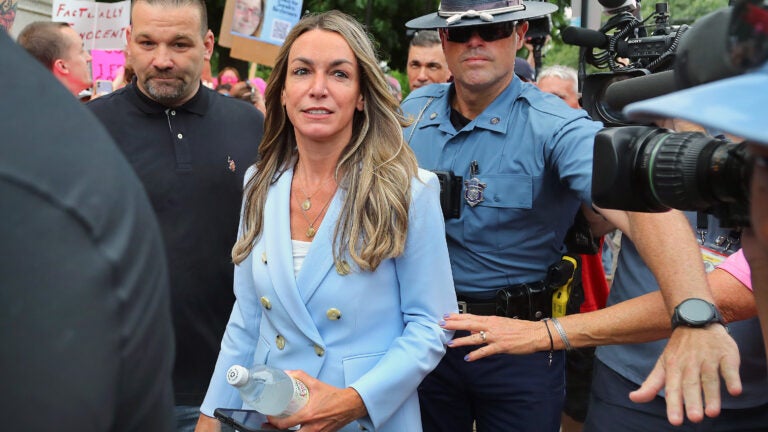
The judge presiding over Karen Read’s murder case has denied a defense motion to dismiss two of the three charges Read is facing in the death of Boston Police Officer John O’Keefe, including second-degree murder.
Citing information they received from several jurors following Read’s first trial, lawyers for the Mansfield woman said the purportedly deadlocked jury internally agreed she was not guilty of murder and leaving the scene of a fatal accident. The defense further asserted that jurors only reached an impasse on the count of manslaughter while operating a motor vehicle under the influence, which carried lesser included offenses of involuntary manslaughter and motor vehicle homicide.
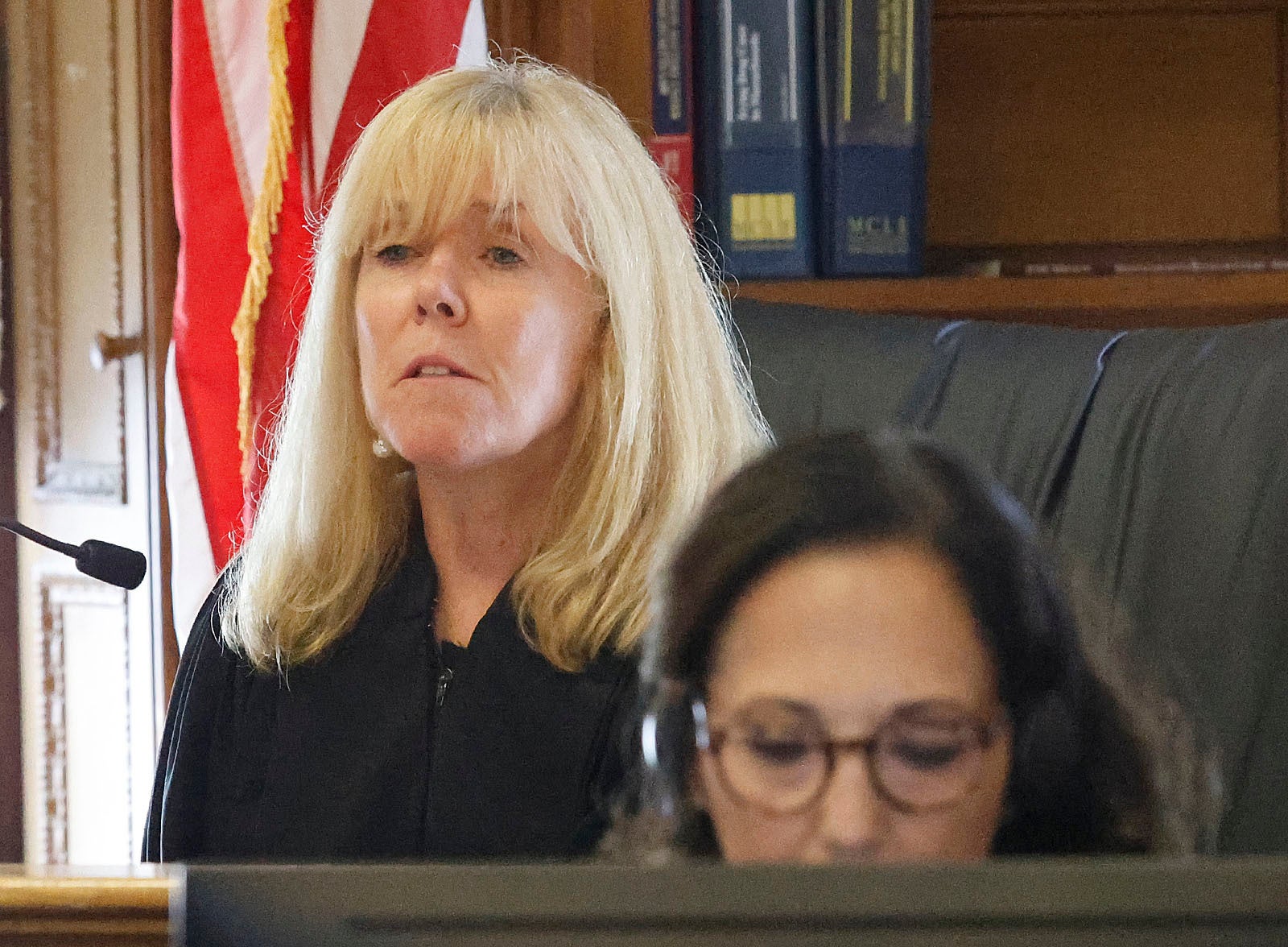
“Don’t make Ms. Read be the first person in the history of the commonwealth to face re-prosecution for murder by the same prosecutor’s office that tried her once and failed to persuade the jury she was guilty,” defense attorney Martin Weinberg implored Judge Beverly Cannone during an Aug. 9 hearing.
Read is accused of drunkenly and intentionally backing her SUV into O’Keefe, her boyfriend of two years, after a night of bar-hopping in Canton in January 2022. The high-profile case resulted in a mistrial on July 1, and Read’s retrial is slated to begin in January.
While Read’s lawyers argued that retrying her on charges of second-degree murder and leaving the scene of a fatal accident would violate the rules of double jeopardy, Cannone disagreed in a memorandum filed Friday in Norfolk Superior Court.
“This Court recognizes that the bar on retrials following acquittals is ‘[p]erhaps the most fundamental rule in the history of double jeopardy jurisprudence,’” Cannone wrote, citing legal precedent. “However, where there was no acquittal on any of the charges in the defendant’s first trial, there is no risk of subjecting the defendant to double jeopardy by retrial on all charges. Therefore, the Defendant’s Motion to Dismiss is DENIED.”
Cannone pointed specifically to statements defense attorney David Yannetti made on June 28, after the jury foreperson sent a note stating that jurors were “unable to reach a unanimous verdict” despite an “exhaustive review of the evidence.”
While Assistant District Attorney Adam Lally argued in favor of continued deliberations, Yannetti asserted that jurors had indicated “that they’ve exhausted all manner of compromise, all manner of persuasion, and they’re at an impasse.”
When the jury came back on July 1 to say that consensus was still “unattainable,” Yannetti again argued in favor of giving the Tuey-Rodriguez instruction in a last-ditch effort to break the deadlock. In arguing for the so-called “dynamite” charge, the defense was “presumably aware” that a mistrial was a likely outcome if the jury remained deadlocked, Cannone asserted.
“Nevertheless, in a remarkable turnaround, defense counsel now argues that the result they twice advocated for was ‘sudden’ and ‘unexpected,’” she wrote.
According to Cannone, Read’s lawyers had “multiple opportunities to voice an objection if they in fact had one” and could have asked to poll the jury immediately after the mistrial declaration.
“The Court finds it hard to believe that when counsel heard that the jury was at an impasse for a third time and a mistrial was inevitable, at perhaps the most crucial point in the trial, counsel would sit silently if they did not consent to a mistrial,” she wrote.
Read’s lawyers also suggested that questioning deadlocked jurors is common or best practice for trial judges. However, Cannone argued that doing so could impede a defendant’s strategic decision to either request polling or leave the final tally shrouded in mystery.
“The defendant’s argument is based on hindsight,” she wrote. “No one other than the jury knew that questioning the jurors as to their deadlock would have yielded a favorable outcome for the defendant.”
Both the prosecution and defense said they received information from purported jurors indicating that the deadlock only applied to the OUI manslaughter charge and its lesser included offenses. Still, the jury’s alleged consensus on some of the charges isn’t enough to trigger double jeopardy, Cannone ruled.
“Because there was no open and public verdict affirmed in open court rendered in this case, the defendant was not acquitted of any of the charges,” she wrote. “The only unanimous act of the jury here was their representation to the Court that they were ‘at an impasse’ and unable to agree on whether the Commonwealth had established beyond a reasonable doubt the ‘elements of the charges.’”
She also agreed with prosecutors that bringing the jurors back to court for a post-trial inquiry would seek information about the substance of jury deliberations, in violation of Massachusetts case law.
In a statement, the Norfolk County District Attorney’s Office said prosecutors “believe that the judge’s decision is consistent with almost 200 years of case law. We are moving forward to trying this case January 27.”
Weinberg, meanwhile, vowed to keep up the fight on Read’s behalf.
“We respectfully but strongly disagree with the cornerstones of today’s rulings and fully intend a vigorous appeal to assert and uphold Ms. Read’s rights founded on the foundation of the federal constitution’s Double Jeopardy Clause,” he said in a statement.

Get everything you need to know to start your day, delivered right to your inbox every morning.




To comment, please create a screen name in your profile
To comment, please verify your email address
Conversation
This discussion has ended. Please join elsewhere on Boston.com