
Newsletter Signup
Stay up to date on all the latest news from Boston.com

On the stand Tuesday (voir dire, jury not present):
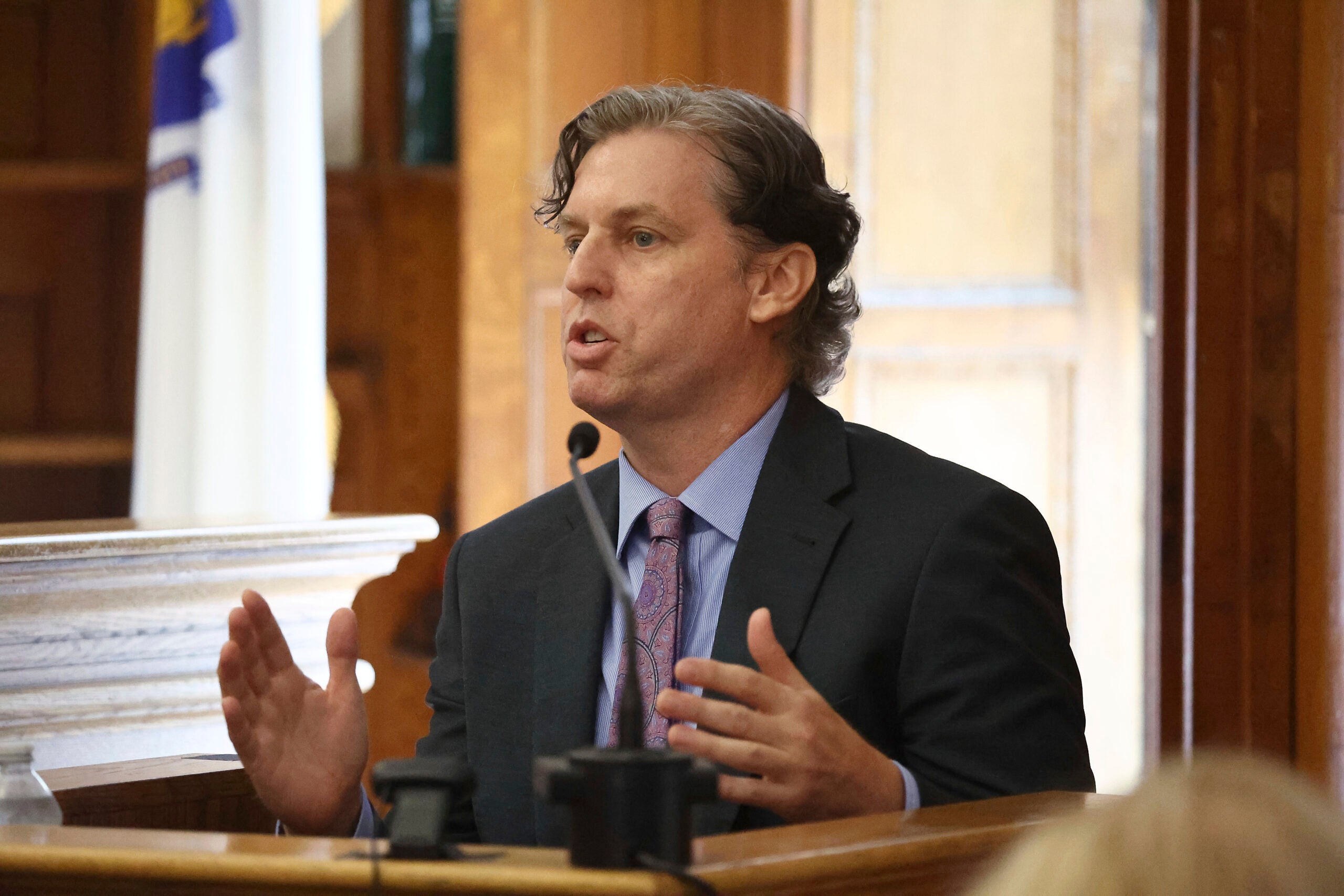
Andrew Rentschler, a biomechanical engineer and accident reconstructionist, said he was tasked with looking into whether John O’Keefe’s injuries resulted from a collision with Karen Read’s Lexus SUV.
Rentschler, vice president and director of biomechanics for the Midwest division of ARCCA Inc., explained that he looks at the body’s response to acceleration and forces to determine how an injury occurred.
“An injury to the human body is just an engineering problem,” he said.
Rentschler is a member of the American Society of Mechanical Engineers and the Society of Automotive Engineers. He also holds both a master’s degree and a doctorate in bioengineering and biomechanics from the University of Pittsburgh.
He said he’s performed a number of tests using crash test dummies and has been involved in studies examining pedestrian collisions.
“A lot of times, we’ll utilize the crash test dummy, where we’ll set it up and we’ll actually have it struck by different vehicles or different objects to look at the response of the body,” Rentschler said.
He added: “It really all depends on how the person’s positioned and the amount of force and speed involved in that type of an impact.”
In Read’s case, he said he was tasked with seeing “if I could determine what happened, how the injuries occurred, and the events leading up to and during that process.”
ARCCA’s report was issued Feb. 12, 2024, and Rentschler confirmed part of his analysis concerned whether the injuries to the back of O’Keefe’s head could have been caused by contact from a vehicle.
He later clarified that he was asked to see if it was possible to determine how O’Keefe’s injuries occurred, “and part of that was to determine whether the injuries — the head injury and the arm injuries — resulted from contact with the Lexus in this case.”
After Rentschler stepped down, Assistant District Attorney Adam Lally said he took issue with the crash reconstruction experts testifying to one of their four conclusions. He questioned whether Rentschler or his colleague, Daniel Wolfe, would be qualified to do so, adding, “That’s more of an area of forensic pathology.”
Defense attorney Alan Jackson read the offending conclusion aloud: “There is currently insufficient evidence to determine the cause of Mr. O’Keefe’s skull and brain injuries or the circumstances surrounding the event.”
He argued in favor of its inclusion, adding, “That is well within the scope of their expertise, obviously.”
Judge Beverly Cannone said she will make a decision on the proposed testimony Thursday. Read’s trial is not in session Wednesday due to the Juneteenth holiday.
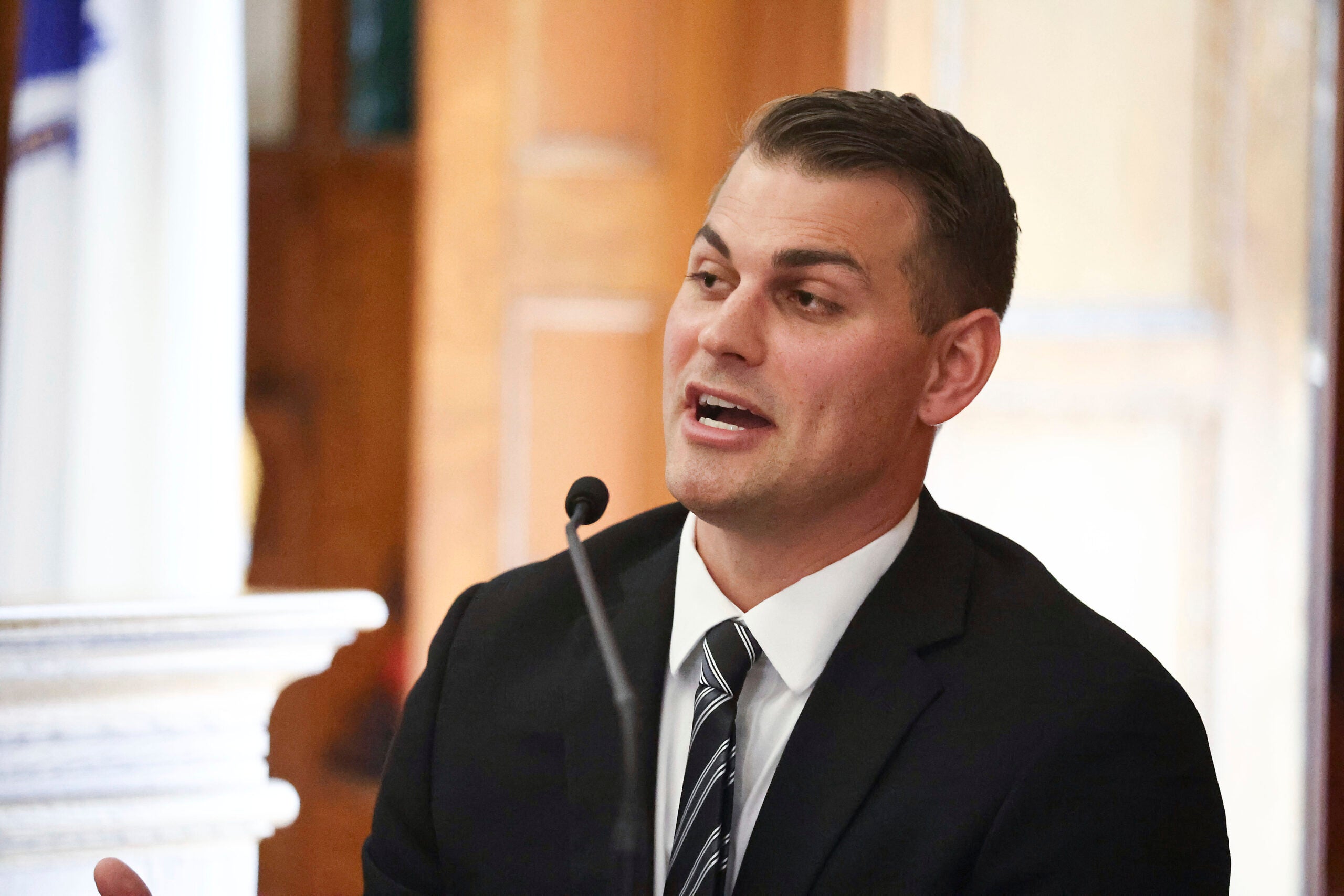
Daniel Wolfe, director of accident reconstruction at ARCCA Inc., confirmed the private company was tasked with examining the damage on Karen Read’s Lexus SUV and John O’Keefe’s injuries to determine whether both were consistent with a pedestrian collision.
Wolfe said he does a lot of “nighttime visibility work” and is accredited as a traffic accident reconstructionist by the Accreditation Commission for Traffic Accident Reconstruction. He’s also a member of several trade organizations, including the Society of Automotive Engineers and the National Association of Professional Accident Reconstruction Specialists.
ARCCA, he said, was not hired by Read’s defense, but by a third-party agency. Prosecutors have previously noted that the defense plans to use expert opinion material from the U.S. Attorney’s Office investigation into Read’s case.
Judge Beverly Cannone asked Wolfe what the company was specifically asked to do.
“The agency that retained us gave us a selected quantity of file material related to this case and essentially left it as an open-ended question: Ultimately, was the evidence consistent with a pedestrian interaction between Mr. John O’Keefe and the Lexus?” he said.
Cannone then asked who selected the information that was handed over to ARCCA.
“As far as I’m concerned, it would be the Department of Justice and the FBI,” Wolfe replied.
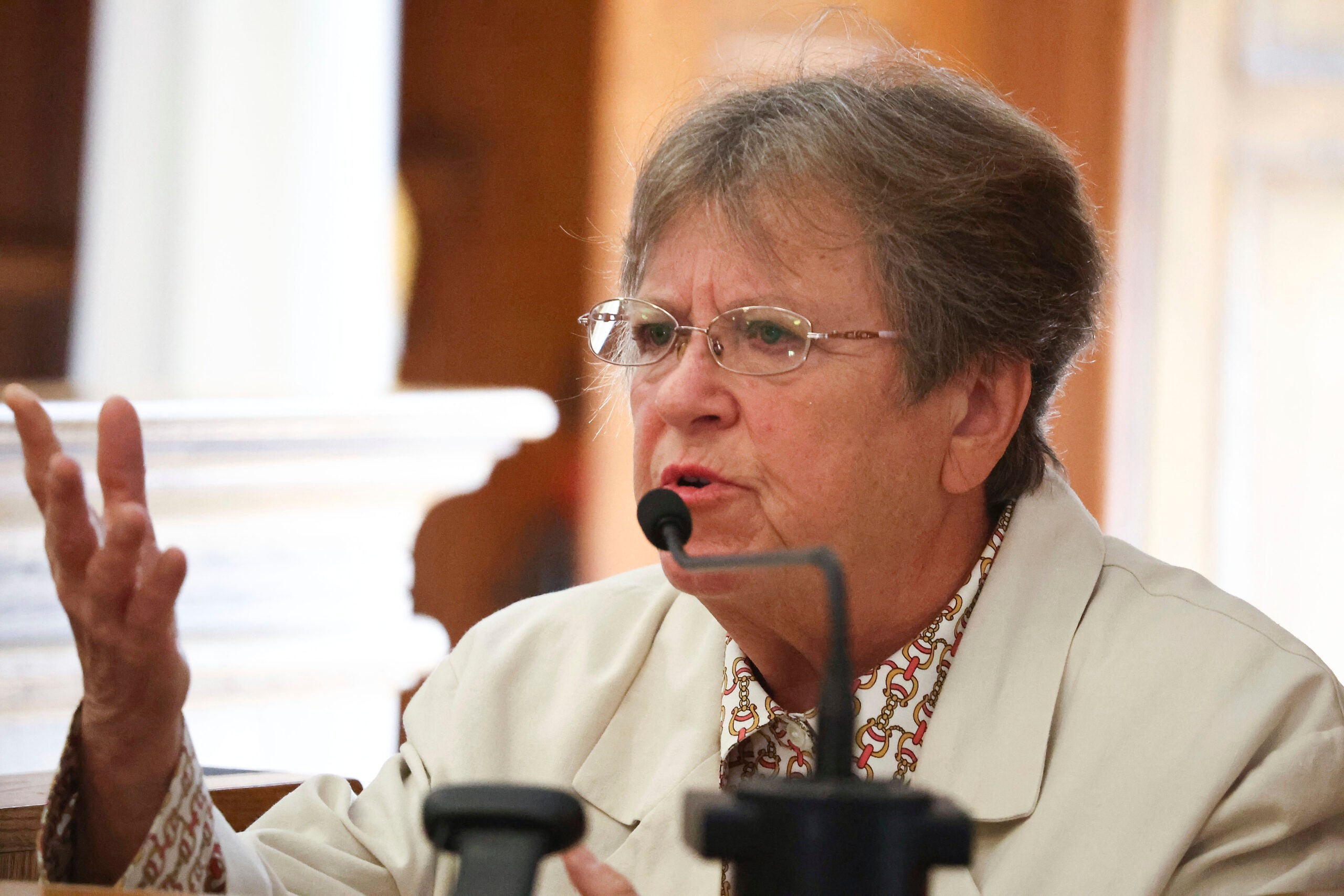
Defense expert Dr. Marie Russell, a retired emergency physician and forensic pathologist, said she has a “high degree of medical certainty” that the abrasions on John O’Keefe’s arm were the result of animal bites or scratches.
Prosecutors and defense attorneys clashed over whether Russell should be permitted to testify in Karen Read’s trial, as the prosecution only received notice of Russell’s expected testimony in late May. Judge Beverly Cannone has not yet determined whether Russell will be allowed to take the stand.
During Tuesday’s voir dire, Russell explained she first heard of Read’s case in mid-May after coming across an article from The Boston Globe. She said she connected with Read’s team through someone at the Los Angeles County District Attorney’s Office, where defense attorney Alan Jackson once worked as a prosecutor.
Questioned without the jury present, Russell described her early career as a police officer in Malden and her training in hit-and-run collisions. She said she later worked on cases involving animal attacks at the Los Angeles County coroner’s office and authored or co-authored several peer-reviewed articles on law enforcement dog bites.
After reviewing documents from Read’s case — including hospital records, autopsy photos and reports, and the medical examiner’s grand jury testimony — Russell said she formed some opinions about the injuries on O’Keefe’s right arm.
“They are consistent with a large dog attack,” Russell opined. “There’s a combination of both what I consider bite wounds and scratch wounds on the arm.”
Jackson displayed photos of O’Keefe’s wounded arm, and Russell pointed to marks she believed were caused by animal teeth or claws. She further explained that she ruled out a car crash as the cause “very quickly,” as O’Keefe’s major injuries were limited to his head.
Responding to a later question from Assistant District Attorney Adam Lally, Russell confirmed her training in hit-and-run crashes was “relatively rudimentary,” as Lally put it. She also confirmed she is board certified in emergency medicine, but not in any form of pathology.
Cannone pointed to records indicating Russell received documents concerning the bite history of a dog named “Chloe” — a German shepherd mix owned by the Albert family, who also owned the home where O’Keefe’s body was found. According to the judge, Russell also received DNA test results from the University of California, Davis Veterinary Genetics Laboratory Forensic Unit, which found no signs of canine DNA on swabs taken from O’Keefe’s shirt.
Russell said she didn’t recall seeing the documents in question.
In his quest to bar Russell from testifying, Lally cited both the late disclosure and Russell’s decision to approach the defense several weeks into the trial. Cannone and Jackson had a tense exchange over whether Jackson misrepresented how Russell came forward to offer her expertise.
“There’s not that many … doctors who have published in the area of dog bites specifically,” Jackson noted, adding, “I understand that it was well into the trial, but that’s not a fault of ours.”
Lally suggested that if Russell were allowed to testify, her testimony should be limited to her opinions on what caused the injuries to O’Keefe’s right arm.
Judge Beverly Cannone agreed with prosecutors that Karen Read’s lawyers violated their reciprocal discovery obligations regarding expert witness Dr. Marie Russell, a retired physician and forensic pathologist.
Cannone said Tuesday’s voir dire would aid in deciding an appropriate remedy for the violation. Prosecutors are pushing to exclude Russell’s testimony altogether.
Defense attorney Alan Jackson argued that the defense has “provided the … prosecution everything that we need to provide to them in terms of disclosure.”
He also noted that Read’s team continued to receive additional discovery from prosecutors after the trial began, pointing specifically to a recent interview Massachusetts State Police conducted with witness Jennifer McCabe. He accused the prosecution of holding onto a report regarding the interview until after McCabe testified.
“I’ve done the damage that needed to be done on Jennifer McCabe. I don’t need to call her back,” Jackson said. “The point is that what’s good for the goose is good for the gander.”
Assistant District Attorney Adam Lally asserted that McCabe reviewed some video and answered a single question during the interview. He said he didn’t receive the subsequent report himself until after McCabe testified, at which point he turned it over to the defense.
Livestream via NBC10 Boston.
Jurors in the Karen Read murder trial get a day off Tuesday, but lawyers on both sides are back in court for voir dire questioning of several defense experts.
Prosecutors last week accused Read’s lawyers of dealing in bad faith, alleging the defense’s delayed disclosure of expert witness materials was “intended to ambush the commonwealth and conduct a trial by surprise.” During a hearing without the jury present, Assistant District Attorney Laura McLaughlin argued that the defense was not exempt from Rule 14 pretrial discovery requirements solely because it chose to rely on material from the U.S. Attorney’s Office investigation into Read’s case.
Judge Beverly Cannone acknowledged the defense had not complied with its discovery obligations, though defense attorney David Yannetti argued Read’s camp was limited by the constraints of the secretive federal probe.
Prosecutors say Read, 44, intentionally backed her SUV into Boston Police Officer John O’Keefe, her boyfriend of two years, while dropping him off at a house party in Canton on Jan. 29, 2022. They allege Read was driving drunk after a night out and left O’Keefe to die in a blizzard.
However, lawyers for the Mansfield woman have suggested O’Keefe’s injuries were actually the result of a beating he received after entering the party at 34 Fairview Road. The homeowner at the time was a fellow Boston police officer, and the defense has alleged a widespread coverup involving witnesses and law enforcement.
As they make their case, prosecutors have pointed to Read’s increasingly fraught relationship with O’Keefe as a possible motive. Jurors on Monday heard a series of heated messages the couple exchanged in the hours leading up to O’Keefe’s death.
“Things haven’t been great between us for awhile,” O’Keefe wrote at one point, telling Read he was “sick of always arguing and fighting.”
In texts of her own, Read accused O’Keefe of “setting [her] up to fail,” questioned whether he’d developed feelings for someone else, and described the couple’s dynamic with O’Keefe’s niece and nephew — who lived with their uncle — as “toxic.”
Monday’s court session left off with testimony from Massachusetts State Police Trooper Nicholas Guarino, who spoke about analyzing digital data from several sources, including cellphones belonging to Read, O’Keefe, and witness Jennifer McCabe.
Despite Tuesday’s voir dire and Wednesday’s Juneteenth holiday, Read’s trial appears to be nearing a close. Her attorneys told WBZ they believe the prosecution will wrap up its case this week, leaving the defense free to start its arguments as early as Friday. The defense anticipates about four days of witness testimony, WBZ reported.
Cannone has said jurors can expect to begin deliberations sometime in the last week of June.


Stay up to date on all the latest news from Boston.com


To comment, please create a screen name in your profile
To comment, please verify your email address
Conversation
This discussion has ended. Please join elsewhere on Boston.com