
Newsletter Signup
Stay up to date on all the latest news from Boston.com
On the stand Tuesday:
Tuesday’s court session ended at about 4 p.m. after Jutras’s testimony concluded. The trial is off for the rest of this week; it’ll resume next Monday, June 3, with a full day scheduled.
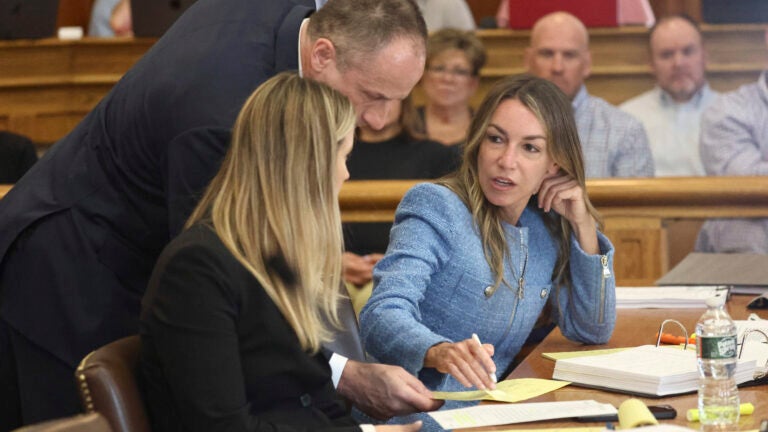
Louis Jutras, Canton’s information systems manager, testified about providing municipal surveillance footage to Massachusetts State Police during the agency’s investigation into John O’Keefe’s death.
“We had pulled some footage from one site in Pequitside Farm that was put together, and then after that, there was a request for anything facing Washington Street, either from Town Hall or from the library,” Jutras recalled.
He said investigators were interested in two different time periods on Jan. 29, 2022: from midnight to 1 a.m., and from 5 a.m. to 6 a.m. Jutras confirmed that when he compiled the requested video, the date and timestamps were accurate. He testified that no one other than him would be able to remove footage from municipal cameras.
On cross-examination, defense attorney David Yannetti confirmed that Jutras did not sit and watch all the requested video from start to finish.
“And at the time that you provided the video footage to the State Police, did you know whether or not there was any missing footage within those two hours?” Yannetti asked.
“No,” Jutras replied. “Because again, I did not play every single second of the video.” He confirmed that he didn’t cut out any of the video footage from the two hours in question.
Jutras also testified about learning on Feb. 1, 2022, that GPS technology on the town’s Department of Public Works trucks hadn’t been working during a snowstorm several days prior.
“It happens several times throughout the year for various reasons,” he said.
Taking the stand Tuesday, Canton Superintendent of Public Works Michael Trotta identified a “plow plan” for the snowstorm that spanned Jan. 28 and 29, 2022.
He testified that Fairview Road — where John O’Keefe was found unresponsive on a snowy front lawn the morning of the 29th — was included in plow route No. 11. Trotta said plow driver Brian Loughran was assigned to that route.
Answering questions from defense attorney David Yannetti, Trotta confirmed he spoke with Massachusetts State Police Trooper Michael Proctor, the lead investigator on the case, over the phone in early February, 2022.
He said he may have identified Loughran as the plow driver assigned to Fairview Road the day O’Keefe died, but “I believe I referred him (Proctor) to the operations manager to double check who was on plowing that day.”
A retrograde analysis put Karen Read’s blood alcohol content between 0.135% and 0.292% at 12:45 a.m. on Jan. 29, 2022, according to Nicholas Roberts, who performed the “serum conversion” when he worked in the Massachusetts State Police Crime Lab Toxicology Unit.
Roberts explained that his conversion relied on Read’s blood serum test from Good Samaritan Medical Center, which registered her blood alcohol level at 93 mg/dl mid-morning on Jan. 29, 2022.
“Serum is essentially the liquid portion of blood,” Roberts said. “What a hospital does, they centrifuge it or spin it very fast in order to get the red blood cells, the white blood cells, and all kinds of the heavier materials out of that blood. And what’s left is the serum. So they use that to test their alcohol.”
A serum conversion essentially takes the serum test result and converts it to what the level would be for whole blood, Roberts explained. He added that forensic scientists usually give a range of possible blood alcohol levels, because a number of factors can affect the conversion — a person’s age, sex, and diet, for example.
“And in this case, obviously, you didn’t conduct any of the testing?” defense attorney Elizabeth Little asked on cross-examination.
“Correct,” Roberts replied.
“You’re just assuming the accuracy of a single test that was performed by a hospital,” Little continued.
“Yeah,” Roberts said.
“And so if the clinical results are invalid, then your extrapolation is going to be invalid,” Little asked.
“Yes,” Roberts answered.
Dr. Garrey Faller, a pathologist and laboratory medical director at Good Samaritan Medical Center, walked jurors through the testing protocols and policies in effect when Karen Read had her blood alcohol level tested at the hospital on Jan. 29, 2022.
“Ultimately, my job is to help ensure that any laboratory report coming from Good Samaritan is accurate,” Faller said.
He explained that the hospital’s policy is to avoid using an alcohol swab to clean the area before drawing blood for a blood alcohol test to avoid potentially altering the results. Faller testified that Read’s blood alcohol level registered at 93 mg/dl the morning of Jan. 29, 2022.
On cross-examination, defense attorney Elizabeth Little asked whether other factors in a patient’s blood could result in higher alcohol readings in a blood serum test.
“There are some factors that can lead to falsely elevated or falsely lowered serum alcohol,” Faller acknowledged, though he noted that laboratory testing machines can detect and flag possible interferences.
“Our machines are very sophisticated now,” he said.
On redirect, prosecutor Adam Lally asked Faller if he saw anything in Read’s medical chart that would cause an interference and lead to elevated blood alcohol levels.
“I didn’t see anything, no,” Faller replied.
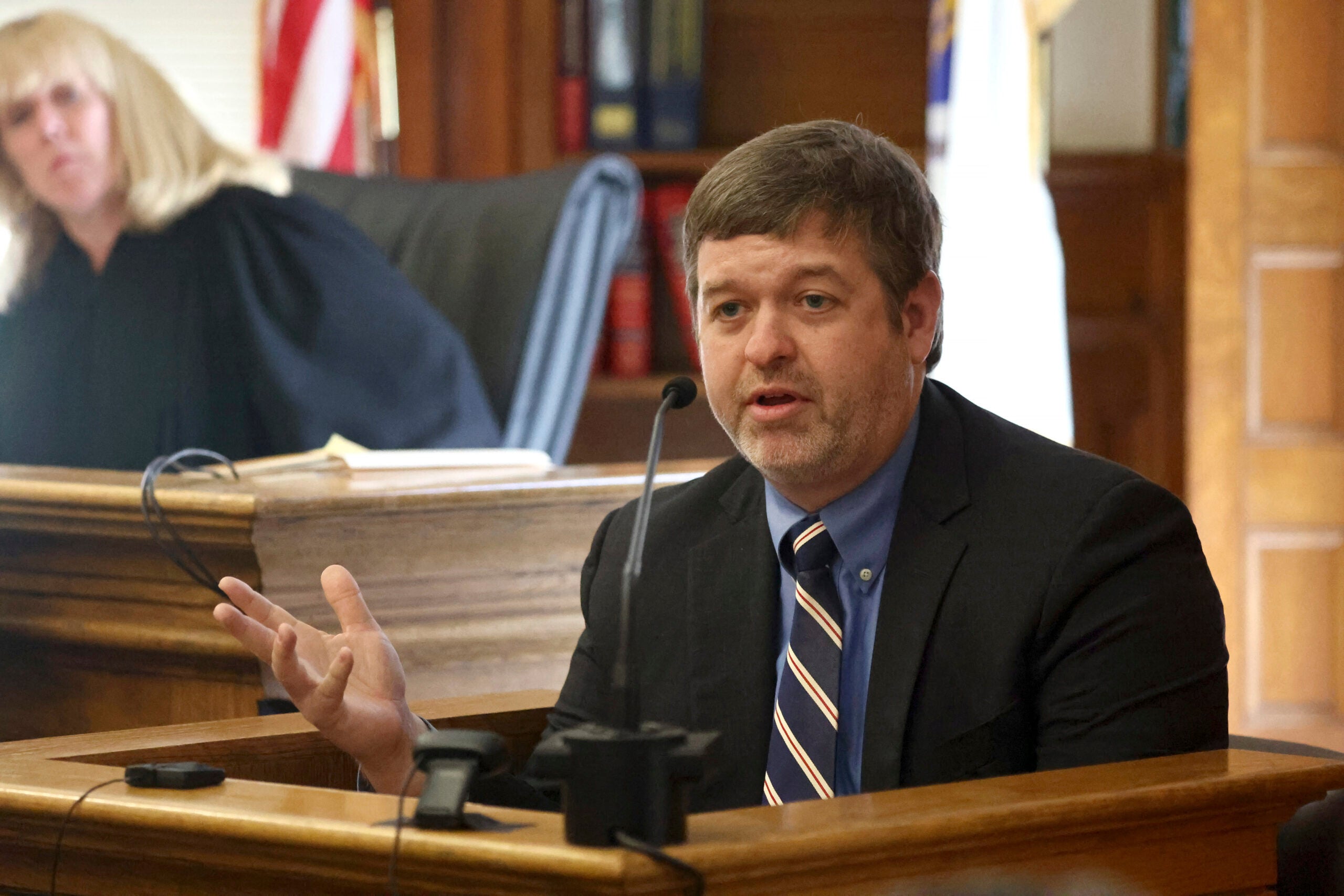
John O’Keefe had a core body temperature of 80.1 degrees when he was brought into the emergency department at Good Samaritan Medical Center in Brockton on Jan. 29, 2022, according to Dr. Justin Rice.
A South Shore Health emergency medicine physician who previously worked at Good Samaritan, Rice was involved in O’Keefe’s care that morning and said O’Keefe’s low temperature would qualify as hypothermia. He testified that O’Keefe was unresponsive when he arrived at the hospital and scored a three on the Glasgow Coma Scale, which measures a patient’s level of consciousness.
“The lowest you can get on the scale is three,” Rice added.
He said O’Keefe arrived at the hospital in cardiac arrest, meaning his heart wasn’t pumping blood on its own. According to Rice, health care workers used a Bair Hugger — a blanket with warm air pumped through it — and warm IV fluids to try to raise O’Keefe’s temperature.
“With him, as I recall, despite resuscitative efforts for approximately half an hour, there was not a significant warming of his core temperature,” Rice said.
He said O’Keefe was pronounced dead at 7:50 a.m.
Reading from O’Keefe’s chart, Rice explained that O’Keefe had a cut on the bony ridge above his right eye, with swelling and bruising of the surrounding soft tissue. He said O’Keefe also had “superficial abrasions,” or scratches, on his right forearm.
While Rice testified that he recalled documenting something to the effect of, “Per EMS report, the patient may have been struck by a vehicle,” defense attorney Elizabeth Little pointed out that Rice’s notes make no mention of a vehicle. Little also confirmed that the report didn’t document any broken bones or fractures from the neck down.
On redirect, Rice told Assistant District Attorney Adam Lally that health care workers would have been focused on trying to resuscitate O’Keefe.
“I think in cases like this, because the attention is on resuscitation of someone’s heartbeat, their life, there’s less focus on injuries or observations that don’t coincide with the resuscitation effort or are not pertinent to that resuscitation effort,” he explained.
Rice said he was also involved in Karen Read’s care after she was brought to Good Samaritan the same morning under a Section 12 order for a psychiatric evaluation. Read had her blood drawn as part of her evaluation, and Rice testified that the results of her alcohol screening showed a level of 93 mg/dl. Prosecutors have previously said that Read’s test result would equate to about a .07% to .08% blood alcohol content, putting her between .13% to .29% around 12:45 a.m. on the 29th, when she allegedly struck O’Keefe with her SUV.
The livestream feed for the Karen Read murder trial went dark Tuesday morning amid testimony from John O’Keefe’s niece and nephew, who lived with their uncle in Canton after their parents died in quick succession.
Judge Beverly Cannone issued a court order barring the recording or transmission of testimony from O’Keefe’s niece and nephew, as they are minors.
In 2022, the children — then 14 and 10 years old, respectively — told investigators Read and O’Keefe argued frequently toward the end of their two-year relationship. O’Keefe’s niece said she heard her uncle tell Read “that their relationship had run its course and that it isn’t healthy,” prosecutors said in prior court documents.
O’Keefe’s nephew was at a friend’s house for a sleepover on Jan. 28, 2022, while his niece remained at home. She told investigators she awoke to Read “screaming and acting frantic” around 4:30 a.m. on the 29th, according to prosecutors.
Read allegedly directed O’Keefe’s niece to call Jennifer McCabe, whose daughter was good friends with the niece. According to prosecutors, O’Keefe’s niece indicated to investigators that Read changed her story several times while on the phone with McCabe, “with initially the defendant stating that she and the victim got into an argument and she dropped him off.”
McCabe previously testified that Read was screaming during the 4:53 a.m. call, “and she tells me that John didn’t come home, they got into a fight, and that she left him at the Waterfall,” a bar where they’d gone out drinking the night before.
McCabe and several others went to the Albert home at 34 Fairview Road for an afterparty following the bar outing. McCabe testified that when she told Read she and her husband saw Read’s SUV outside the home, Read “told me that she didn’t remember going there and then she started yelling, ‘Jen! Jen!’ And then she was saying, ‘Did I hit him? Could I have hit him?’”
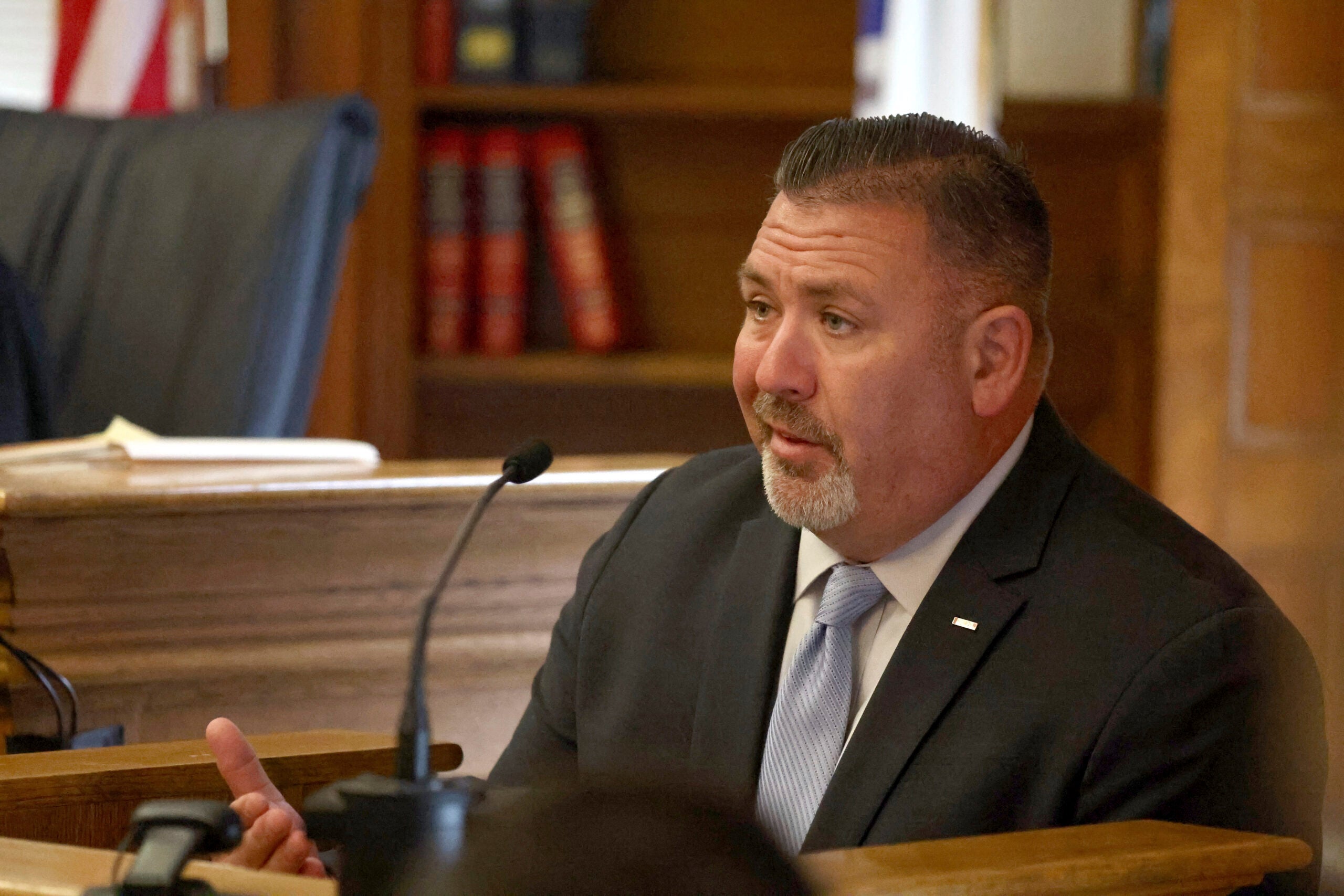
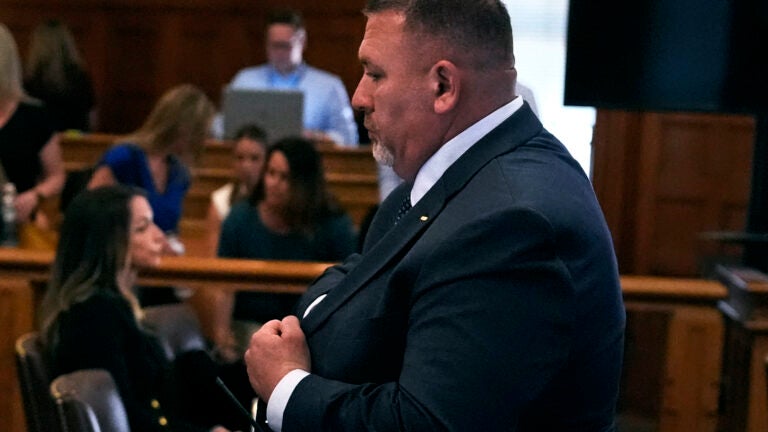
Brian Higgins testified Tuesday that he got rid of his cellphone in 2022 after he received a call from the target of an investigation he was working on and learned that his personal phone number was posted on the internet.
Higgins, an agent with the federal Bureau of Alcohol, Tobacco, Firearms, and Explosives, testified that receiving a call from the target of an investigation in July 2022 gave him pause.
“I had a lot of concerns, so July of ’22 is when I probably started thinking about, ‘You know what, I’ve got to get rid of the telephone number itself,’” he said.
Higgins confirmed he eventually changed his personal phone number on Sept. 29, 2022 — one day before he received a court order to preserve the phone, which Karen Read’s lawyers were seeking as evidence. Higgins testified that he learned the defense motion had been denied in October and got rid of his old phone “about two months after that,” because it was “beaten” and he’d already gotten a new one.
Answering questions from defense attorney David Yannetti, Higgins confirmed that he never received anything in writing canceling or lifting the preservation order for his phone, nor did he consult anyone before disposing of the device. He testified that he didn’t know whether he removed the SIM card when he got rid of his phone but said that if he did do so, he either cut the SIM card or broke it.
“Then you drove to a military base and you threw both the destroyed SIM card and the phone into a dumpster, didn’t you?” Yannetti asked.
Higgins confirmed he was driving through a military base on Cape Cod and said he believed he put the destroyed SIM card and phone into a dumpster there.
He further testified that he didn’t transfer anything from his old phone to his new one, including photos, videos, and possible text messages with members of the Albert family, who owned 34 Fairview Road at the time. On redirect, Higgins told Assistant District Attorney Adam Lally he didn’t have much saved on his personal phone to begin with.
“In the sense that I’m divorced, I don’t have kids, I didn’t have the typical memories that somebody would’ve had on their phone that they wanted to preserve,” Higgins said.
He explained that he occasionally threw trash away at the military base if he was there to get gas or visit the duty free shop.
Livestream via NBC10 Boston.
After spending much of Friday reading aloud his flirty text messages with Karen Read and answering questions about the fate of his old cellphone, witness Brian Higgins will return to the stand Tuesday for additional cross-examination in Read’s murder trial.
Higgins, a federal Bureau of Alcohol, Tobacco, Firearms, and Explosives agent, is one of three men Read’s defense attorneys have sought to implicate in the death of Boston Police Officer John O’Keefe.
Read, 44, of Mansfield, is accused of backing her SUV into O’Keefe — her boyfriend of two years — while dropping him off at a fellow Boston police officer’s home in January 2022. Read, O’Keefe, and Higgins had gone out drinking with a group of people at the Waterfall Bar & Grille in Canton that night. Higgins also attended a subsequent afterparty at 34 Fairview Road, the home where O’Keefe was found cold and unresponsive in the snow early on Jan. 29, 2022.
While prosecutors say Read intentionally struck O’Keefe with her car and left him for dead, Read’s lawyers have alleged a widespread coverup. They claim O’Keefe entered the home and was severely beaten, possibly attacked by the homeowner’s dog, and dumped outside in the snow. And both the prosecution and defense have pointed to the romantic texts between Higgins and Read as evidence of a potential motive in their vastly different theories.
On Friday, Higgins confirmed that he used a “kiosk” in the FBI’s regional computer forensics lab to pull text conversations and information from his cellphone to hand over to law enforcement. When Higgins confirmed that he no longer has the same phone he did in 2022, defense attorney Alan Jackson grilled him on whether he had destroyed the device.
“No, I threw the phone away,” Higgins said.
“Well, that’s destroying the phone, isn’t it?” Jackson pushed back.
“I had every right to do that,” Higgins replied.
Jackson also asked whether Higgins removed the phone’s SIM card, drove to a military base, and threw the phone and SIM card into separate dumpsters as the investigation into O’Keefe’s death was underway.
“That is not correct,” Higgins replied. Judge Beverly Cannone then concluded Friday’s testimony before Jackson could ask another question.
Tuesday’s court session will be the only day of testimony this week.


Stay up to date on all the latest news from Boston.com



To comment, please create a screen name in your profile
To comment, please verify your email address
Conversation
This discussion has ended. Please join elsewhere on Boston.com