
Newsletter Signup
Stay up to date on all the latest news from Boston.com
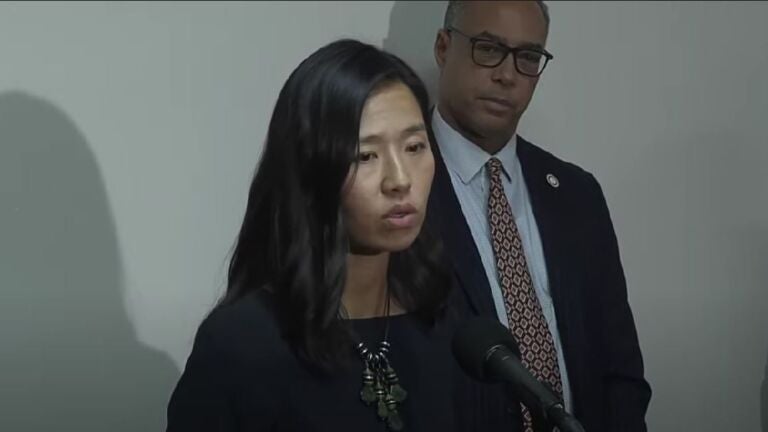
Boston officials gathered Tuesday to plan and explain their holistic response to youth violence in the city after two weekends with multiple shootings.
The group tried to reassure the public that while these incidents are impactful, violent crime in the city is still decreasing.
Still, according to officials, youths under 18 are increasingly involved in the shootings that do occur. So, city leaders said, they are trying to address this issue specifically, especially through Boston Public Schools.
Mayor Michelle Wu met with Superintendent of Schools Mary Skipper, Police Commissioner Michael Cox, Suffolk County DA Kevin Hayden, District 6 City Councilor Kendra Lara, and State Rep. Russell Holmes to discuss the issue privately Tuesday afternoon.
After their meeting, the group spoke to the public to detail how they intend to address violence in the city’s streets.
Mayor Wu said the group talked extensively about how to address the impact the violence has had on the community, from students to faith communities.
“Boston is a relatively small city where people know each other and every single incident affects so many in our communities,” she said.
The group also discussed widening access to mental health services and investing in violence prevention and intervention, Wu said. This will include vamping up the work of programs already in place and reinstating task forces that had fallen by the wayside during the pandemic.
Wu also said they are in the process of getting Boston Public Schools more involved in violence prevention, and admitted that it wasn’t the district’s focus the last few years during the pandemic.
“[We were] just dropping everything to make sure students and families were fed and safe and had the resources they need to battle a new virus,” she said.
DA Hayden said that while the violence that Bostonians are seeing in the streets is real, Boston is still “bucking the trends of other cities” when it comes to violent crime.
“Despite the recent surge, violent crime is in a relatively good space,” he said.
Wu added that Boston is continuing to see the decrease in violent crime year over year that it’s experienced over the last few decades.
“We continue to see those numbers below last year, although any single incident is extremely impactful and devastating in our communities,” she said.
What has disturbed law enforcement and city officials, Wu said, is that recent trends show young people, especially those under 18, having more access to weapons and being involved with more shootings.
Hayden added that Boston has been recognized for enacting a range of effective crime prevention and intervention programs, but that these programs have never come together to address crime at the same time.
“With that comprehensive approach, I think that we will be able to make the difference,” he said.
Commissioner Cox said one big goal of the leaders who met Tuesday is to build trust in Boston’s different communities.
“The police always have a role, and we’re always going to do all that we can to prevent things through visibility,” he said. “But the fact is that we need support and help because these issues are far bigger than traditional law enforcement.”
Superintendent Skipper said Boston Public Schools is utilizing its mental health and restorative justice programs, as well as enacting new initiatives to combat “chronic absenteeism,” to help address youth violence in the city.
“Our students need to be in school. That’s where they’re safest. That’s where they learn. That’s where they’re meant to be,” she said.
Skipper added that anyone who knows people in their late teens or early 20s who didn’t finish in the district should contact the school’s reengagement center.
“We have to have the opportunity to give our young people who were not able to finish during the pandemic a plan, skills, a job, a diploma,” she said.
Councilor Lara said local government is working to strengthen the “ecosystem” that creates safe communities, as crime response often focuses on the young person but not the families they come from.
“That means that our neighborhoods are strong, that people can afford where they live, that one job is enough, and that our schools are places where young people are going to learn and to be supportive,” she said.
In accomplishing that, Lara said, everyone from teachers to non-profit workers to the clergy have a role to play.
“Young people do not wake up one day and decide to be violent. It is something that takes time,” she said.
Watch the full news conference here:
Stay up to date on all the latest news from Boston.com





To comment, please create a screen name in your profile
To comment, please verify your email address
Conversation
This discussion has ended. Please join elsewhere on Boston.com