
Newsletter Signup
Stay up to date on all the latest news from Boston.com
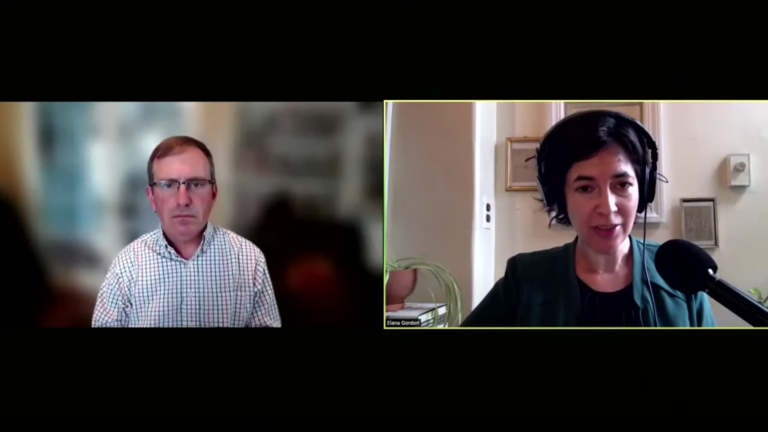
A professor of epidemiology at the Harvard T.H. Chan school of public health is strongly encouraging all those who are eligible to get the COVID-19 vaccine in order to protect children who are unable to get it yet.
In a Q&A panel Tuesday afternoon, Dr. Marc Lipsitch spoke with Elana Gordon from The World about the delta variant and its impact on children, answering questions and concerns that were submitted by the audience.
“A successful year would be if children were able to stay in school for most of the year besides when cases get really bad, or if a few kids have to stay at home for a few days due to COVID-19,” Lipsitch said on the reopening of schools this month.
With schools reopening amidst the surge of COVID-19 cases from the delta variant, Lipsich weighed in on just how much children can be protected and the impact of the adults’ reactions and decisions on the children.
Here are four key points from the Q&A with Lipsitch.
Although the delta variant is much more contagious and more transmissible than the alpha variant of COVID-19 — resulting in a significantly increased number of cases in the past month — the average child who gets infected will not have a severe outcome, according to Lipsitch.
“Compared to adults, children are still at much lower risk, even with delta, of getting severe disease,” he said.
With children who did contract COVID-19, the vast majority did not have to be hospitalized or show severe symptoms. Also, vaccinated children over age 12 most likely got vaccinated much more recently than older adults, increasing the effectiveness of the vaccine for them right now.
Children are getting exposed to COVID-19 in all of the same places adults are, Lipsitch said. Although schools are a location with high transmission rates, children can also contract COVID-19 from those at home who may not realize that they are infected.
Lipsitch said the best way to protect children from COVID-19 in general, especially those who are ineligible to get the vaccine, is by getting as many adults vaccinated as possible.
“Every adult who’s vaccinated is someone who’s less likely to transmit to children,” Lipsitch said.
By having those who are eligible for the vaccine get the shot in order to protect themselves, this will also lessen the rate of transmissions in schools, he said. Approximately 61% of the U.S. population has received at least one shot of the vaccine, but Lipsitch hopes that the recent full FDA approval of the Pfizer vaccine will encourage more adults over the age of 16 to get vaccinated.
“I think [the full Pfizer approval] will have some benefits in getting adults vaccinated who were waiting for that approval,” Lipsitch said in the Q&A. “I hope that there will be [less hesitancy among] a lot of the people who are still unvaccinated because vaccinating adults will help to protect children.”
In response to the question of how to actively increase the number of vaccinations across the country, Lipsitch said that access was the most important piece to the solution.
“Hesitancy and access are not two different problems, they’re different sides of the same coin,” Lipsitch said. “If you make something easy for someone, their hesitancy has to be really high before it determines their behavior.”
As of August, Kaiser Family Foundation (KFF) reported 41% of children aged 12-17 had received the vaccine.
The most convenient place for students to get vaccinated is at school, Lipsitch said. But barriers can also be reduced by bringing vaccinations to local doctor’s offices and through mobile clinics.
Many schools are not offering remote learning anymore this semester as they try to progress toward a “normal” school year. However, that makes it much harder to keep up with learning for those who are unable to attend school if they test positive or have been exposed to COVID-19.
Lipsitch believes that schools must have a balance between keeping those students in school and not shutting down, and trying to prevent a large outbreak. Rapid testing is one key strategy that can be used to mitigate the spread of the virus.
“It’s really another low-cost, relatively low-effort way to reduce transmission to test people and take them out when they need to be out, not when they might need to be out,” Lipsitch said.
By rapid testing students in schools, it can determine which students need to actually quarantine versus having to send home every person who came into contact with someone who tested positive for COVID-19.
Especially as students, parents and teachers yearn to return to “normal” and students do not have access to remote learning any longer, rapid testing, Lipsitch said, could be helpful in keeping students in school.
Stay up to date on all the latest news from Boston.com



To comment, please create a screen name in your profile
To comment, please verify your email address
Conversation
This discussion has ended. Please join elsewhere on Boston.com