
Newsletter Signup
Stay up to date on all the latest news from Boston.com
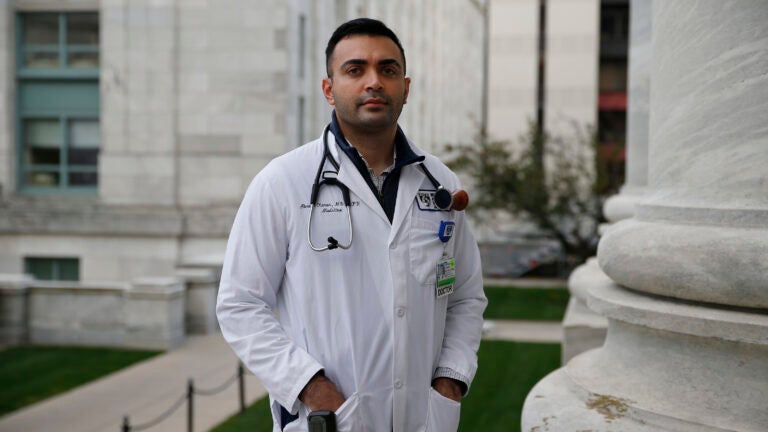
A physician who worked on the front lines of the COVID-19 pandemic response in Boston is arguing that the way to stop the virus is by protecting everyone in the community — not just individuals.
Dr. Abraar Karan, a former internal medicine doctor at the Brigham and Women’s Hospital and Harvard Medical School who is now based at Stanford University, wrote an op-ed for the medical journal BMJ on the importance of inclusivity and trust in a community responding to the pandemic.
“This ‘everyone for themselves’ approach will leave us isolated, vulnerable, and destined to fail—even those who are now vaccinated,” Karan wrote. “We must refrain from reverting to the reckless individualism that left us ill prepared against this pandemic to begin with.”
While treating unvaccinated patients, Karan found that most people were regretful and confused when it came to getting vaccinated. He urged the public to start thinking about unvaccinated individuals as vulnerable, susceptible to misinformation, and lacking resources to help them get vaccinated.
The individualistic mindset of those who are vaccinated is causing danger to those who are not yet vaccinated, especially with the recent rapid spread of the Delta variant, the doctor wrote.
“Some people in the [vaccinated] group feel that they played by the rules, and now should reap the rewards, whereas the [unvaccinated] group did not and thus deserves the fate which awaits them,” Karan wrote.
If the community cannot come together to help those who are unvaccinated, it will only lead to viral mutations spread by those people, he said. Eventually, the variants will reach those who are vaccinated, threatening the health of everyone.
Vaccination rates in the United States have plateaued since they first became available to the public, and states have been trying different ways to incentivize people to get the shot. The U.S. now lags behind other wealthy nations not limited by vaccine supply, such as Canada, according to the New York Times’ vaccine tracker.
President Joe Biden recently called on state and local officials to provide $100 for people to get vaccinated. Money has been frequently used as an incentive already, with many states including Massachusetts doing a lottery system for vaccinated individuals.
The public narrative that the unvaccinated are “at fault” for not getting vaccinated despite the push for vaccines has to be stopped, Karan wrote.
He stressed the need to protect those who are unvaccinated and avoid putting them in a category of a “homogenous group.” Instead, people should work to understand an individual’s reasons behind not being vaccinated in order to help them get the shot.
“As physicians and public health leaders, we must understand that those who are unvaccinated are not people who are hoping to get sick or die from covid-19,” Karan wrote. “They are people who, for various reasons, remain vulnerable to this disease, as well as to the social and economic systems that have led to so much immense suffering and death in our country.”
Read his full op-ed on the BMJ.
Stay up to date on all the latest news from Boston.com





To comment, please create a screen name in your profile
To comment, please verify your email address
Conversation
This discussion has ended. Please join elsewhere on Boston.com