
Harvard epidemiologist warns that stigma around COVID-19 breaks down public health efforts
“People become afraid to share their exposures, symptoms, and test results with each other, with contact tracers.”

A Harvard infectious disease epidemiologist is warning that “shame and blame” perpetuate stigma around COVID-19 and break down public health efforts aimed at controlling the spread of the virus.
Related Links
-
COVID
Charlie Baker’s order requiring face coverings at all times in public takes effect on Friday. Some disease experts say it goes too far.
-
COVID
Read: Leader of Mass. Medical Society pleads with residents to follow measures to prevent COVID-19 spread
-
SECOND SURGE
3 things to know about the second COVID-19 surge in Massachusetts
Julia Marcus, of Harvard Medical School, explained on Twitter Friday how stigma around the virus is “toxic” to public health.
“Without federal support, it feels like ‘personal responsibility’ is what will save us—so of course people are trying to shame each other into healthier behavior,” she wrote. “But shame and blame perpetuate stigma, which can have the *opposite* of the intended effect.”
Under the banner of “personal responsibility,” individuals are told to “do the right thing” and called “selfish” and “reckless” if they don’t wear a mask or practice social distancing. But, Marcus emphasized, that results in individuals who contract COVID-19 as being seen, or feeling themselves to be, “bad, careless, deserving of punishment.”
“Instead of deterring risk behavior, stigma deters disclosure,” she wrote. “People become afraid to share their exposures, symptoms, and test results with each other, with contact tracers. They avoid getting tested at all. Stigma makes public health efforts break down.”
Contact tracing and testing, experts agree, are essential parts of mitigating the spread of the virus.
“Empathy is an antidote to stigma,” Marcus wrote. “It’s not always easy to muster, especially in the context of fear, anger, fatigue, and politicization. But trying to understand people’s behavior, including risk taking, is the first step toward helping them change it.”
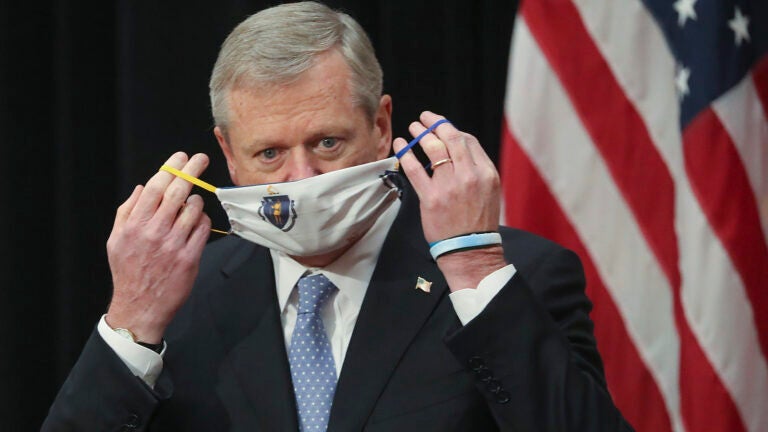
Last week, Marcus expressed concern that Gov. Charlie Baker’s new mask mandate, which requires individuals to wear a face covering largely at all times in indoor or outdoor public places, would do more to break public trust than reduce infections, calling the new order “pandemic theater.”
“Masks are an important prevention tool when we’re close to other people, especially indoors, but there’s really no reason to be wearing a mask when you’re outdoors and you’re not close to anyone,” she previously told Boston.com.
Violators of the new order may face a fine of $300.
On Friday, Marcus stressed that “few people” are seeking to contract the virus and far less want to get sick.
“Risk taking often reflects people’s unmet needs: for a paycheck, for social connection, for accurate information about risk,” she wrote. “Acknowledging and meeting those needs supports risk reduction and reduces stigma. Some may think people really *are* stupid and selfish if they’re going to work sick or traveling to see loved ones, that they deserve to be shunned for putting others at risk. But compassion isn’t coddling—it’s a pragmatic and humane approach to maximizing public health.”
The epidemiologist said it would be more informative and less stigmatizing to break down the relative safety or risk of certain actions in health information.
When people hear “you should do X” in health communications, they often hear judgment. Less stigmatizing AND more informative: “X is safer than Y.” pic.twitter.com/QxOI60H6Wm
— Julia Marcus, PhD, MPH (@JuliaLMarcus) November 11, 2020
Read her full thread below:
What is #covid19 stigma, why is it toxic to public health, and what can we do about it?
A short thread. 🧵
— Julia Marcus, PhD, MPH (@JuliaLMarcus) November 13, 2020
People are called “selfish” and “reckless,” even criminalized, for not wearing masks, not distancing. They’re told to just “do the right thing,” be “responsible.” So it’s no surprise when those who get #covid19 are seen—& see themselves—as bad, careless, deserving of punishment.
— Julia Marcus, PhD, MPH (@JuliaLMarcus) November 13, 2020
Empathy is an antidote to stigma. It’s not always easy to muster, especially in the context of fear, anger, fatigue, and politicization. But trying to understand people’s behavior, including risk taking, is the first step toward helping them change it. https://t.co/bHiTv3jWPO
— Julia Marcus, PhD, MPH (@JuliaLMarcus) November 13, 2020
Some may think people really *are* stupid and selfish if they’re going to work sick or traveling to see loved ones, that they deserve to be shunned for putting others at risk. But compassion isn’t coddling—it’s a pragmatic and humane approach to maximizing public health.
— Julia Marcus, PhD, MPH (@JuliaLMarcus) November 13, 2020




To comment, please create a screen name in your profile
To comment, please verify your email address
Conversation
This discussion has ended. Please join elsewhere on Boston.com