
Here’s what will happen if a student (or staffer) exhibits COVID-19 symptoms at school
“A safe return to in-person school environments will require a culture of health and safety every step of the way."
Related Links
After releasing guidance about a month ago indicating that school districts should prioritize physical instruction this fall, the state recently put forth protocols on how officials should handle potential COVID-19-related scenarios in school.
These include instructions on what to do if someone with virus symptoms, be it a student or staff member, shows up at school or gets on the bus, and how districts should handle notifying close contacts.
“A safe return to in-person school environments will require a culture of health and safety every step of the way,” the list of protocols states.
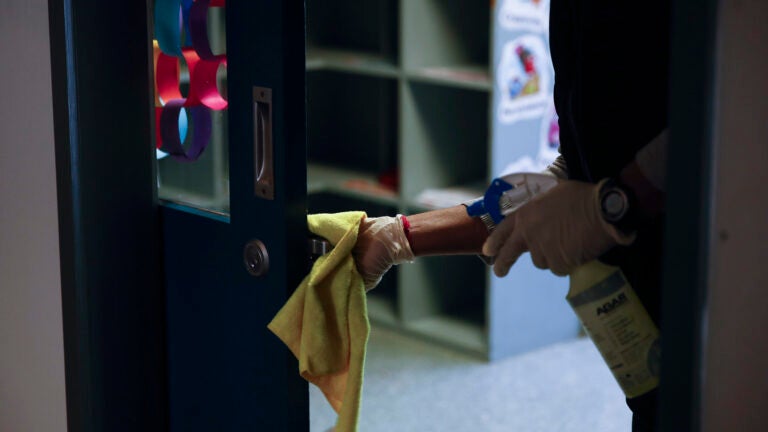
The guidance includes what to do if a student or staff member tests positive, including determining if they were in the school two days before their symptoms started, and protocols for disinfection at all grade levels from elementary school through high school.
Determining close contacts and having them taken out of school to either have a COVID-19 test or isolate for 14 days if they don’t want to be tested is also part of the plans.
Caregivers must also determine each day if a student has symptoms prior to sending them to school, and keep them home if they have symptoms.
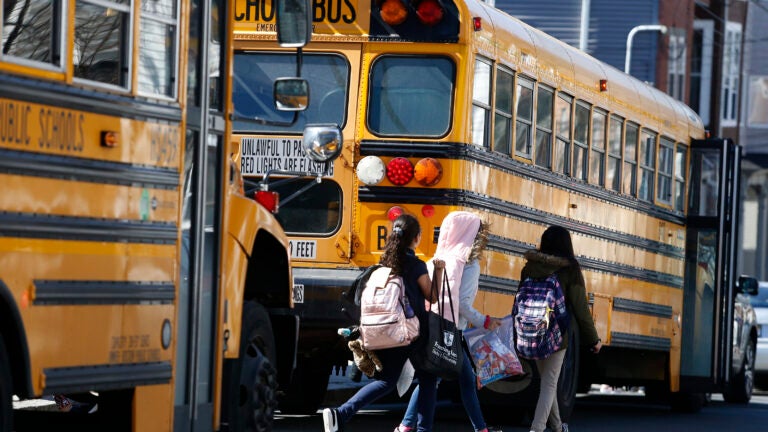
Bus drivers and monitors will also be trained to watch for potential symptoms of students boarding. For instance, if a student appears to have symptoms prior to getting on the bus and their caregiver is present, they will not be allowed on the bus.
If the student is already on the bus and the driver or other staffer notices symptoms, school officials will be notified, including the school nurse. That student should get off the bus first, and the student will then be brought to a waiting area. The student will then either have to wait for their caregiver to pick them up during the middle of the day, or wait until the end of the school day to be picked up. They “should not” take the bus home, the protocols say.
For a staff member who may experience symptoms while at school, they should leave during the school day, and then get tested, according to the guidance.
The protocols also detail what a school or district should do if there’s more than one case, including if there’s virus spread beyond the ill student’s assigned group. This includes “extensive cleaning” or closing the school either in part, or completely, for a two-week quarantine.
The guidance also provides for strict guidelines of how students and staff will go about their school day – wearing masks, frequently washing hands, and separating students into groups that don’t mix.
While state officials have stressed getting students back in to schools, authorities have also told districts to devise plans for a hybrid instruction model – a mix of in-person and remote instruction – plus a completely remote learning plan.
Some of the reasoning behind reopening schools has do with statistics showing that kids under age 19 were much less likely to receive a COVID-19 diagnosis, and schools are thought to be places of lower transmission than other situations.
There’s also concern of the long-term effects social distancing and not being in school will have on kids.
“Continued isolation poses very real risks to our kids’ mental and physical health, and to their educational development,” Gov. Charlie Baker said when the reopening guidance was announced. “This plan will allow schools to responsibly do what is best for students, which is to bring them back to school to learn and grow.”
Still, there’s concern over heading back to the classroom in a matter of weeks.
“The fall is expected to be really very difficult indeed,” William Hanage, an epidemiologist at Harvard’s T.H. Chan School of Public Health, told The Boston Globe. “For all that I admire about this plan, and I am impressed by it, I am anxious that the pandemic is not going to play along and we have to account for that.”



To comment, please create a screen name in your profile
To comment, please verify your email address
Conversation
This discussion has ended. Please join elsewhere on Boston.com