
Boston playgrounds and splash pads have reopened. Here’s what to know.
“Safety is still a top priority as we reopen,” Mayor Marty Walsh said.
Related Links
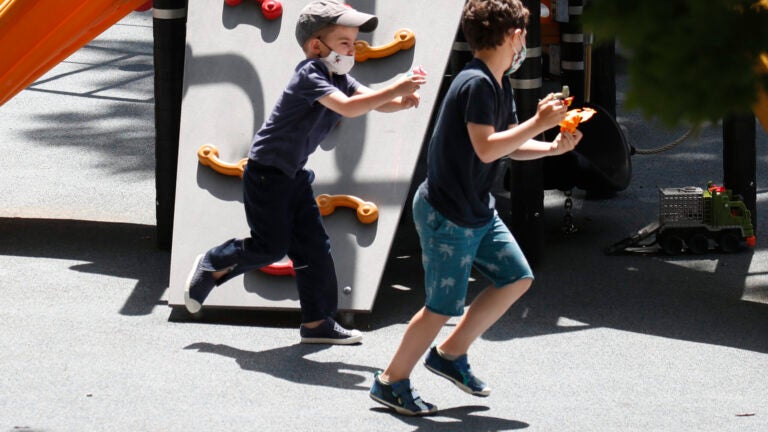
Playgrounds and splash pads have reopened in Boston, and along with that come special guidelines to help protect visitors and prevent the spread of COVID-19.
Signs have been installed at the play areas, in both English and Spanish, asking people to socially distance, wear a face covering when it isn’t possible to stay 6 feet away from others, and a reminder to wash hands both before and after using playground equipment. Children should be accompanied by an adult, and those who aren’t feeling well should stay home.
#BPRD staff were busy this morning putting up signage in parks throughout the @CityOfBoston with #COVID19 safety guidelines as we open up playgrounds & splash pads.
For more info on the reopening: https://t.co/3e3SnNE4Mr pic.twitter.com/9rJv6U2M6l
— Boston Parks and Recreation Department (@BostonParksDept) June 15, 2020
“Safety is still a top priority as we reopen,” Mayor Marty Walsh said on Twitter.
Guidance was issued last week by the state Executive Office of Energy and Environmental Affairs about social distancing and cleaning at playgrounds and splash pads. The guidelines note that operators should clean, but are not mandated to disinfect high-touch areas.
Starting today, June 15, playgrounds and splash pads in #Boston are open. Remember, #COVID19 is still here, so please still be vigilant about wearing a face covering, staying 6 feet away from others and washing hands. Safety is still a top priority as we reopen. https://t.co/aT8UAwvpxF
— Mayor Marty Walsh (@marty_walsh) June 15, 2020
Is it safe?
With the reopening of playgrounds and splash pads, and the warm weather of summer here, parents and caregivers may wonder if it’s safe for them and their children to visit playgrounds or splash pads.The New York Times noted that outdoor spaces are safer than being indoors when around other people. However, visiting a playground filled with children and their families isn’t ideal. The newspaper cites Massachusetts state guidelines, which say playground operators should limit capacity, or if unstaffed, families should seek out a less crowded facility.One study from The New England Journal of Medicine said coronavirus can live on plastic and stainless steel the longest, which is 72 hours. Another study from The Lancet said four days. Both said that the way they were able to pull the virus from the surfaces isn’t the same as touching them. The World Health Organization, meanwhile, said that people should consider that the studies were completed in labs that hadn’t been disinfected, and it isn’t known if the virus could infect someone who came in contact with it on plastic or stainless steel, according to The New York Times.Sunlight could help to lower the amount of virus on a surface, but whether or not that’s true for playgrounds is unknown, the Times article said.Kids going to a playground should wear a face mask, according to the Times, noting that WHO now recommends that governments urge residents to use them. Families should also consider going to the playground when there aren’t a lot of kids, like early morning, and carrying hand sanitizer if bathrooms aren’t close by. If using sanitizer, also bring a bottle of water to rinse hands first since the CDC says the sanitizer doesn’t work as well if hands are covered in dirt.




To comment, please create a screen name in your profile
To comment, please verify your email address
Conversation
This discussion has ended. Please join elsewhere on Boston.com