
Concerned about returning to work as Mass. reopens? Here are 5 things an employment law attorney says you should know.
"We definitely need guidance and assistance.”
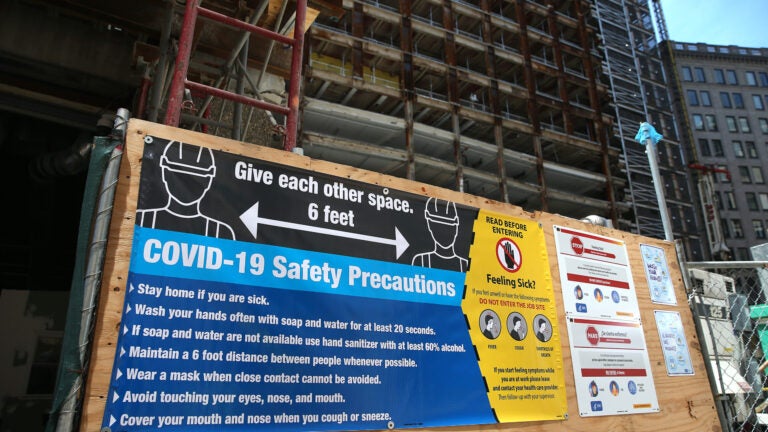
As Massachusetts begins the first of four phases to reopen the state’s economy with the ongoing coronavirus pandemic, residents across the state are set to begin returning to work.
Related Links
-
COVID
Here are the public health metrics Mass. is using to monitor COVID-19 in the state’s reopening
-
NEW RULES
This is what happens if a business violates Massachusetts’ COVID-19 safety standards for reopening
-
COVID
What Mass. officials said about child care and summer camps with the state’s COVID-19 reopening plan
While some might be ready to return — with offices outside of Boston able to reopen Monday under restrictions and other industries such as construction and manufacturing resuming this week — other employees may still have reservations about returning with the ongoing risks associated with the virus.
To learn what rights and protections employees should know about, we spoke with Judith Miller, an employment law attorney with Miller Employment Law.
Below, the five things she says are key to keep in mind as people return to work in Massachusetts.
Talk to your employer if you’re concerned
First and foremost, Miller recommends talking to your employer about any concerns you may have about returning to work, particularly if you still feel unsafe about returning to your job site.Because of the coronavirus, the issues that both employers and employees alike are facing are largely taking place outside the normal bounds of employment and labor law, so Miller emphasized that both sides need to think creatively and “outside the box” about how to move forward safely and fairly.“The more thoughtful employers are and the more that they talk to their employees about, ‘Do you think that this will work? Do you think that will work?,’ and make it a collaborative process, the better,” she said. “The more their workers will be willing to come back and be happy to come back, and the better workforce and more efficient workforce they will have.”
If a lack of child care is a problem for returning to work, you might have some options
The Families First Coronavirus Response Act requires employers to give employees up to 12 weeks of child care leave, paid at two-thirds of their pay, Miller said.Gov. Charlie Baker has said that the state is working on plans for reopening child care centers, which are ordered closed until at least June 29. Currently, only emergency child care programs, designated by the state, are allowed to be open. The centers have been providing services to vulnerable children and kids whose guardians are essential workers.The emergency centers are only 35 percent capacity, and state officials have said they can be utilized to meet the needs of families with “no alternative for care” as the state reopens and more residents return to work.“At least, frankly, until school is over, that’s an easier one to deal with,” Miller said of the issues associated with reopening. “The much more difficult issue to deal with is, what do employees do if they don’t feel safe returning to the workplace?”
If you have underlying conditions, you may be eligible for protections and accommodations
If you have a disability that is recognized under the federal disability act that also puts you at higher risk for severe complications from the virus, such as diabetes, asthma, and certain lung or heart conditions, you can seek accommodations from your employer under those existing state and federal laws, the employment attorney said.With the coronavirus, those requests for accommodations could range from asking to continue to work from home to changing work hours to requesting specific adjustments to your workspace.“They have the ability to go to the Mass. Commission Against Discrimination if they believe that their employer hasn’t accommodated their disabilities,” Miller said.But those protections don’t extend to everyone who is at high risk for the coronavirus. For example, people who are over the age of 65, with no underlying conditions, don’t get those protections or accommodations.“The one thing that I loved in the Massachusetts plan is that it instructs employers to give priority for accommodations to employees who are at high risk, pursuant to the CDC guidance,” Miller said. “So someone who’s over 65 can use that to go to their employer and say, ‘Hey, I need an accommodation.’”
What if your employer doesn’t make accommodations?
Separate of the pandemic, Miller said one of the most difficult and challenging areas of employment law is around the idea of what constitutes a “reasonable accommodation” for an employee.“There’s no sort of hard and fast answer whether that person can stay on unemployment,” the attorney said. “Because you have to go through an interactive process of figuring out what accommodations can we make to protect that person. Then if you go through all the accommodations and both sides agree that we can’t make an accommodation, then the employee will be able to continue on unemployment.”It’s another reason why more structure from the state for figuring out accommodations would be beneficial, she said.If an employee — who had no protections from existing disability laws — decided not to return due to concerns about safety at their place of employment, whether or not they would receive unemployment benefits isn’t straightforward, Miller said.“Under the unemployment laws, there is a concept that if you leave your employment voluntarily but for good cause attributable to your employer, then you can get unemployment,” she said. “So the claim there would be, ‘I tried to get a workplace that was safe and the employer wouldn’t comply, so I felt compelled to leave.’”But Miller said she would only recommend that course as a last resort.“It is a provision that is used very infrequently, and it is one that is difficult to prove and to win in unemployment,” she said. “Those claims are denied more often than they are allowed. But then we’ve never faced this situation before, so who knows what unemployment might do in that situation.”The challenge with the plan for reopening Massachusetts is that Miller said there is no guidance for what happens if an employer won’t work with those requests for accommodations.“What does an employee who is over 65 for example do if their employer is resisting giving them the accommodations that they need?” she said. “In addition, there’s nothing in the Mass. guidance that says, ‘What does an employee — who doesn’t fall into a high risk category but believes that his or her workplace isn’t doing what they’re supposed to to make the workplace safe — where do they go?’”Having a specific state phone number to call or entity to contact to help mediate such situations would help both employees and employers, Miller said.“It helps employers because if an employee calls up and says, ‘This is what my employer is doing,’ and the voice on the other end says, ‘Oh, your employer is actually doing more than they’re required to do,’ then you’ve got an employee who’s feeling better,” she said.On the other hand, the entity could provide oversight and advice, investigating concerns raised by employees to ensure employers are doing the right thing.“That’s the flaw that I see and the problem I see for employee rights,” Miller said.Officials have said that businesses that violate the state-mandated safety standards will face a series of fines before potentially being shut down.Attorney General Maura Healey announced Wednesday that her office is launching a new online form where employees can report unsafe working conditions related to COVID-19.
https://www.facebook.com/MassAttorneyGeneral/posts/1410289335845709
Just being afraid to return to work isn’t enough
On its own, being afraid to return to work isn’t necessarily enough to maintain your unemployment, Miller said. Likewise, if you have family members or household members who are at high risk, that doesn’t mean you get the protections or accommodations for your own employment.The best thing you can do is talk to your employer about your concerns and try to work something out, Miller said.“I would work with my employer and say, ‘Gee, I’d really like to stay home, is there someone else who really wants to come back to work?’ And then surprisingly that sometimes works,” the attorney said.Everything about the current situation faced by both employers and employees is new, she said. “We’ve never had to in a sense make these kinds of modifications, which are akin to reasonable accommodation for everybody in our workforce,” Miller said, emphasizing again the need for more guidance at the state level. “And while it seems simple — social distancing, six feet apart — it’s not simple when it comes to a manufacturing floor or a lot of different workplaces. So … the question is do we come up with new laws just for this situation? I’m not sure we’re there yet. But we definitely need guidance and assistance.”





To comment, please create a screen name in your profile
To comment, please verify your email address
Conversation
This discussion has ended. Please join elsewhere on Boston.com