
Nurses union continues to air concerns over decontaminated N95 masks
In contrast, Battelle, the company that created the mask decontamination system in Somerville, says they've received positive reviews from the Boston medical community.
Related Links
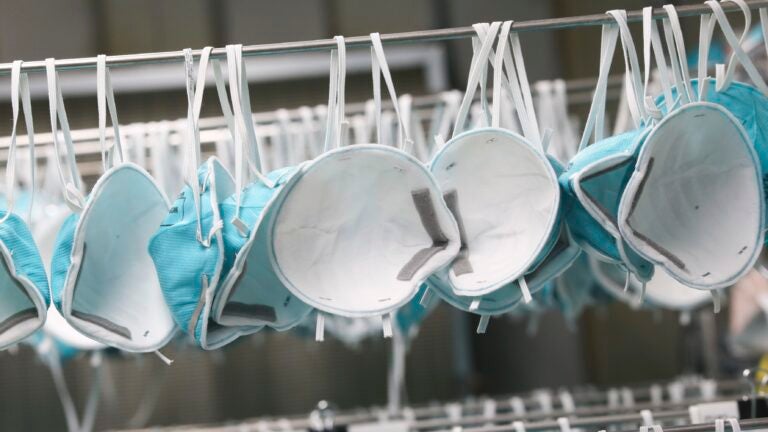
Weeks after the Massachusetts Nurses Association said nurses and health care workers should have the right to refuse a decontaminated mask at work, the union now says nurses are exhibiting adverse symptoms while wearing the reused masks.
“We have received multiple reports from nurses experiencing headaches, sore throats, dizziness and nausea while wearing a device that was simply never meant to be reused,” Judith Pare, the MNA’s director of nursing education, said in an email to Boston.com. “The short-term side effects are now apparent to us but the potential long-term health effects may be catastrophic and therefore we remain strongly opposed.”
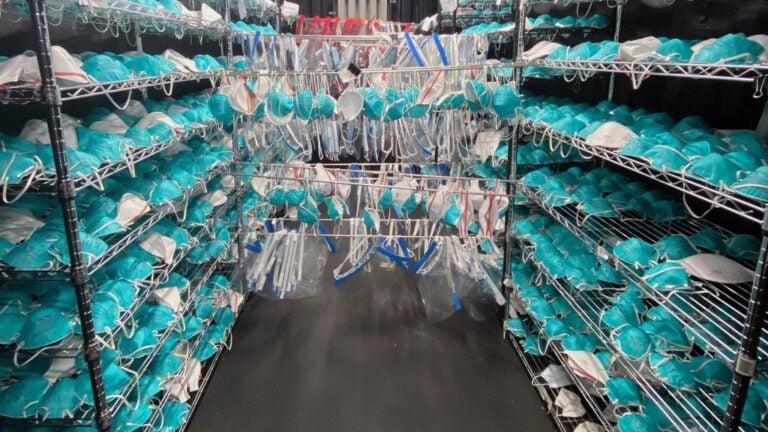
Battelle, the company which created the decontamination system set up in Somerville in April, said in a statement that while it’s preferred for health care workers to use new masks, decontamination is a “viable option” and the protection from a decontaminated mask has been shown to be equivalent to that of a new one.
The response in Boston has been “very positive,” a Battelle spokesperson said in the statement.
“We’ve decontaminated hundreds of thousands of masks around the country and Boston has been one of the largest, and supportive, users of the service,” the statement said.
The U.S. Food and Drug Administration granted Battelle an Emergency Use Authorization in March for decontamination systems, calling it “an important step forward in helping reduce shortages” of N95 masks during the pandemic.
In its April 29 position statement, the union, which is the largest union for nurses and health care workers in the state with over 23,000 members, said that nurses and health care professionals should be able to decide if they will or won’t use a decontaminated mask, further adding that “there are no decontamination methods that have been proven safe and effective.”
“The lack of reliable information on these practices, as well as the potential safety risks of these decontamination procedures pose risks to the health and safety of health care workers, as well as the general public at large require that these practices be halted,” the statement said.
The MNA notes that National Nurses United also opposes decontamination.
In a post to its website on May 11, the MNA alerted members to submit reports of symptoms related to any side effects they may have experienced as a result of using a mask decontaminated with hydrogen peroxide vapors.
Part of the concern is a lack of long-term evidence, Pare said, adding that manufacturers of decontamination systems have not shown if their systems can “inactivate the pathogen,” ensure that the masks will continue to produce the necessary seal against the wearer’s face and continued filtration, and protect the wearer from any other hazards during wear.
“Government agencies and healthcare facilities have lowered their standards during this outbreak, including by using decontamination methods that are not supported by peer-reviewed studies, putting the health and safety of frontline healthcare workers at risk,” Donna Kelly-Williams, an RN and the MNA’s president, said in a statement.
In contrast, Battelle pointed to positive reviews from users of decontaminated masks, including a tweet from Derek Monette, an emergency room doctor at Massachusetts General Hospital. In the April 26 tweet, Monette said he’s “thankful” for his decontaminated mask.



To comment, please create a screen name in your profile
To comment, please verify your email address
Conversation
This discussion has ended. Please join elsewhere on Boston.com