
Here’s Bill Galvin’s plan for voting this fall in Massachusetts
“I want to make sure that any voter who wants to cast their ballot by mail is able to do so this fall, but it is also essential that we preserve in person voting as an option for those who need it."
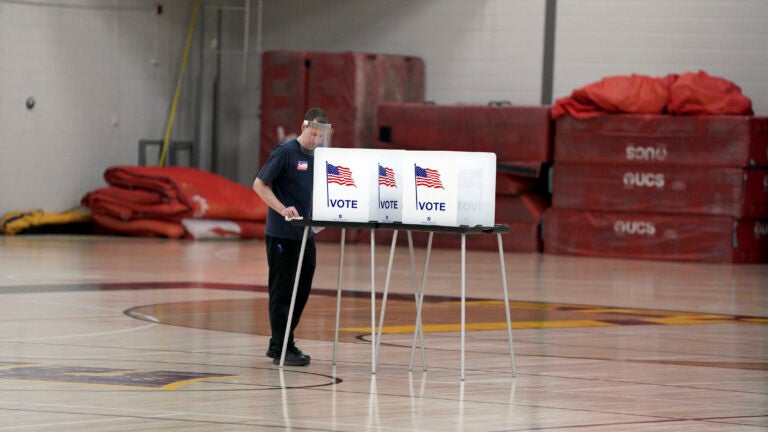
The coronavirus outbreak has already disrupted how elections are being held across the country this spring. And as the pandemic wears on in hard-hit Massachusetts, Secretary of State Bill Galvin is proposing a plan in the hopes of ensuring that Bay State voters can safely cast ballots this fall.
Galvin’s plan, released Wednesday morning, proposes expanding both mail-in and early voting options for the Nov. 3 general election and the Sept. 1 state primary elections in Massachusetts. It would also keep in-person voting in place.
“I want to make sure that any voter who wants to cast their ballot by mail is able to do so this fall, but it is also essential that we preserve in person voting as an option for those who need it,” the Boston Democrat said in a statement. “The best way to do that is to spread it out over as many days as possible, to avoid crowding in the polling places.”
His plan calls for extending early voting for the general from the current 10-day period to 18 days, meaning Massachusetts residents could begin casting in-person ballots the Tuesday after Columbus Day, as well as on the weekends during the 18-day period (currently, weekend early voting is an option for cities and towns but not required). Galvin’s plan would also provide seven days of early voting ahead of the September primary, which currently has no early voting period.
For those who feel uncomfortable visiting a potentially close-contact polling place, Galvin’s proposal also offers no-excuse mail-in voting for both elections —which has been an option in 34 other states even before the pandemic (five states — Colorado, Hawaii, Oregon, Washington, and Utah — conduct elections entirely by mail). His office is asking state lawmakers to allow election officials to mail early ballots to any voter who has requested one.
“My Elections Division will be working to make sure applications are distributed to all voters, through a variety of methods,” he said. “We are also in discussions with the Post Office right now to determine the best way to ensure voters do not need to pay for postage to return their mail-in ballots.”
Galvin’s plan comes amid similar proposals on Beacon Hill, but doesn’t go as far as some local Democrats want. Rep. Joe Kennedy III and Attorney General Maura Healey have led calls for universal mail-in voting, in which every registered voter would be automatically sent a ballot. And a bill proposing such a system, as well as two weeks of early voting before the September primary, was filed Tuesday with support from the ACLU and Common Cause Massachusetts.
However, Galvin has raised concerns about potential complications — in the primary, independent voters would still have to request which party ballot they want — and expressed a desire to provide “maximum options” for voting.
“Some of these proposals, they’re great for press releases,” Galvin told The Boston Globe in an interview last month. “But they’re not good for actually conducting an election.”
The bill he introduced Wednesday would also allow voters to submit a request for a mail-in ballot online, in addition to through paper applications.
To address concerns about crowding at the polls, voters would have the option of returning their ballots to an official dropbox (which were used in Ohio’s recent presidential primary) or asking a family member to deliver the ballot by hand. Voters admitted to a health care facility or forced to self-quarantine within one week of the election would also be allowed to designate a non-family member to deliver a ballot to them.
Deb O’Malley, a spokeswoman for Galvin, told Boston.com that “most of the changes” proposed in his bill would only be for this year — though she hinted at the potential for them to be instituted for future elections as well.
“After November, I expect we will review what worked well for our voters and then work with the Legislature to look at more permanent changes,” O’Malley said.
But first, Galvin is focused on getting state lawmakers to make changes for this year, as his office has to begin printing ballots for the September primary soon after the June 2 candidate filing deadline.
“We need to have our plan in place very soon, so that my office can order a sufficient number of mail-in ballot materials for voters, and so that voters can start getting those ballots,” he said. “The more time our local election officials have to prepare, the more smoothly this election will run for everyone.”


To comment, please create a screen name in your profile
To comment, please verify your email address
Conversation
This discussion has ended. Please join elsewhere on Boston.com