
In Trainwreck, other trainwrecks are finally given a main character we recognize
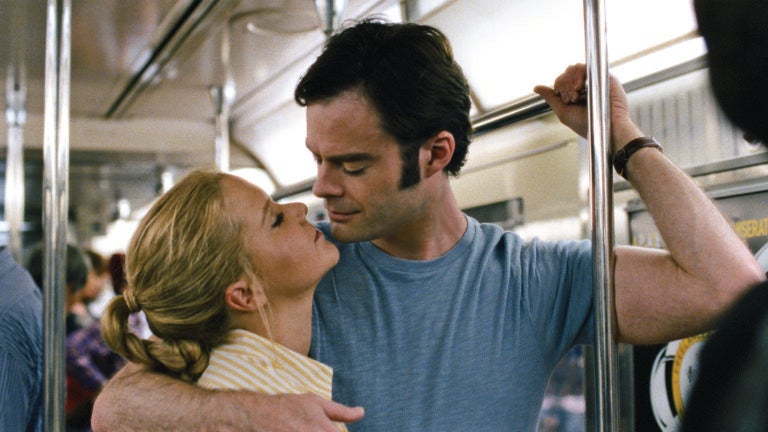
There’s a scene in Trainwreck when something happens to make Amy Schumer’s character very sad. That scene, with its slow, melancholy music, abruptly cuts. Schumer is suddenly in a club, dancing hard to a pounding bass, drink in hand, with a manic determination to have fun. She’s smiling. She’s having a terrible time.
I cringed and then cried as I watched. It hit very close to home.
There’s a pattern of behavior that started in college for me and a lot of my friends. It was largely meant to protect ourselves from our own feelings. I can only speak from my experiences but, like Schumer’s character, we played by men’s rules. If they could sleep around and drink and do whatever they wanted, so could we.
This bravado became a way to protect ourselves. It was a whirlwind of activity meant to prevent ourselves from getting hurt. If we never showed we cared, we could never be labeled “crazy’’ when we tried to establish an emotional connection with a man who wasn’t looking for one.
If the game we were playing were minesweeper, emotions were the hidden bombs.
But acting tough doesn’t make you tough. Because both then and now, most of us want to find someone to love, someone who loves us back for who we are. Despite who we are. Schumer is calling B.S. on the idea that in order to equal the playing field, women can adopt the same playbook as men without emotional consequences. Some women can, of course. But not all of us.
Trainwreck is a manifesto of sorts, where Schumer suggests that our rules don’t have to be the same. She shows the discrepancy between how women who use this excessive behavior act and how we feel. The club scene embodies this: Rather than work through her pain or deal with the root cause of it, Schumer twirls on the dancefloor as though she can physically outmaneuver the very things she can’t control: her own feelings and desires.
What Schumer and the other filmmakers mercifully never do in Trainwreck is cast judgement. While her character ultimately realizes that her actions are attempts to distract rather than deal with herself, she doesn’t condemn them. She gets drunk and gets high and gets off without apologizing for it. She allows her behavior to be fun and to be funny. Because a lot of the time, it is.
Schumer’s character also represents a lot of our truths that Hollywood doesn’t often honor: She’s desirable while still being wickedly funny and smart. She is sexy and beautiful without being impossibly thin. She has great style through the whole film—there’s never the ugly-duckling-turned-swan moment because, let’s be honest, when does that ever happen outside of TLC’s What Not to Wear?
Trainwreck presents a world where it’s okay that what we want and what we have won’t always match up, where it’s okay to be wild, and where it’s okay not to operate on a timeline.
But it also deals beautifully with contradiction. Because the film ultimately presents a world where sometimes it’s not okay to be that wild, because you’re hurting yourself. The unacceptibility of this behavior has nothing to do with moral or social norms—it instead becomes a personal imperative not to self-destruct because it hurts too much. Schumer plays a woman who ultimately lets herself show how tender she actually is.
The film suggests that it’s harder to be the girl who decides to stop veering off the tracks than it is to take another shot and get out there on the dancefloor. But sometimes, it’s the only way to get where you’re trying to go.
Who plays who in Trainwreck:
[bdc-gallery id=”114166″]



To comment, please create a screen name in your profile
To comment, please verify your email address
Conversation
This discussion has ended. Please join elsewhere on Boston.com