
Everyone and no one is to blame for the killings in Charleston
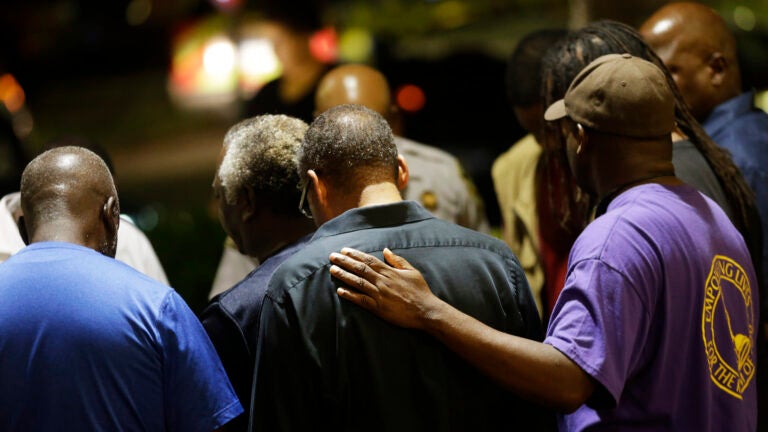
A white man murdered nine black people inside a church on Wednesday.
Where do we start? Do we blame this on our country’s appalling lack of gun control? On the fact that our country’s policies are essentially rigged against black people? On ourselves for electing leaders who have failed to protect our own people? On the dismal state of our nation’s mental health resources?
Yes, yes, yes, and yes. The murders were a hate crime. They underscore just how accustomed we’ve become to mass killings. They make it clear that we still haven’t figured out how to control guns in a way that prevents these acts, or at least makes them harder to commit. Hopefully, they have to do with mental illness, because the thought that a sane person could do something like this is scarier than it being the act of one deranged man.
But blaming this on large institutions and broken systems means we end up blaming no one. Congress doesn’t care if we say this is its fault; a collective group of mostly white men are largely untouchable if we just say, “You guys should’ve fostered a nation where this never happens.’’ Even calling out individual senators who’ve supported gun rights—Ted Cruz, Rand Paul, Mike Lee—doesn’t do anything to move the needle. And it wouldn’t make them change their minds.
It puts everything into terrible perspective that a white man would murder nine black people amidst all of the millions of articles about Rachel Dolezal this week. The murders in Charleston blew the cover off the safe and mostly low-stakes conversations we were having about race. We asked questions like “Why is what she did wrong?’’ and “Should a white woman get to decide she’s black?’’
Who cares.
What really matters is that 52 years after the bombing of the 16th Street Baptist Church in Birmingham, Alabama, the same kinds of hate crimes still happen.
Talking about race makes people really uncomfortable. People like Dolezal and Donald Sterling (the former owner of the Clippers who said very racist things) are easy ways to open up conversations about it, because they come with answers. We can say that Dolezal shouldn’t have masqueraded as black, that Sterling shouldn’t have said the N-word. We can ascribe blame to people in easy, clear-cut terms. We can walk away feeling like we’re on the right side of history.
But then a white man kills nine black people in a church and there are no answers. Who do we blame, besides the man who killed them? Of course he should be brought to justice. But laying the blame on him alone feels far too small. The circumstances that led to it are larger than all of us. So the responsibility rests on all of our shoulders.
There is no way we can be on the right side of history when it comes to an act like this. There is no walking away from this feeling like we’ve done, said, or written the right thing.
There are only nine dead people and the grief left in their place.
Photos from Charleston:
[bdc-gallery id=”319259″]


To comment, please create a screen name in your profile
To comment, please verify your email address
Conversation
This discussion has ended. Please join elsewhere on Boston.com