
Great Minds, Falling to Earth
This week, academia has seen not one, but three of its greats fall to earth by an enemy only Tim Duncan has managed to defeat: Father Time.
Michael Eric Dyson, renowned author, public speaker, and Georgetown professor of sociology, wrote 10,000 words on the fracturing of his relationship with, and his respect for, Dr. Cornel West. In his screed, Dyson outlines his disdain for West’s decision to levy personal attacks against him while failing to completely represent his views or character. Dyson combats these offenses by levying personal attacks against West while failing to completely represent West’s views or character. He does well to touch on some fairly salient points about West’s recent output or lack thereof, as well as his attacks against Obama. But these are things we knew, and things we didn’t need mud slung about in order to remember.
The New Republic has pumped the diatribe with the fervor of a frantic club promoter’s social feed. This is fairly understandable, as TNR recently came under fire for its past, both distant and recent. Also, clicks make money, and prominent academics undressing one another (with their words) will always be a draw.
Not to be outdone by the lack of necessity of the whole endeavor, MSNBC welcomed TNR’s Jamil Smith to discuss whether or not Dyson’s tome damaged the Black Lives Matter movement. To rephrase the purpose of Smith’s appearance: Do black folks have to love each other for white people to cop to something as uncontroversial as black lives mattering? With a bar set as low as lives simply mattering, not being superior or having a specific dollar amount like they once did, one would think we wouldn’t need to drop the personal dealings of two men in ivory towers only tangentally related to a movement born in response to black citizens dying in the streets.
Two titans fell to earth this week. And, as deeply stupid as all of this is, we’ve yet to arrive at the best part.
Henry Louis Gates Jr., master of the mama joke, and one of the greatest living academics dealing in matters of race, saw his dirty laundry aired as well.
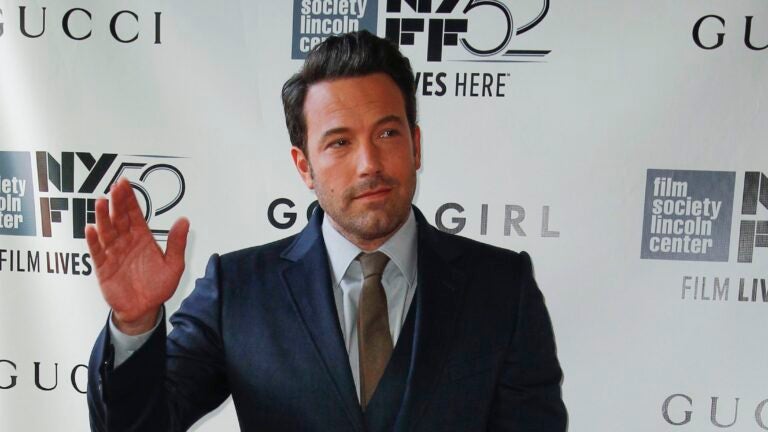
In a series of leaked emails, it was revealed that Ben Affleck’s family tree was home to a slave-owning ancestor. Affleck wanted the relative taken out of his portion of the PBS documentary series, Finding Your Roots. Gates pushed back, but ultimately left the ancestor out, stating the actor had more interesting facets of his tree that the documentary would cover. Affleck later revealed his ancestor to be slaver Benjamin Cole, and, in a release, made it clear that “we deserve deserve neither credit nor blame for our ancestors,’’ and though he doesn’t like his ancestor’s story, he is “happy that aspect of our country’s history is being talked about.’’
First, I don’t blame Gates for leaving out a slaver if he felt other stories made for more compelling television. Affleck has three ancestors who made the cut: an occult enthusiast, a Revolutionary War participant, and a relative who marched in the 60s during civil rights demonstrations.
In the face of discussing how the slave ownership may have affected Affleck’s fortunes, we’re left with two ancestors to undergird the niceguy-ness of a beloved actor.
Affleck’s grandmother was the director of public information at the famed Metropolitan Museum of Modern Art. His grandfather was a professor and activist. He was born on the Upper East Side of New York along with his father, who worked as an actor and stage manager alongside the likes of Robert Duval. With an opportunity to see the impact of ancestry unfold across generations when observing the jump between a slaver and an actor, Gates chose to focus on the sunny side of things. It would be appalling if it weren’t the knee-jerk reaction to discussions of race.
Gates has made his bones with honest, thoughtful, nuanced discussions of race in America. Affleck’s family tree served him an alley oop. Gates decided to go for the layup under the guise of “compelling television.’’ It isn’t a layup because the discussion is necessary. It’s a layup because it’s necessary and it’s in Gates’ wheelhouse. In his late-career shift from brave public figure to feel-good Ken Burns acolyte, another great mind stumbled for all to see.







To comment, please create a screen name in your profile
To comment, please verify your email address
Conversation
This discussion has ended. Please join elsewhere on Boston.com