
Pam Smart, Dzhokhar Tsarnaev, and Cameras in the Courtroom
Billy Flynn was granted parole, and it’s a stark reminder of how little trial coverage has changed since 1991.
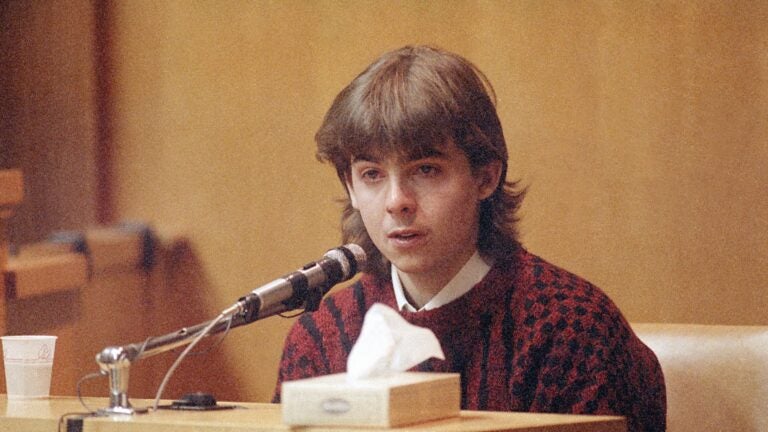
Billy Flynn was released from prison on Thursday after 24 years behind bars. Flynn was convicted of murdering Greg Smart, the husband of his lover Pam Smart. In March, Charlotte Wilder wrote about the Smart trial and how it defined courtroom coverage for a generation.
At 16 years old, Billy Flynn murdered Gregory Smart in Derry, New Hampshire. At 17, he went to prison. On Thursday, March 12, a board granted him parole. His 41st birthday is Friday.
In 1991, the trial of Pamela Smart came through America’s television screens and held viewers in its salacious grip. It was the perfect crime drama. Pamela Smart, an attractive, 22-year-old teacher, convinced Flynn, her 15-year-old student and lover, to murder her husband Greg. Flynn’s friends acted as his accomplices, and a 16-year-old girl turned out to be the prosecution’s key witness. She revealed that Smart put the boys up to the gruesome task.
The Smart trial was the first case to be broadcast live on American television from start to finish; it ran from March 14 to March 22, 1991. WMUR in New Hampshire suspended most of its programing to show the proceedings; as Captivated—an HBO documentary made in 2014 about the case—claims, the trial was reality television before reality TV existed.
The camera loved Smart, and Smart loved the camera. Before she was indicted, the teacher, who’d always wanted to be a broadcast journalist, gave interview after interview as the grieving widow. Her hair cascaded around her face in an ‘80s-style halo. During the trial, Smart secured her bouffant with a trademark bow.

Pamela Smart gets sworn into court in 1991.
The case practically begged to be made into a feature film. First came the novel, To Die For, by Joyce Maynard. In the movie by the same name, Nicole Kidman played Suzanne Maretto, the character whom Maynard based on Smart. Her purple eye-shadowed eyes lit up when she spoke directly to the camera: “You’re not anybody in America, unless you’re on TV.’’
Helen Hunt also took a turn as Smart in a made-for-TV movie Murder in New Hampshire: The Pamela Wojas Smart Story.
Flynn’s parole comes at a time when Massachusetts—and the world—is riveted by two of the highest profile cases in recent state history: the trial of alleged marathon bomber Dzhokhar Tsarnaev, and ex-Patriot and alleged murderer Aaron Hernandez.
But the media each trial uses to hold our attention is vastly different.

Aaron Hernandez with his attorney Charles Rankin during his murder trial.
Tsarnaev faces federal charges. Hernandez faces state charges. In 1946, Congress passed a law banning all cameras in federal cases, though judges in state courts can also ban recording if they feel the presence of cameras will lead to a “substantial likelihood of harm.’’ As a result, there are no cameras in the Tsarnaev case, other than one closed-circuit feed that streams the proceedings into an overflow room for members of the media.
Most of the coverage comes in the form of journalists’ tweets and articles.
There are cameras in the Hernandez courtroom. We can watch as prosecutors present the bloodied shirt that murder victim Odin Lloyd wore when he was killed. We can see Hernandez give a witness what one reporter called “the stink eye.’’

A courtroom sketch of Dzhokhar Tsarnaev and his defense attorney Judy Clarke.
In Captivated, Smart claims that the media coverage leading up to and during her trial severely impacted her right to a fair case. She blames the media frenzy that followed—including all of those movies and the many television shows that based plotlines on her case—for perpetuating the idea that she is a seductive sociopath.
But many argue that not allowing cameras to record and broadcast proceedings is outdated.
Eileen McNamara, writing for WBUR’s Cognoscenti, makes the case that the fast pace of Internet coverage, from real-time tweeting to day-of blogging, is essentially broadcasting without cameras. The subjectivity of each individual reporter robs the public of the ability to actually see the proceedings and make decisions about statements for themselves, rather than reading the constant stream from other people’s perspectives.
Others argue that lawyers and judges are not immune to the “observer effect,’’ the premise that when an organism is aware it’s being watched, it behaves differently from one that doesn’t. They say that cameras in court would cause lawyers to grandstand and judges to speak only for soundbites.

Billy Flynn in 2008.
But one thing both parties can probably agree on is that we’re having the same conversations about broadcasting trials that we had when Smart was found guilty. An article in The Boston Globe when Captivated came out cites a study from the 1990s. This is not new ground, and these are not new arguments.
When Flynn entered prison, he was a 16-year-old boy. His release as a 41-year-old man is a striking reminder of how much time has passed since the first televised trial.
Twenty-four years later, we’re no closer to deciding what the best practices for handling trial coverage are than we were when hair was big and purple eye-shadow ruled the makeup aisles.




To comment, please create a screen name in your profile
To comment, please verify your email address
Conversation
This discussion has ended. Please join elsewhere on Boston.com