
Lessons Learned from Online Dating: We’re All Awful
The results of two new studies on preferences in online dating were released last week, proving just what singles and non-singles alike have feared all along: Everyone is terrible and there is no hope for anyone.
Naturally I speak in hyperbole, but trust me, I have a point.
The two pieces of research, one by the granddaddy of free dating sites OKCupid, and the other an independent experiment conducted by Buzzfeed writer Anne Helen Petersen, sparked no shortage of media vitriol.
“OKCupid Data Reveals the Disturbing Truth About How People Pick Their Partners,’’ said News.Mic.
“Tinder Experiment Proves that We Are All Judgmental,’’ wrote SheWired.
“You Might Not Be Racist But Your OKCupid Habits May Suggest Otherwise,’’ mused Jezebel.
“Your Ovaries Are Really Depressed Right Now,’’ screamed my internal thought process.
Let’s talk first about OKCupid’s foray into the world of the (discriminating) human psyche. Cupid co-founder Christian Rudder, whose dabbling in “experiments’’ on users raised brows earlier this summer, released new data on the five-year evolution of the site’s users in relation to preferences on race and attraction. Based on data from 2009 and 2014, the study revealed that race not only remains a critical deciding factor for prospective daters but that the same bias has, as Rudder put it, “intensified a bit.’’ For example, Rudder cites that “82% of non-black men on OkCupid show some bias against black women,’’ while black and Asian men were also penalized by women of different races.
Nothing so bad about that, right? People date who they date. It gets weirder, though, when you consider that the site may be designed to reward certain racial identities.
“One interesting thing about OkCupid’s interface,’’ wrote Rudder, “is that we allow people to select more than one race, so you can actually look at people who’ve combined ‘white’ with another racial description. Adding ‘whiteness’ always helps your rating! In fact it goes a long way towards undoing any bias against you.’’
Hmm. So there’s that.
Petersen’s Tinder project yielded no less frightening results.
She analyzed the snap judgments we make based on appearance. The alleged benefit of Tinder is its dependency on impulsiveness. You’re attracted to someone, you swipe right. You’re not? Swipe left. If you’re both attracted, the opportunity to chat appears. In theory, it mimics the way we may interact with a strange we’ve met in real life; mutual attraction leading to conversation.
Petersen wondered what factors, besides physical appearance, lead us to swipe one way versus the other. Photos can cause perceptions and assumptions based on a number of factors that have nothing to do with beauty. Where was the photo taken? What were you wearing? What was your facial expression? What did your body language say? Was it merely just a photo of your bank account? (If so, you’re an idiot.)
She writes:
The vast majority of explanations for the no swipes on all of the above profiles pointed to a perceived lack of common interests: “we’d have nothing to talk about,’’ “I don’t think our politics would mix,’’ “nothing in common.’’ Sometimes those assumptions stem from depicted activities — fishing, body modifications — but some are just the way the mind runs wild with class, weaving the narrative that a working-class person probably doesn’t read books for pleasure, or enjoy art cinema, or seek out microbrews, or go on hikes the way a bourgeois, middle-class person does.
Is any of this really a surprise? Yes, the U.S. has made some strides in race and class acceptance. But progress or not, we haven’t reached a place where matters of race and class don’t matter. I’m not sure why we would expect the pursuit of romance to magically be more progressive and less ignorant than any of this generation’s other personal outlooks.
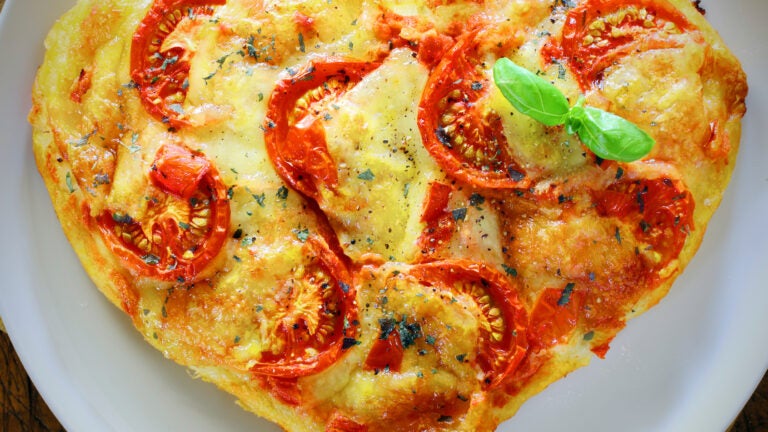
Let me put it this way: You want to order a pizza. Let’s say you’re somewhat narrow-minded in your pizza ordering preferences. You only like the pre-determined pizza toppings. You don’t like to deviate. Do you accept that others should be allowed to deviate? That toppings should be the choice of the person eating the pizza? Sure. But that doesn’t mean you should have to deviate. You like what you like. And I get that. You do you.
Let’s say you fancy yourself a Hawaiian pizza. You consider yourself a modern, unique individual, representative of the progressive Millennial and you believe your choice in standard pizza toppings represents that. A Hawaiian means: Red sauce, mozzarella, pineapple, and ham. But I say: Hey, let’s ditch the standard mozzarella cheese and throw on some ricotta instead.
You say: Whoa whoa whoa. When I apply the standards of ordering pre-committed toppings for the rest of my pizza, why would I suddenly change it up on the cheese?
But ricotta is delicious, I say. It’s a bit different than what you’re used to, but you should try it. You might really like it.
Nope, you insist. That’s a texture and flavor profile with which I am uncomfortable. And, you know, I just do not feel naturally inclined to deviate from my other preferences.
And then I say, that’s why you are the downfall of our generation.
As arbitrary as it may be, rigid pizza preferences are not unlike dating habits. Both feature a pattern of consistency when it comes to this type of predetermined bias. When we apply a specific mindset to our everyday lives – to our choices in pizza toppings and music and ice cream brands – why would our pursuit of companionship be any less narrow-minded?
Well, it wouldn’t. But that doesn’t make the result any less disappointing.





To comment, please create a screen name in your profile
To comment, please verify your email address
Conversation
This discussion has ended. Please join elsewhere on Boston.com