
Sign up for the Today newsletter
Get everything you need to know to start your day, delivered right to your inbox every morning.
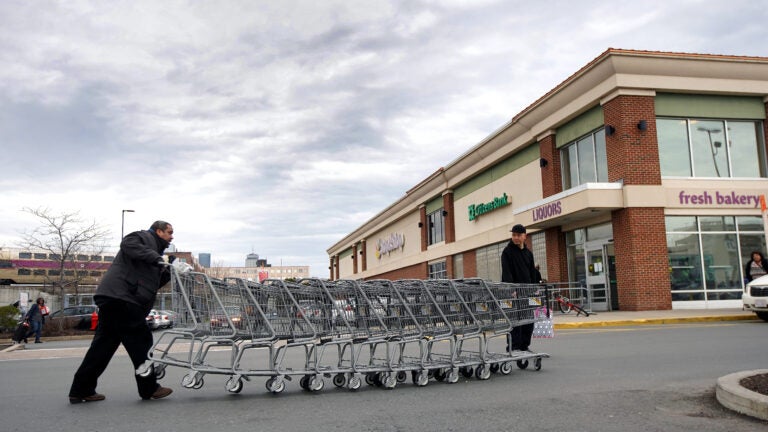
In May, lawmakers questioned whether Stop & Shop was doing enough to lower grocery costs for urban residents. On Wednesday, the grocery store chain shot back, saying it’s been doing the work all along.
Roger Wheeler, president of Stop & Shop Supermarket Company, LLC, wrote to lawmakers that the grocery chain is undergoing a multi-year strategy to “lower everyday prices across all our stores.”
Wheeler wrote that the strategy to lower everyday prices began last May. Since then, the effort has lowered prices at more than 40% of stores, he said.
By the end of 2025, Wheeler wrote, “prices will be lowered at all Stop & Shop locations in the Commonwealth.”
Lawmakers first raised concerns in September, when youth volunteers from the Hyde Square Task Force found that Stop & Shop charged 18% more for identical staple items at its Jamaica Plain store—a predominantly working-class, minority neighborhood—than at its location in wealthier Dedham.
That fall, a second study revealed similar pricing disparities at other Boston stores, including Grove Hall, South Bay, and Mission Hill.
In April, the task force revisited those stores and found that while prices had dropped in Jamaica Plain, other urban locations were still charging more, leading them to conclude that Stop & Shop “continues to profit at the expense of lower-income communities.”
After the report showed little progress, Sens. Elizabeth Warren and Ed Markey and Reps. Jim McGovern and Ayanna Pressley asked Stop & Shop’s CEO for an update in a letter earlier this month on the company’s promise to lower grocery prices in Massachusetts.
“We pressed Stop & Shop to lower grocery prices for families across Massachusetts, and it’s a big deal that they’re committing to getting that done,” said Warren in a statement to Boston.com in response to the latest letter.
“We’ll keep up the pressure to make sure Stop & Shop keeps its promise so that families —especially those in working-class neighborhoods — aren’t being overcharged based on where they live,” she continued.
Wheeler explained that prices hadn’t dropped across all stores because the grocery chain faces broader economic challenges. These reportedly include rising labor and product costs, volatile energy prices, supply chain challenges, higher transportation costs, and high electronic card swipe fees.
He noted that many grocery store item costs are affected by factors such as global supply chain disruptions by natural disasters, international conflicts and more recently, tariffs on imported products, ingredients, and raw materials.
Wheeler said it is common practice in the retail industry for pricing to vary by location. Factors such as rent, real estate costs, the size of the store, labor costs, variety of products, supply chain and transportation costs, and shrink (including losses due to theft) all affect the price of goods.
Stop & Shop does not consider neighborhood demographics when setting prices, he noted.
Wheeler said the specific process of setting prices is confidential and competitively sensitive for retail businesses. If disclosed publicly, it could result in competitive harm.
Additionally, Stop & Shop operates more than 60 pharmacy locations in the state, and it is experiencing cost pressures due to the rising cost of prescription medications he said.
“I provide you with this background to paint a realistic picture of the cost challenges grocery retailers are facing every day in an industry that already operates on razor-thin margins,” Wheeler wrote.
Regarding a question about Stop & Shop closures, Wheeler said the company closed eight stores in the state last year that were reportedly underperforming financially. However, the company said it is reinvesting in other locations with newly renovated stores in Jamaica Plain, Dorchester, and Mission Hill.
Stop & Shop will also continue to be a corporate donor to the Greater Boston Food Bank, Worcester County Food Bank, and the Food Bank of Western Massachusetts. It also helps support more than 260 in-school pantries to combat student hunger.
“We’re proud of all that we do to serve our customers, associates and communities,” Wheeler wrote. “We are going to continue with the work that’s already underway to improve the customer experience in our stores and to lower prices.”

Get everything you need to know to start your day, delivered right to your inbox every morning.




To comment, please create a screen name in your profile
To comment, please verify your email address
Conversation
This discussion has ended. Please join elsewhere on Boston.com