
The taxi industry’s Uber battle in Massachusetts is not over yet
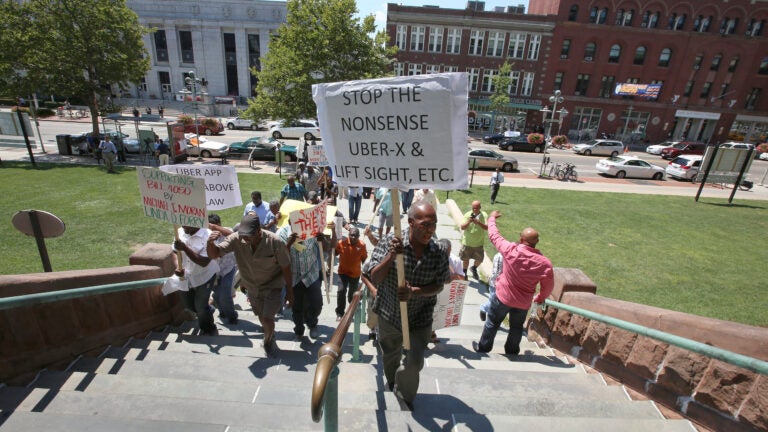
Gov. Charlie Baker on Friday will sign into law the state’s first rules overseeing Uber and Lyft, bringing to a close the contentious issue of how to best regulate the app-based hired-ride services.
For now.
Scott Solombrino, a limousine executive and spokesperson for Ride Safe MA, a taxi and livery industry group, said the bill passed by lawmakers last weekend is a victory for those industries, which have long called for tighter regulations on services like Uber and Lyft.
His comments come as something of a surprise, after he had ripped proposed House and Senate ride-for-hire laws earlier this year that ultimately resulted in the final bill. He and other advocates had pushed for tighter regulations, including fingerprint-based background checks on drivers, which they said would have created a more level playing field between the taxi industry and their newer competitors.
For example, the final bill includes a state-run background check for drivers, which will see the state double-check Uber and Lyft’s own internal checks. The Senate bill and one filed by Gov. Charlie Baker in 2015 each included a similar system, and Solombrino spoke out forcefully against both bills.
But Solombrino on Friday praised the background check measure, arguing it will help to weed out some bad actors from the driver rosters.
“The double background check is unbelievably efficient,” he said. “The state now has to do their own background check on [the companies’] background check.”
Solombrino also celebrated other aspects of the bill, which requires Uber and Lyft drivers to pay commercial toll rates, display placards on their cars, and notify their personal vehicle insurers that they will provide transportation services. He also speculated that Uber and Lyft, both of which have put out statements reacting positively to the final legislation, “are not happy with the bill.”
Solombrino’s sunny reception to the law is at odds with other industry representatives. Donna Blythe-Shaw, a former staff representative for the Taxi Drivers Association, earlier this week told The Boston Globe that “there is just no way they can recover from this legislation.” And Jenifer Pinkham, a lawyer representing taxicab companies in Boston and Cambridge, said on Monday that they may sue the state to challenge the law.
And even in praising the soon-to-be law, Solombrino said his group’s efforts are far from over. For one, he said, it will push for a new law during the next legislative session — which starts in January — to add a fingerprinting requirement for the services’ drivers.
“I also believe fingerprinting is coming,” he said. “This is not done. We’re not done with fingerprinting.”
He said that a “whole pile of lawyers” will work at the municipal level to lighten city regulations on cab industries. For instance, he predicted that with Uber and Lyft now regulated statewide, cities and towns might be willing to give cab companies control over their fare rates, a freedom Uber and Lyft already have. Cab groups have sued cities in Massachusetts and elsewhere, demanding the competing services all operate by the same rules.
Another looming battle will come at the airport. The bill passed last week said the Massachusetts Port Authority could set its own regulations about whether to allow Uber and Lyft drivers from picking up passengers at Logan Airport. That was a big win for Uber and Lyft, after a prior House bill proposed banning Logan pickups for at least five years, giving cabs and livery services exclusive jurisdiction at the airport. Massport has indicated that it intends to open for business to the companies’ drivers in the near future.
However, Solombrino said the provision is good for the cab and livery industries, because it will allow them to lobby Massport as it sets the regulations.
“It takes on another whole negotiation,” he said.
Additionally, Solombrino said cab companies will likely press the attorney general’s office to investigate whether Uber and Lyft are violating labor laws by classifying drivers as independent contractors. Those issues have come up in court before, with one high-profile class-action suit settled earlier this year.





To comment, please create a screen name in your profile
To comment, please verify your email address
Conversation
This discussion has ended. Please join elsewhere on Boston.com