
Speaker: House will take up Uber law this winter
Several bills related to ride-hailing technology were taken up last fall by a legislative committee
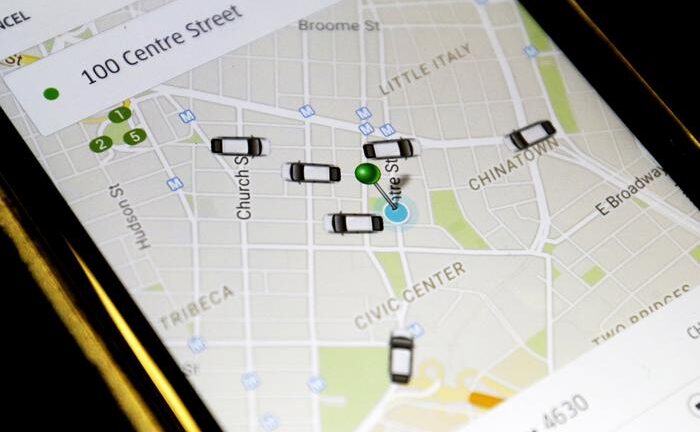
Establishing statewide regulations for on-call ride services like Uber and Lyft will be a priority for legislators this winter, Massachusetts House Speaker Robert DeLeo said Wednesday.
A bill will be drafted and considered by the House in February, he said.
“We will find a way to make companies such as Uber and Lyft part of the permanent landscape in Massachusetts while keeping in mind the benefit that competition from taxicabs and livery companies brings to the marketplace,’’ the Winthrop Democrat said in a speech to representatives in which he outlined the chamber’s agenda for the coming months. “Consumer choice is a good thing, and we will take up legislation that accomplishes that goal in the month of February.’’
Since Uber entered Boston, taxi companies have decried the lack of regulation on so-called transportation network companies, which allow users to summon a ride with the touch of a button. As Uber and Lyft have grown in popularity, the tightly regulated cab industry has complained that business has sharply fallen off, arguing taxi companies can’t compete due to the differing rules.
Several bills related to ride-hailing technology were considered last September by a legislative committee. Members of the joint Committee on Financial Services have been working to draft a new bill in the months since the hearing.
The two bills that were most heavily considered last year had support and opposition on either side of the issue.
One, proposed by Gov. Charlie Baker, has the support of the newer ride-hailing companies. The bill would require a state background check, but would not require fingerprinting—an aspect of the debate that has been hotly contested.
Another, from Rep. Michael Moran and Sen. Linda Dorcena-Forry, would require fingerprint-based background checks and commercial insurance policies for Uber and Lyft drivers. That bill has the support of cab companies.
Several law enforcement officials and prosecutors have voiced their support for fingerprinting Uber and Lyft drivers.
Uber rallied against the Moran-Forry bill in an online campaign last summer (which was not received particularly well by all lawmakers). The company has resisted the call for fingerprinting in Massachusetts and across the country, claiming its own background check process is more effective.
Rep. Aaron Michlewitz and Sen. James Eldridge, the two co-chairs of the legislative committee, have both said they expect a so-called Uber bill to be finalized before the legislative session ends this summer.



To comment, please create a screen name in your profile
To comment, please verify your email address
Conversation
This discussion has ended. Please join elsewhere on Boston.com