
Jonathan Kraft on daily fantasy sports: ‘I think it should be regulated’
The Kraft Group is an investor in Boston-based DraftKings, one of the major daily fantasy sports companies.
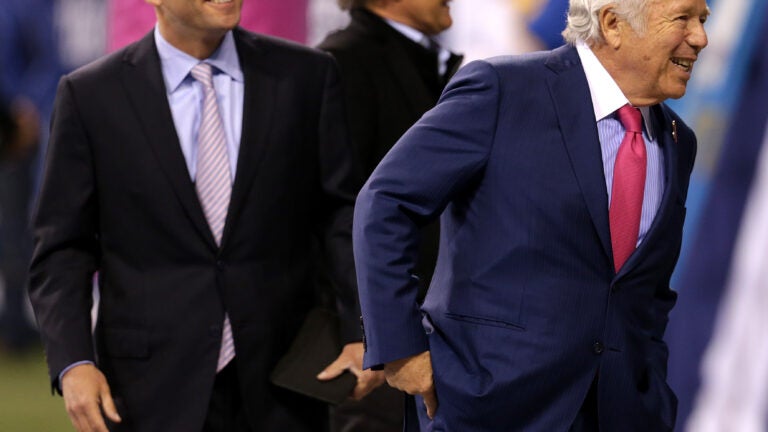
The Kraft Group, which owns the New England Patriots, is among the many high-profile investors in the Boston-based daily fantasy sports company DraftKings.
Along with its rival FanDuel and other competitors, DraftKings has become a flashpoint this football season. Daily fantasy sports companies have attracted the eye of lawmakers amid questions about their contests’ legality under state and federal laws, and concerns about the fairness and integrity of the games. Attorney general reviews, a reported federal probe, and calls for regulation have come amid a backdrop of seemingly endless advertisements on NFL broadcasts.
Ahead of the Patriots’ Sunday night game against the Colts, Kraft Group President Jonathan Kraft told the Patriots radio pregame show on 98.5 The Sports Hub that the companies should face some regulations.
“I think both companies … are both willing, and I think they welcome the oversight,’’ he said. “And what I’ve read of both companies’ CEOs, they’ve said everything should be transparent, and we’re open to regulation, which is probably the right next step. But I think fantasy sports is pretty much a part of mainstream culture now in our country, and I think it’s a nice element of what we have, and I think it should be regulated as well.’’
FanDuel said a week and a half ago that it would “look forward to speaking with regulators across the nation about how to define the right set of rules for our industry as it continues to grow.’’ DraftKings CEO Jason Robins told The Boston Globe he would be “open to, and accepting of, regulations put on us,’’ but that he did not think regulations were necessary.
Questions about the right regulations for the games differ from the mounting questions about whether they are legal in the first place, as many consider the big-money games a form of sports betting. The answer can vary state by state based on gambling laws. (Attorney General Maura Healey has said her office believes the games are legal under Massachusetts law.) A federal law, the Unlawful Internet Gambling Enforcement Act of 2006, exempted fantasy sports from an effective ban on most forms of online gambling. Kraft referenced that law in his interview.
“Congress made it legal,’’ he said. “It’s interesting to me, over the last month or so with all the yelling out of Washington about how this is an unregulated industry–well, they have the right to regulate it. They chose to make it legal and not pass regulations.’’
The 2006 law was passed before daily fantasy games had risen to prominence, when fantasy sports almost exclusively referred to the more traditional season-long contests. The coauthor of the law, former U.S. Rep. Jim Leach of Iowa, has said the fantasy sports exemption in the law was favored by the NFL and MLB, and the NFL is widely thought to have played a big role in securing the exemption, according to The New York Times.
Robert Kraft and Roger Goodell through the years:
[bdc-gallery id=”463031″]




To comment, please create a screen name in your profile
To comment, please verify your email address
Conversation
This discussion has ended. Please join elsewhere on Boston.com