
Has Massachusetts reached peak casino?
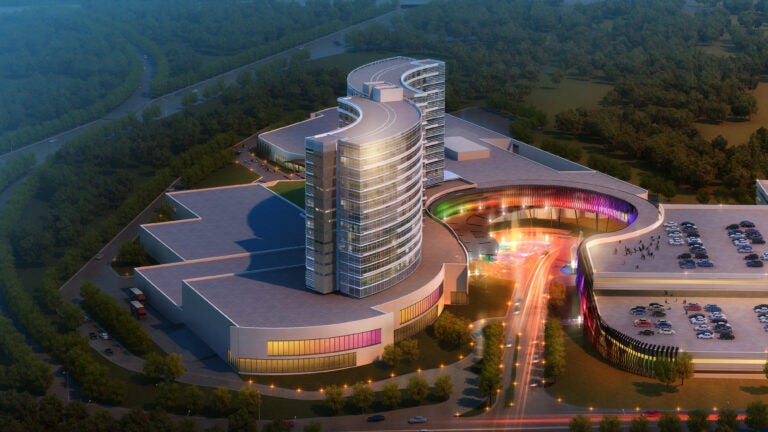
Late last week, the Mashpee Wampanoags received the news the tribe had hoped to hear for years: it had been granted sovereignty over 320 acres of land, about 150 of which are in Taunton, where it hopes to build one of the first resort casinos in Massachusetts.
That poses a couple of big questions to the Massachusetts Gaming Commission: How much is too much when it comes to resort casinos in Massachusetts? And are we there yet?
The tribal casino effort has cast lingering questions over the state’s young casino industry. In 2011, when state lawmakers approved of opening three casinos and a slots parlor, the gaming commission originally held off on licensing a casino in southeastern Massachusetts. Instead, it deferred to the tribe’s efforts to gain control of the land and open its own casino in the region, which would not need the commission’s approval.
That federal process to gain control over the land dragged on for a while, though. The gaming commission recognized that the feds may have allowed for the tribal casino to move forward, but also recognized that it was unclear when or how it would decide. And so it opted to explore licensing a commercial casino for the region anyway. One applicant hopes to build a commercial casino in Brockton, which would be about a half-hour drive from the tribal land in Taunton. The possibility that the tribal casino would eventually open in the same region scared off another casino applicant in New Bedford earlier this year.
It’s not just proximity that would be an issue for a commercial casino. If the state allows a commercial casino to open in the same region, the tribe would not pay anything to the state at all, giving an extremely different budgetary picture than any competitor in the region. Without a commercial competitor, the tribe would pay 17 percent of its gaming revenues to the state, lower than the 25 percent commercial operators must pay.
“If there was a Native American operator, they could undercut any commercial operator,’’ said Rev. Richard McGowan, a Boston College economist who studies the gaming industry. “Why would you even bother trying to compete?’’
On Friday, the tribe gained control over the Taunton land, making that scenario all the less hypothetical. Though it could be tied up by litigation, the tribe intends to move quickly. Cedric Cromwell, the tribe’s chairman, said over the weekend that early site work could begin next spring.
The backer of the Brockton casino, Mass Gaming & Entertainment, has said it thinks the two casinos can coexist.
The next big question is whether the gaming commission agrees. It will take the issue up on Thursday, and could decide how to proceed in the region, according to commission spokeswoman Elaine Driscoll. The commission has cautioned throughout the southeastern Massachusetts licensing process that it may opt not to issue a license in the region.
“This determination provides further important information for the decisions the commission must make in the weeks ahead,’’ Driscoll said in a statement.
Senate President Stan Rosenberg used the o-word on Friday—’’oversaturation,’’ a sentiment gaming commission chairman Stephen Crosby conveyed while discussing the southeastern region with The Boston Globe last year. Rosenberg said in a statement that the said the gaming commission “has the responsibility to weigh the significant market oversaturation that would no doubt occur with multiple resort casinos in the southeastern region.’’
Clyde Barrow, a former UMass Dartmouth professor who now teaches at the University of Texas Rio Grande Valley and studies casinos, said he expects the gaming commission to drop the Brockton plan now that the tribal casino appears likely. Barrow said that even if the market can bear two casinos in the region, the tribal casino would perform better. Since it would not be required to share any revenue with the state, it could invest more in attracting guests. And that would mean the casino in the region that was making more money would not be paying any of it to the state, Barrow said.
“The state may do a cost-benefit analysis and say, ‘We’re getting 25 percent off a $200 million-per-year casino, and we could be making 17 percent off a $500 million casino,’’’ he said. “It’s hard for me to imagine a scenario where they license a commercial casino.’’
So far, Massachusetts has opened one gaming establishment: a slots parlor in Plainville. Wynn Resorts has been licensed to open an Everett resort casino, and began site prep work this month. Out west, MGM Resorts expects to open a Springfield casino in 2018.
Meanwhile, the Aquinnah Wampanoag tribe, separate from the Mashpee tribe, hopes to open a smaller casino on Martha’s Vineyard, a decision in the hands of U.S. District Court. And a real estate developer named Eugene McCain is pushing for a 2016 ballot question that would ask voters whether to allow for a second slots parlor in Massachusetts.
Saturation is a concern across New England. Rhode Island and Connecticut casino operators are maneuvering to protect against Massachusetts casinos taking away their share of the market.
The operators of Connecticut’s Foxwoods and Mohegan Sun casinos are teaming up to open a third casino in the Nutmeg State to compete with the MGM casino planned for Springfield. And the Newport Grand slots parlor in Rhode Island aims to move closer to the Massachusetts border, an effort that would also involve offering table games.
Barrow, the former UMass professor, said he believes that if Massachusetts opened three casinos and a slots parlor as originally planned, New England would be at “saturation or something close to it.’’
But he said the casino market does not necessarily pay attention to supply and demand at the regional level, because each state wants to capitalize on gambling revenue on its own.
New Hampshire, for example, does not have casinos. Legislators there have considered multiple times whether to open casinos, and may again in the future. Opening a casino there would not hurt the state, because the state currently has nothing to lose on the gambling front.
“If I’m New Hampshire, why not?’’ Barrow said. “It’s all new revenue to them.’’
How Boston’s skyline has changed:
[bdc-gallery id=”466772″]



To comment, please create a screen name in your profile
To comment, please verify your email address
Conversation
This discussion has ended. Please join elsewhere on Boston.com