
Why didn’t the USOC just choose L.A. in the first place?
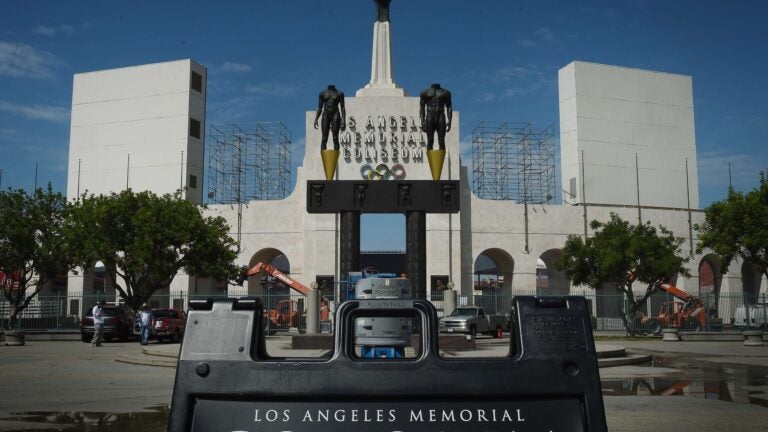
And just like that, it’s as though Boston’s Olympic bid never happened. The United States Olympic Committee on Tuesday officially named Los Angeles its bidding city for the 2024 Summer Games, 36 days after it gave up on Boston, its first choice, due to poor public support.
While concerns are already registering in L.A. about potential cost overruns, the city has a lot more going for it than Boston did when it comes to hosting an Olympics.
Los Angeles already has the competition venues Boston would have needed to build. Unlike Boston, it has somewhere near 80 percent support from its public. (In Boston, support sank as low as 36 percent.) Opposition groups in Boston were loud and active long before Boston was chosen as the U.S. bid city; there’s been very little organized opposition in L.A. And the winning proposal presented by bidding committee Boston 2024 also included a $500 million deficit, which was later hidden from the public.
So, why did the USOC even bother with Boston in the first place?
USOC spokesman Mark Jones declined to answer that question when asked by Boston.com in August.
But last Friday, the head of Los Angeles’s bid, sports marketing executive Casey Wasserman, offered an explanation to the L.A. City Council.
He said the USOC staff—including Chairman Larry Probst and CEO Scott Blackmun—supported the L.A. bid. But when it came time for a vote on the matter, USOC board members felt differently.
Wasserman, according to a transcript from Sports Business Daily, suggested that some board members chose Boston because they work or have previously lived here.
“There are a bunch of athletes based in Boston on that board, and a couple of executives on the board, and Boston in their mind was a new, fresh city,’’ he said.
Among the USOC board members with ties to Boston are James Benson, former CEO of John Hancock, and Whitney Ping, who works for Bain Capital, which is where Boston 2024 Chairman Steve Pagliuca works as managing director. (Pagliuca was not yet the chair when the USOC selected Boston, but had been involved with the bid.)
Wasserman said the USOC’s vote between Boston and L.A. was extremely tight. When the committee chose Boston on January 8, the USOC said Boston received its board’s “unanimous endorsement.’’ But the minutes from that meeting show those words carried some nuance. After a majority of USOC members voted for Boston, it then unanimously voted to endorse it. The unanimous vote wasn’t to choose Boston—it was to get on board with Boston after the board had already narrowly chosen the city over L.A.
Wasserman also said the novelty of Boston may have played a role in the selection.
“The one thing about L.A. is this would be our third time hosting, and the USOC—and the most important thing they do, other than train athletes, is bid for games—and they had gotten some insight from the [International Olympic Committee] that maybe a new city would be a better way to approach that,’’ he said. “But the truth is, a new city with a plan that’s not feasible is not a good city to bid with, and that quickly became evident.’’
The USOC did not respond to a request for comment about the validity of Wasserman’s assessment.
Los Angeles will bid against Rome, Paris, Budapest, and Hamburg.
Read Wassermnan’s full explanation at Sports Business Daily.
What a Boston Olympics would have looked like
[bdc-gallery id=”115186″]




To comment, please create a screen name in your profile
To comment, please verify your email address
Conversation
This discussion has ended. Please join elsewhere on Boston.com