
Mayor doubles down in Wynn casino fight
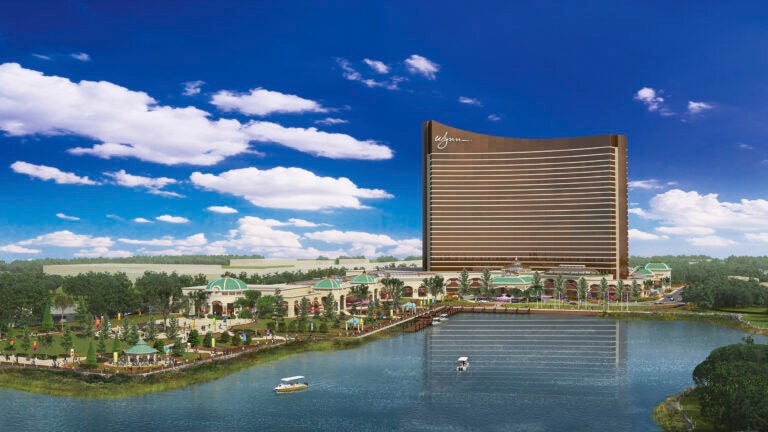
Boston Mayor Marty Walsh has made his objections to the Wynn Resorts casino planned for Everett a mountain he’s willing to die on. This week, he refortified the mountain, as his administration amended and expanded a lawsuit against the Massachusetts Gaming Commission.
Walsh is challenging the gaming commission’s decision last September to give Wynn, one of the casino industry’s most recognizable names, a license to build a $1.7 billion gaming establishment just over the city boundary.
At 152 pages, the new suit is more than twice the length of the original suit filed in January. It challenges the Wynn license on broad of grounds, arguing:
• Gaming commission chairman Stephen Crosby, who had a business relationship with an owner of the Everett land where the casino will be built, should have recused himself from the licensing process far sooner than he did.
• The commission erred in declaring the Wynn plan suitable due to separate controversial land ownership issues.
• Wynn has not completed certain conditions of its license in a timeframe it agreed to during the licensing process.
• The commission should have recognized Boston as a host community to the Wynn project, a designation it sought last year.
The suit can be read in its entirety here.
It suit asks the court to declare the Wynn license “null and void’’ and, barring that, to declare Boston a host community.
It also asks the court to disqualify the entire gaming commission from “any and all proceedings’’ regarding a Boston-area license, which the city wants done over.
“We need to start the process over again,’’ Walsh said at a Thursday press conference at Sullivan Square, near the planned casino site.
It’s the latest swing in a long fight between Walsh against Wynn and the gaming commission, dating back to near the start of the mayor’s term in 2014. The refreshed suit reads like a trip down memory lane, with challenges dotting the timeline.
Last spring, the mayor sought to gain the designation of a host community for both of the then-proposed casino projects: Wynn’s in Everett, as well as a Mohegan Sun plan for Revere. The host community designation does a couple of things: First, it gives the city better negotiating power as it seeks to receive payments from a casino operator. Second, it also gives the city the ability to vote on whether or not the casino should be built in the first place.
In Everett, the city argued, the only road into the casino was within Boston’s boundaries. (Wynn intends to build a separate entrance on land it has agreed to buy from the MBTA—which has become a whole other controversy.) The gaming board rejected Walsh’s challenge, and now Walsh is challenging that rejection, hoping that if he can’t get rid of the casino he can at least get some money out of it.
The mayor was still free to pursue surrounding community agreements with the two operators, stipulating mitigation payments to the city but no vote. He reached a lucrative agreement—worth $18 million per year—with Mohegan Sun, but he was unable to strike a deal with Wynn.
Walsh was given the opportunity to go to arbitration over the payment, which he declined. That put the city at risk of not receiving any money from Wynn, though during the licensing process Wynn and the gaming commission set aside payments for Boston to help it mitigate traffic at Sullivan Square. Walsh is arguing now that the arbitration process is faulty and asks that the gaming board’s entire arbitration process be declared invalid.
Wynn was awarded the regional casino license in September. Shortly thereafter, federal and state indictments were brought against three landowners, alleging they had kept the ownership stake of one of them—convicted felon Charles Lightbody—secret. This controversy was subject to the original Boston lawsuit and is raised again in this one. It has also been included in similar suits brought by both the cities of Somerville and Revere, which also seek to reverse the licensing decision.
In a statement, Wynn referred to the issues raised in the suit as “retread stories…without merit.’’
Walsh originally filed the suit against the gaming commission in early January. A couple of days later, Wynn attempted to pay $1 million to the city as part of the agreed upon mitigation, but said the city rejected the check. Shortly thereafter, Steve Wynn said: “I hope the mayor doesn’t slow us down.’’
At Thursday’s press conference, Walsh made it clear that he has every intent to do so, if not more.
“I’m not going to let this pass without a fight,’’ he said.



To comment, please create a screen name in your profile
To comment, please verify your email address
Conversation
This discussion has ended. Please join elsewhere on Boston.com