
Explaining the Massachusetts Pay-to-Play Beer Scandal
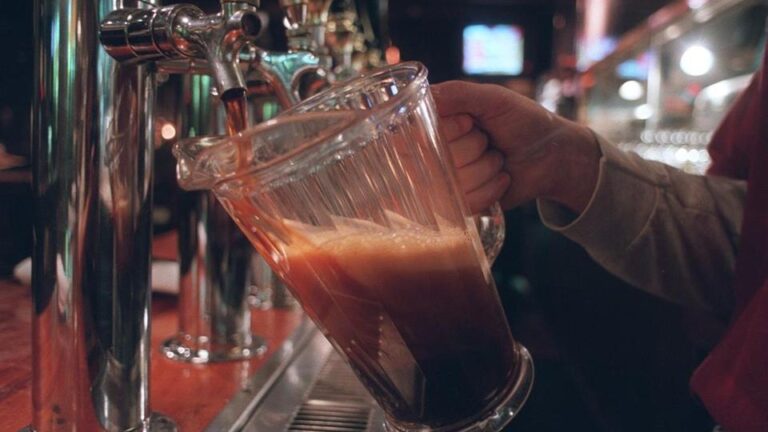
Last month, Dann Paquette, the owner of craft brewing company Pretty Things Beer & Ale Project, took to Twitter to allege that an owner of a couple of Boston bars had engaged in “pay-to-play’’ practices—asking for some kind of compensation in order to have its beers put on tap.
This is illegal under Massachusetts and federal laws, and so the claim created quite a bit of hubbub, with many involved in the industry suggesting online that the practice isn’t that uncommon. The state said it would investigate the claims. And on Friday, The Boston Globe reported that the state’s Alcoholic Beverages Control Commission had sunk its teeth in some, taking a broad approach to the investigation, complete with several subpoenas across the industry. You can read that full article here.
Gary Dzen is Boston.com’s associate sports editor. He also is The Boston Globe’s beer writer, and worked on the Globe’s story about the state investigation. He took time from his busy Friday—just two days shy of Patriots v. Colts, and with LeBron James in town!—to talk about the story.
In case anybody’s just jumping in now, can you explain what a pay-to-play arrangement looks like? It’s not just the idea of paying cash in order to wind up on a line, right?
Gary Dzen: Right. Pay-to-play can take many forms. The simplest is handing over cash in exchange for a dedicated tap line. But because all of this is illegal, potential violators try to disguise it in any way they can. I’ve heard, anecdotally, of a bar’s draft lines being replaced, of someone paying for two years of a DirecTV package, of new coolers being brought into a liquor store free of charge. These things tend to be harder to track down than Big Brewery or Distributor X writing a check to Al’s Pub. In its simplest form, pay-to-play may just be a brewer offering or a bar demanding a tiny discount on kegs.
How does the issue differ from grocery stores taking payments to put groceries on endcaps, or restaurants signing contracts with one of Coke or Pepsi?
GD: With the grocery and Coke examples, you’re not breaking any laws. It is illegal in Massachusetts to make inducements or pay for alcohol’s placement in bars or restaurants. According to a state regulation, “The use of any device, promotion or scheme which results in the sale of alcoholic beverages at less than invoiced cost is prohibited.’’
The state seems to be giving more than just lip service to an investigation, after saying it would look into the issue last month. Does that surprise you?
GD: It surprises me because, in trying to track down information on pay-to-play practices last year, an official with the Alcoholic Beverages Control Commission said a case had not even come up for review in 18 years. So either the state wasn’t looking for cases, they weren’t being reported, they were being glossed over, or some combination of all three.
Had you, as an intrepid beer reporter, heard much about this issue before it came up?
GD: All the time. But like I said before, it was all anecdotal. Every single person I asked about this, from brewers to bar owners to store owners, had a story. Usually the story was vague—“some brewer wrote a check to a bar down by Fenway that was enough to buy a Cadillac’’—but that’s not enough evidence to print something. Industry folks are very hesitant to go on the record, and who would blame them? They don’t want to turn in their business partners. They don’t want to point a finger at someone else only to have it come back at them. There’s a ton of money to be lost here, people’s mortgages.
Let’s say the state finds violations. What would come of that?
GD: As far as penalties, if such allegations were brought before the ABCC, a hearing would be held to review the facts surrounding those allegations. Depending on the circumstances and a thorough review of the case, penalties could range from no action taken, to a warning, to a license suspension, all the way up to a complete license revocation.
Both the distributor and the bar could be subject to penalties if the commission determined that such allegations had merit.
Those who have spoken up about this suggest it’s been going on for a long, long time. That may or may not be the case, but if it is, could it be that it’s become part of the culture of the business at this point? Or a sense that if everybody else is doing it, maybe it’s not such a big deal?
GD: Absolutely, this is embedded in the way people do business. If you’re a brewer, you may feel like you have to do it, or else you don’t sell your beer. It’s easier to build the cost into running your business than blow the whistle and potentially not have a business at all.
One thing I’ll say is that I don’t think anyone thinks it’s “not a big deal.’’ It’s a huge deal to just about everyone I’ve talked to, but no one is sure what to do about it. I don’t think anyone has resigned themselves to this being the right way to go about things.
Some brewers and distributors who have claimed anonymously and/or vaguely that pay-to-play is an issue have been criticized since the Pretty Things tweets for not putting forward evidence or naming names—for sort of cheering from the sidelines. Do you think the notion of a fairly serious sounding investigation might compel more people to talk?
GD: I sure hope so. I thought the Pretty Things stuff might spur others to come forward, but their coming out hasn’t removed the difficulty of others doing so. It’s tricky. In some ways it’s easier for a small brewer to come forward because they have less to lose in overall dollars, but in some ways it’s much more difficult—they could lose their entire business. We also need to be careful not to paint this as big brewers vs. small brewers, massive distributors vs. tiny, local businesses. The truth is likely much more complicated than that. But again, without documentation that money and goods are being exchanged, these questions are going to linger.


To comment, please create a screen name in your profile
To comment, please verify your email address
Conversation
This discussion has ended. Please join elsewhere on Boston.com