
Why Boston’s Snow Removal Budget So Often Comes Up Short
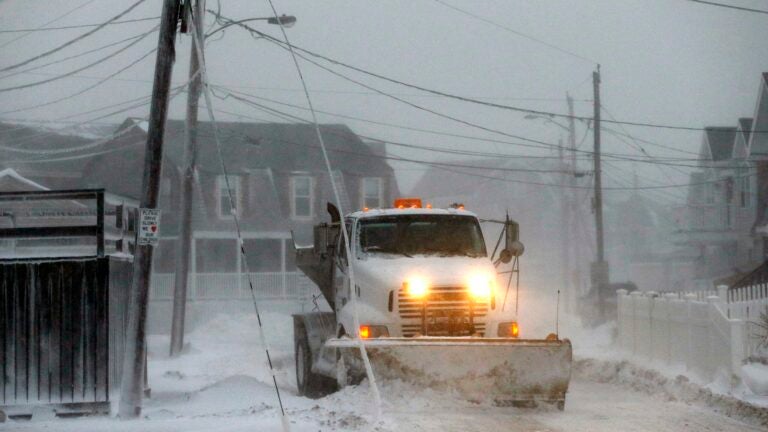
Boston’s snow removal program ran a deficit in six of the last nine winters.
That’s not just Mother Nature’s fault—it’s the way the city chooses to budget.
This winter’s budget has $18.5 million set aside for snow removal services, which pays for snow plow drivers, their equipment, and tons and tons of salt.
Compare that to 2005, when $7.7 million was budgeted for snow removal.
You can see the steady climb of the snow removal budget in the graph below, with data gleaned from the city’s website.

That graph shows how much money was appropriated, generally two years ahead of time, for snow removal. Comparing that to the actual cost of snow removal services shows the deficit or surplus over the years.

In the graph, the cost of snow removal (in dark red) swings wildly from year to year, with a high of $22 million in precipitation-heavy 2005 to a low of $5.4 million in a largely snowless 2012. Even with those swings, though, more often than not Boston’s appropriated funds (in pink) don’t cover the bill.
Thankfully, the snow still gets cleared no matter the budget status. In the case of a deficit, the city pays for snow clearing and reports it as a deficit, and surpluses in other areas of the budget then go to cover the shortage. Similarly, during surplus years, money not spent on snow removal is spread to other departments that exceed their allotted budget.
“We have our budget and we hope we stay within it,’’ said Jim Williamson, Boston’s interim budget director. “But it’s gonna be what it is.’’
There are two main reasons the appropriated funds often don’t cover costs. One is the way the budget is calculated. The other is the rising cost of plowing snow and buying salt.
To get to that budget number, the city averages the cost of snow removal for the previous five years, Williamson said. This year, Boston’s budget-makers did make a small alteration by taking the outlier year of 2012 out of the analysis. But otherwise, the snow removal budget is chosen by simply averaging past years.
That reliance on the past means that when costs increase, Boston is constrained by budgets made during cheaper years. And that’s exactly what’s happened over the past decade.
The price of salt, for example, has increased just this year from $45 per ton to $55 per ton, according to Michael Dennehy, Boston’s interim commissioner of Public Works, who fondly recalled the days when it cost just $25 per ton. Given that Boston has eight salt facilities, and each holds 35,000 tons of salt, any price increase takes a big bite out of the budget.
Similarly, the cost of hiring snow plows and contractors to drive them has been going up the past few years. Those prices are decided by competitive bidding contests, Dennehy said, and the increases are just the “cost of doing business.’’
Yet as the costs of salt and contractors go up, the budget remains partly reliant on prices from five years ago. That’s why the budget will keep increasing over the next years, but it will likely constantly be trending just below the actual cost of cleaning the streets.





To comment, please create a screen name in your profile
To comment, please verify your email address
Conversation
This discussion has ended. Please join elsewhere on Boston.com