
The Towns That Once Opposed Casinos Voted in Favor of Gambling on Election Day
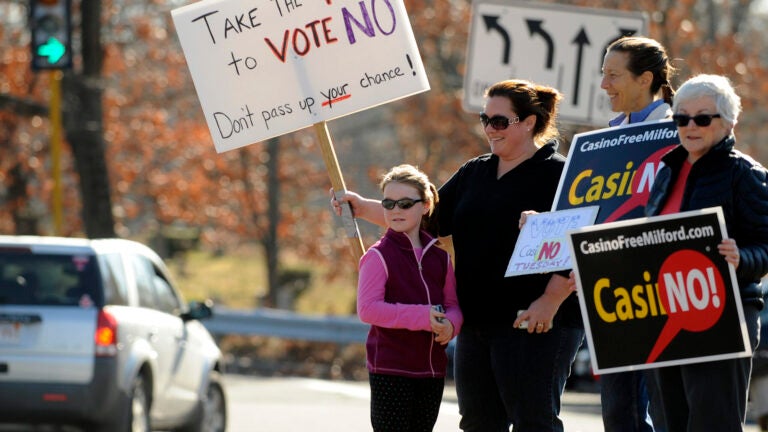
The anti-casino rhetoric was strong in a number of communities across Massachusetts over the last couple of years, as several proposed gambling projects were shut out by residents in several places. But when the question of whether to move forward with casinos statewide was presented to voters on Election Day, many of the residents who had opposed casinos in their own communities proved that they had been working from a NIMBY (not in my backyard) playbook.
The hope from those heading up the casino repeal effort was to harness the local opposition that had proved successful in individual communities and transfer it statewide. That didn’t work out, of course, as the Repeal the Casino Deal committee was heavily outfundraised and outspent before it was defeated by about a 20 percent margin on Election Day. Casinos, it appears, are here to stay. Not only did the repeal group fail to get most of the state on its side, nearly all of the communities that rejected casinos inside their own borders were okay with letting them move forward elsewhere in the state.
West Springfield, Milford, Palmer, and East Boston each voted no to serving as host communities to gambling projects in 2013. On Tuesday, all but East Boston voted against getting rid of casinos in Massachusetts.
Other towns and cities had previously shut out the casino process without formal referendums. For example, Lakeville and Freetown each undertook nonbinding referendums a couple years ago in which voters said they were not interested in hosting an Aquinnah Wampanoag casino. Neither town voted in favor of repeal Tuesday.
Things never got to a referendum in Holyoke and Foxborough, but in both cases, local elections in 2012 brought in anti-casino candidates, essentially halting their potential hosting bids. In Millbury, fractured support last year caused a proposed slots parlor to withdraw its bid shortly before a planned referendum. Tewksbury residents voted at a town meeting last year not to approve of a zoning change that would have opened the door to a slots parlor there. Again, in all four cases, voters said no on Question 3, showing support for casinos in the state, by wide margins.
East Boston’s 2013 vote against a Mohegan Sun casino at Suffolk Downs was probably the most high-profile of rejections. (Suffolk Downs went on to move its proposal just over the city boundary and fully into Revere, but the Massachusetts Gaming Commission would later award the Boston area’s only casino to Wynn Resorts in Everett.) The leadership at the heart of the No Eastie Casino group went on to lead the statewide anti-casino initiative. In East Boston, voters moved to ban casinos on Election Day, by about a 52-48 margin.
But that was hardly enough to move the needle, as the effort to keep casino plans moving forward cruised to victory. That wasn’t just statewide—it was also in nearly all of the communities that had previously said they didn’t want gambling on their own turf. As it turned out, it looks like it was just their turf those communities were worried about before.





To comment, please create a screen name in your profile
To comment, please verify your email address
Conversation
This discussion has ended. Please join elsewhere on Boston.com