
After the Wynn: What’s Next for Mass. Casinos?
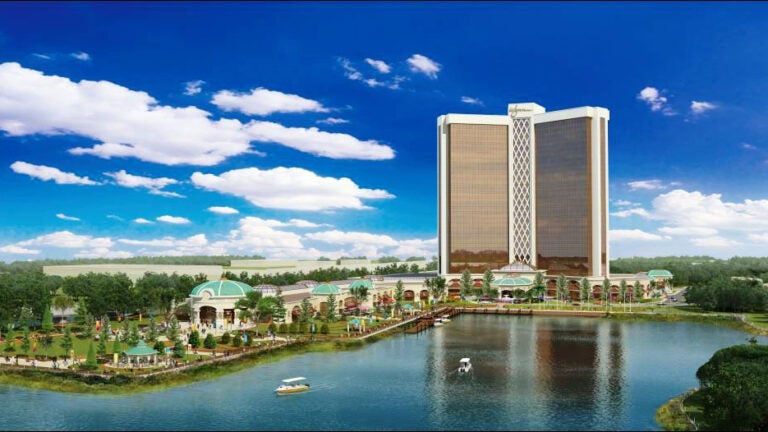
So, just shy of three years after the passage of the state’s expanded gambling law, we know who is building where in the Boston area. Massachusetts just got itself a new major player in Steve Wynn, and Everett is in line to host a $1.6 billion casino.
But wait! The fun is really just beginning.
Here are some of the things to watch for in the aftermath of the Massachusetts Gaming Commission’s move to award the Eastern Massachusetts license to Wynn’s Everett resort.
What’s the Appeal of Repeal?
Let’s start with the most obvious, shall we? The prospect of a repeal of the 2011 casino law loomed over the gaming board’s Greater Boston deliberations.
Indeed, all of this may prove to be for naught on Nov. 4, when voters will be asked whether they want to throw the developers’ plans out the window.
Both toward the start and end of the summer, polls showed an electorate that seemed pleased enough to move forward with casino plans. But it will be interesting to see if the Wynn decision changes the dynamics.
For starters, we can probably expect to see Wynn begin putting some energy (not to mention money) toward fighting the repeal question, joining Plainville slots parlor developer Penn National Gaming and MGM Resorts, which plans to build a Springfield casino. Those two companies have already put $1.75 million into urging the electorate to keep the industry around.
Then there’s Mohegan Sun, whose Revere casino bid lost out to Wynn in front of the commission. Now that the Revere option is off the table, it will be interesting to see if Mohegan Sun looks to protect its flagship casino in Connecticut by fighting for repeal—a thought floated by The Boston Globe’s Shirley Leung Tuesday. Mohegan Sun CEO Mitchell Etess declined to speak about anything beyond the licensing process last month, Leung writes.
Some area politicians are also out for repeal. Mass. US Sen. Elizabeth Warren said she will vote to do away with the law, but it’s not all that likely that she’ll campaign on the issue.
Somerville Mayor Joe Curtatone has been among the elected officials most strongly against the legislation since it was passed. Curtatone lost to Wynn in arbitration for a surrounding community agreement earlier this year, winding up with less in mitigation payments than he had hoped. And the crown jewel of Curtatone’s decade-plus as mayor, the $1.5 billion Assembly Row development, just sprung to life this year, sitting on the banks as the same river as Wynn’s proposed casino. Curtatone will likely double down in the next month and a half.
[fragment number=0]
[fragment number=1]
The state’s Catholic bishops are urging voters to repeal the law, and other religious leaders are expected to relay that message as well.
Many politicians, including gubernatorial candidates Charlie Baker and Martha Coakley, have said they will vote against repeal.
The pro-repeal group will likely focus its messaging on gambling addiction and dispute the economic boosts supporters say casinos could provide. The anti-repeal group will stress the jobs the casinos could bring, and argue that a statewide referendum shouldn’t interfere with voters in individual communities who elected to host the projects.
(And just to clarify, because it comes up now and then: A ‘Yes’ vote would kill casinos, and a ‘No’ would keep them around.)
The Walsh Conundrum
One politician who probably won’t favor of repeal: Boston Mayor Marty Walsh. Walsh has built a political career with the support of union workers, who strongly support the casino law. That’s not to mention, as a state representative in 2011, he helped make the law a reality.
But just because Walsh is unlikely to fight the law in its entirety doesn’t mean he’s pleased with today’s circumstances. Walsh very publicly feuded with both the gaming board and Wynn over the last year. In recent months, the city failed to reach a surrounding community agreement with the developer, opted not to move forward with arbitration to reach such an agreement, and threatened legal action if the board moved to award the license.
In the end, the board imposed conditions on Wynn that will see it pay a decent chunk of change to the city, with much of it going to traffic mitigation at Sullivan Square in Charlestown. But the payments are small compared to the payments Mohegan Sun committed to the city had it received the license.
Following the gaming commission’s decision, Walsh released a statement that called Wynn’s mitigation payments proposed by the board “unacceptable.’’ But the statement was also somewhat conciliatory. Walsh left the door open for legal action by saying “everything is on the table at this point,’’ but immediately followed that up by suggesting he’d be willing to put the bad blood behind him, saying “we have never closed the door to engaging in discussions with Wynn.’’
[fragment number=2]
The Boston Herald suggests that former Mass. Governor Bill Weld, who represented Wynn throughout the process, could help to mediate between Wynn and Walsh as the two sides look to move forward.
And on Wednesday, after the project’s approval was formalized, Walsh again expressed a willingness to work with Wynn, calling it “a new day’’ and saying he planned to meet with Steve Wynn personally.
The Future of Suffolk Downs
The race track at Suffolk Downs sought for years to be the site of a casino, and nearly got there with the Mohegan Sun proposal. But with Wynn coming out on top, Suffolk Downs looks set to shut down. So, what’s next for the site?
A New England Revolution stadium was in the past tied to the prospect of Revere getting a casino. In fact, the idea was openly endorsed by Revere Mayor Dan Rizzo in a 2012 media blitz. Most of that discussion centered on the shut-down Wonderland greyhound track, with the thought being that the site could be converted to a soccer stadium as part of a Revere casino deal. Little more came out about those plans over the course of the last two years.
But following the Wynn news, followers of the team were quick to point out that Suffolk Downs itself could also be an option for such a project. The Kraft family, which owns the Revolution, has long said it is looking for MBTA-accessible land in the Greater Boston area large enough to host a stadium. Suffolk Downs would certainly qualify, provided the site hits the market.
Suffolk Downs straddles Boston and Revere, and a project of that size would require partnerships with both cities. As of early September, the Krafts had not been in touch with the Walsh administration about a soccer stadium, and as of June, they had not spoken with Rizzo in months. As it pertains to Suffolk Downs, that’s plenty sensible as all eyes were on the casino license. If Bob Kraft is interested in exploring Suffolk Downs as a possible stadium site, the time to start poking around would be now.
Rizzo, for his part, indicated he’d still be interested on Twitter (while also taking the chance for a pot shot at the gaming board).
[fragment number=3]
Another idea for the site that has sparked some conversation online since the board made its decision: An Olympic Stadium, which Boston would need to build if it winds up hosting the 2024 games. A winning bid will be announced in 2017—the same year Wynn is currently scheduled to open in Everett.
The soccer and Olympics ideas aren’t mutually exclusive, as any Olympic stadium could conceivably be downsized into a soccer stadium following the games. But that would put the Revolution in Gillette Stadium for another 10 years, at least, at a time when Major League Soccer is encouraging teams to play in soccer-specific venues.
Stadium dreams are fun, but then again, big swaths of open land in the Boston area are hard to come by. With a nearby Blue Line stop and plenty of space, should the area cease to be a race track, it could well become a hot spot for any number of big-money developers with commercial, housing, or mixed-use ideas.[fragment number=4]
One More License
There’s still one more license to be awarded in the state, in Southeastern Massachusetts.
The board hopes to award the license by August of 2015. The process has been delayed after a deal struck between the state and the Mashpee Wampanoag tribe, which was given preference for the region and hopes to build in Taunton, was held up by the federal Bureau of Indian Affairs. There is no clear timeline on when the process will be settled.
Other companies are also reportedly eyeing the region, including Foxwoods and KG Urban.
That’s all assuming this license is still even in play come August of 2015—something we’ll know after Election Day.




To comment, please create a screen name in your profile
To comment, please verify your email address
Conversation
This discussion has ended. Please join elsewhere on Boston.com