
Why Routine-Based Labor Is Growing So Slowly
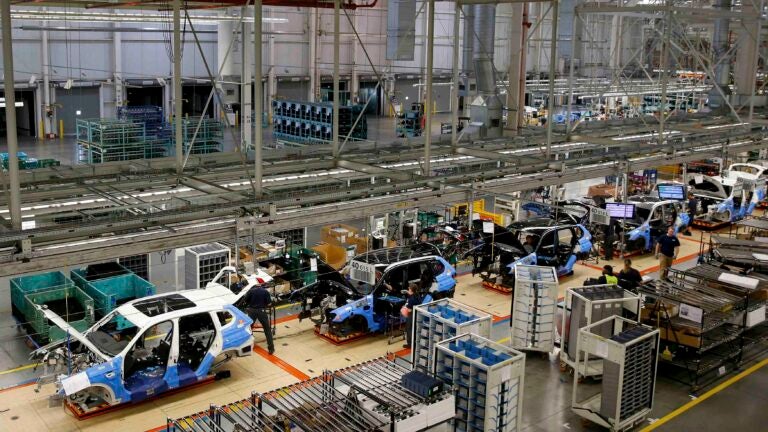
A study from the Cleveland Fed highlighted on the Wall Street Journal’s Real Time Economics blogsuggests the continued automation of some labor has slowed overall employment gains.
The study split the labor market up into different categories. As described by the Journal:
[fragment number=0]
It then looked at how jobs in those three areas gained over three different time periods: From 2003 to 2007, in the run-up to the financial crisis; from 2007 to 2009, the period that saw the start of the recession; and from 2009 to 2013, which could be looked at as the recovery.
Abstract jobs (8 percent) and manual jobs (7.5 percent) saw just about even gains in the first period of time, while routinized jobs trailed (gaining at 3.7 percent). During the middle period, routine jobs saw the greatest turmoil, falling about 8.2 percent, followed by manual labor at closer to 4 percent. Abstract positions saw jobs lost, too, but those losses were relatively minimal at about 1 percent.
Since the turnaround began, manual work has seen far and away the greatest gains, and has made up for the losses it felt during the recession. While abstract jobs have seen the least gains since then, it has seen enough to also recoup its losses during the recession.
While routinized jobs have increased by 4.3 percent since the recession, they have yet to break even.
Here’s a chart from the Fed:

Part of the reason for the greater fall-off and slower recovery for routinized jobs may well be that those sorts of roles are more easily replaced by robots and computers—meaning companies may feel less of a need to hire them back than they did a few years ago. As the Fed study notes:
[fragment number=1]
That fits right in line with the perspective of some robotics experts, who suggest that job automation figures to lead to plenty of construction and creative jobs. Companies who had previously sent their factory work overseas might now prefer to bring their factories back to the U.S., the theory holds, as robots might make for better bang for the buck than even off-shore labor. And with all those robots and computer programs running around, you need some folks on-hand who know how to program them. But in this scenario, the routinized labor is still ultimately squeezed out.
That example provides just one quick snapshot of a much larger employment picture that the Fed’s study is looking at, but it’s indicative of how certain types of jobs are subject to greater losses from automation than other types of labor.
And for those who do work in routine labor? Compared to the other types of work, they feature significantly more part-time workers, according to the Fed. Nearly 18 million workers who fall under the routine umbrella work part-time, compared to less than 8 million in abstract work and about 3 million in manual work.





To comment, please create a screen name in your profile
To comment, please verify your email address
Conversation
This discussion has ended. Please join elsewhere on Boston.com