

Get a little love in your inbox!
Sign up for the Love Letters newsletter for announcements, hand-picked letters, and other great updates from the desk of Meredith Goldstein
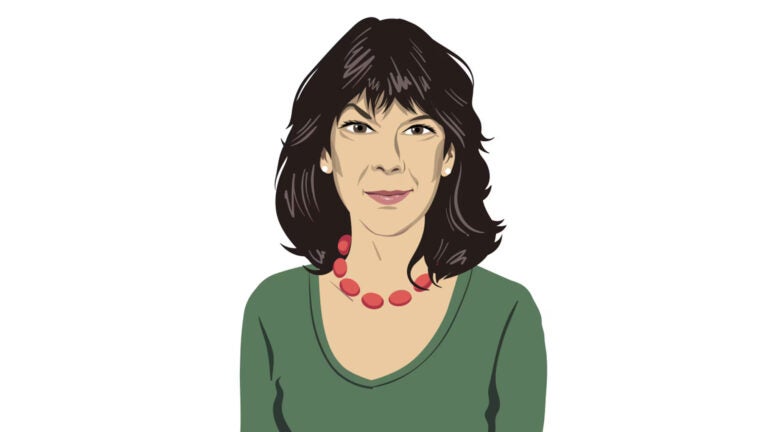
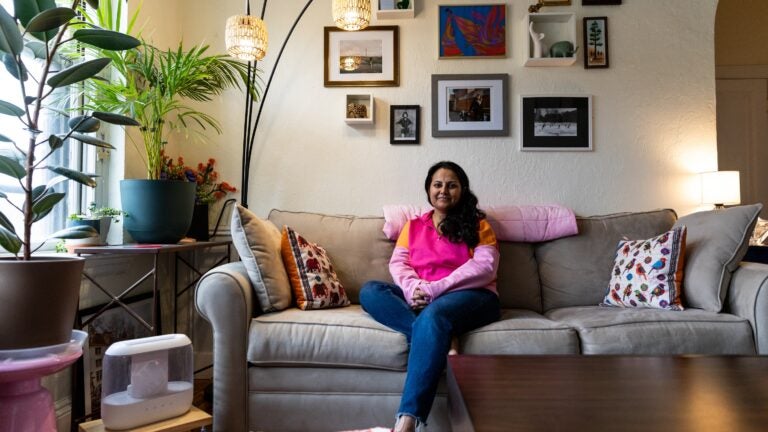
Some of you have asked me what our most recent podcast guests look like. I know it’s nice to have a face with a narrative.
This is a photo of Kelly and Jess relaxing at their Italian Palazzo. If you haven’t listened to the episode, absolutely do. It’ll get you ready for Episode 3 next week.

The Boston Globe’s etiquette columnist, Robin Abrahams, a.k.a Miss Conduct, has just retired. She’s been doing the weekly Globe Magazine column for 20 years. Readers wrote to her, asking questions about manners, and she responded.
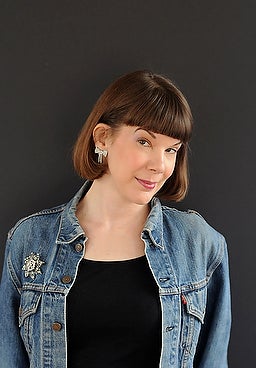
For the record, I could never do what Robin has done for all these years. When I’m answering questions as a relationship advice columnist, I’m not thinking about the right way to behave as a human in the world. I’m thinking about feelings.
Sometimes getting to the heart of feelings involves not having manners at all.
One of my favorite questions Robin answered during her tenure at the Globe was a 2017 letter about a family that hid matzo in their toilet.
For those who don’t know, hiding a piece of matzo is part of a Passover tradition. People hide one piece – the symbolic “afikomen” – and then kids search for it for a prize.
Then people eat it.
My family used to hide the afikomen behind a piece of furniture. Or on a bookshelf. Not in a toilet.
For those who can’t get behind the Globe’s paywall, this was the question, written to Robin:
“A friend recently told me of a Passover Seder where the afikomen was hidden in the toilet tank. Sure, it was in a sealed plastic bag, but people had to eat it afterward! Please tell me I’m not alone in finding that disgusting.”
Robin offered a fantastic answer that included this take:
“I don’t think Moses himself would have blamed you for not wanting to eat any afterward.”
To celebrate Robin’s many years of service, I had a conversation with her about what she learned – and what’s next (lol). The interview has been edited and condensed for your reading pleasure.
Let’s all enjoy her thoughtfulness and expertise.

Meredith: One thing I think about, with Love Letters, and etiquette specifically, is that rules change. Things that I would say were OK to do 16 years ago might not be OK today. When my column started, if someone wrote in to me and asked “Can I ask someone out via text?” I’d have said, “That’s rude. Make a call.” Now it would be rude to call. In 2025, calling someone feels invasive – like an emergency. I imagine that over 20 years, etiquette, in particular, has been this ever-changing moving target for you.
Robin: I agree that that’s probably a thing, but honestly, one thing I grappled with when I first started this column 20 years ago is: The wrong people are going to take my advice in the wrong way. If I say, “Stand up for yourself more,” the people who are already selfish are the ones who are going to be like, “Yeah! [I’ll] stop being a doormat.” One of the most rageful people I know thought she had a problem expressing anger. It’s like, no, everyone’s terrified of you.
And the people to whom I’m like, “Hey, you know, maybe give other people grace; cut them slack,” that’s going to be picked up by people who do too much of that anyway. But … you kind of can’t control that, and I had to let go of that very early. I’m going to say what I think is right. I communicate as clearly as I can; I cannot be responsible for how people interpret it.
Meredith: Has reading letters from people given you more or less faith in humanity?
Robin: My faith in humanity has changed, but not because of the questions. … My article [in the Globe Magazine] really gets into this – the extent to which humans are just fundamentally concerned with the same set of social questions that go right back to our evolutionary heritage. A good third of my questions, Meredith, are basically about reciprocity norms – because that’s a really big thing.
We can’t survive on our own [as] humans. We evolved in tribes, so it’s really important to bond with the group. But if somebody’s just freeriding – if you’re never doing your share and everybody’s just picking up your slack – we can’t have that. We have a really innate sense of fairness and quid pro quo. It’s like, OK, who owes what to whom? What do men owe to women? What do children owe to parents and vice versa? What do colleagues owe to each other? What do I owe to my neighbor? Sometimes that’s really codified, like in a professional relationship. Sometimes it’s really nebulous. … Another really big one is: how do we not make each other sick?
Meredith: Well, I was going to ask about that – about illness and etiquette.
Robin: We’re each other’s greatest resource and necessity, but we’re also each other’s greatest danger – and not just from interpersonal aggression, but from disease. If you have bad hygiene, that affects me. … With COVID [the discussion about] vaccinations kind of blew up. But there were these questions from the beginning [of the column]. “People in my gym don’t wash hands.” “My coworker coughs all the time.” “I don’t think my sister in law prepares food safely.” “How do I manage my allergens?” Sometimes, the flip side: “I have a skin condition that looks contagious but isn’t. How do I let people know that I am not a danger to them?” This is human stuff. I used to want to write a book and call it “Cave Manners,” about exactly this kind of thing – the evolutionary roots of etiquette.
Meredith: I would read the hell out of that. … On the topic of COVID, we’re working on pandemic fifth anniversary stories in the newsroom, and I have to imagine it changed your column a lot after 2020, specifically.

Robin: One thing that has been even bigger – and I’m really curious if this has affected your world at all …
[Robin inserts an Atlantic article in the chat box in Zoom.]
Robin: This is an article in The Atlantic that I think is absolutely stupendous. And one thing it talks about is that there is an erasure of the middle range of relationships. I text with my friends all day. People text with their partners all day. I can talk to “Star Trek” fans, and trade “Severance” theories with people I’ve never met [online]. But what they call familiar, but not intimate relationships – those are going away. With neighbors, service providers, colleagues – people that we just sort of share space with, in a public way. Those relationships are really tanking.
And to be frank, Meredith, that’s where a lot of my copy came from. I’ve kept a 20-year spreadsheet of what I was writing about. If you look back, there’s been this notable shift from these kinds of interactions with colleagues, service workers, people who share space in some way – like how to behave at a theater, at a concert, this kind of thing – and a move toward family/friend groups. Not the broadly socially awkward moments.
Meredith: This is a question for people-pleasers like me. No matter how hard you try not to be a rude person, somebody is going to think you did it wrong. Any messages for people about coping with the fact that as humans, we’re just not going to get it right all the time? Or we might for some but not for others?
Robin: To me, this is a very basic fact. I find it really hard to know what to say to someone who has a hard time accepting that. I’m really not a people-pleaser. A lot of that came from when I was a kid. We moved around a lot – like a lot, Meredith. And I was the same person, but sometimes I’d be super popular, and sometimes I’d be bullied. And so I was just like, “OK, people are going to respond to me based on what they want to do. I can’t control how people think of me. I can only control how I behave.”
And that just really kind of freed me. Because I was like, “Oh, OK, the same lunch box that makes me the top girl in the yard over here gets me laughed at somewhere else. That broke any tendency I might have toward, you know, the idea that you could please everyone.
Robin’s next move? She wrote a play called “None Escape” that’s being staged by Somerville’s Theatre@First in March. The theater calls it: “an adaptation of The Island of Dr. Moreau by H.G. Wells set in a trauma support group in the present day.”
Yes, I’m going. Maybe we should make it a Love Letters group activity for people around town.

I did go to California last week to see relatives. I stopped by the Noah Purifoy outdoor museum, which was very moving (highly recommend reading all about him). I’ll leave you with a photo I took of a work called “Voting Booth.” What you can’t see in my shot is that one side of the sculpture does look like a voting booth – with people’s legs and shoes sticking out at the bottom. This is the view from the other side.
– Meredith
Sign up for the Love Letters newsletter for announcements, hand-picked letters, and other great updates from the desk of Meredith Goldstein



To comment, please create a screen name in your profile
To comment, please verify your email address
Conversation
This discussion has ended. Please join elsewhere on Boston.com