

Get a little love in your inbox!
Sign up for the Love Letters newsletter for announcements, hand-picked letters, and other great updates from the desk of Meredith Goldstein
You’re reading Meredith Goldstein’s Love Letters newsletter. Each week, Meredith shares tales of human connection, thoughts on public policy and relationships, and behind-the-scenes stories about the Love Letters column and podcast. Sign up to get the dispatch.
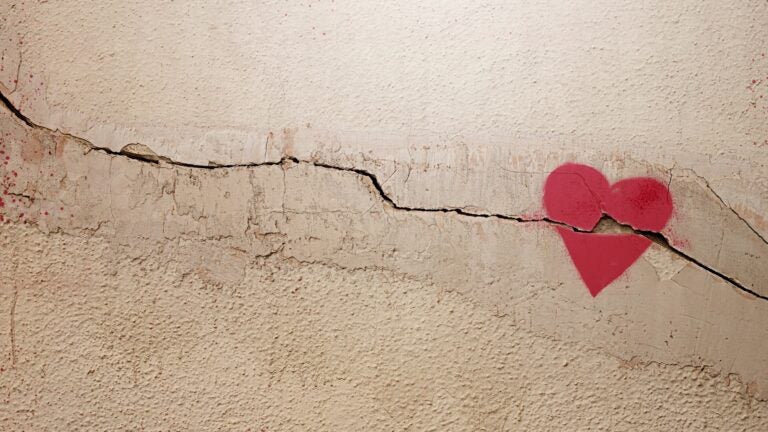
In a recent newsletter, I discussed the Japanese philosophy of wabi-sabi – which suggests that the cracks and flaws in an object can be the most beautiful thing about it.
It made me think about relationship wabi-sabi, and how the literal cracks in our lives can commemorate a moment we grew, learned, and felt loved.
I asked readers of this newsletter to send me pictures of imperfections and/or damage that now symbolizes beautiful moments in your relationship’s history.
I thought I would compile these photos into a gallery.
Truly, I was expecting shots of cracks in pottery, wine glasses glued together, or a colorful wall ruined by the wrong kind of paint.
When you all responded, I had to laugh because every picture looked like this one.
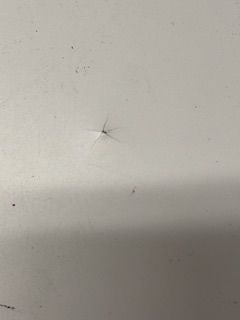
They all had beautiful stories attached. This particular flaw marks a moment that led to a very long marriage. (To this reader, thank you for sending it.)
But obviously the photos weren’t as lively as I thought it would be. It’s a lot of white walls with tiny holes.
That said, thank you to all who shared.
Maybe my next reader callout for photos should be for “bad art you’ve put up with because you love someone.” Then we’d have a much livelier scrapbook.
Over the past two weeks, I’ve read about a dozen or so essays about “Adult Braces,” a new memoir by Lindy West.
If you haven’t heard of West, my quick summary is that she’s a writer and funny person who represents (to me, at least) an era of millennial and younger Gen X memorists/essayists who have delved into relationships, culture, politics, and life in general.
West’s book “Shrill: Notes from a Loud Woman,” published in 2016, was adapted as a show for Hulu starring Aidy Bryant.
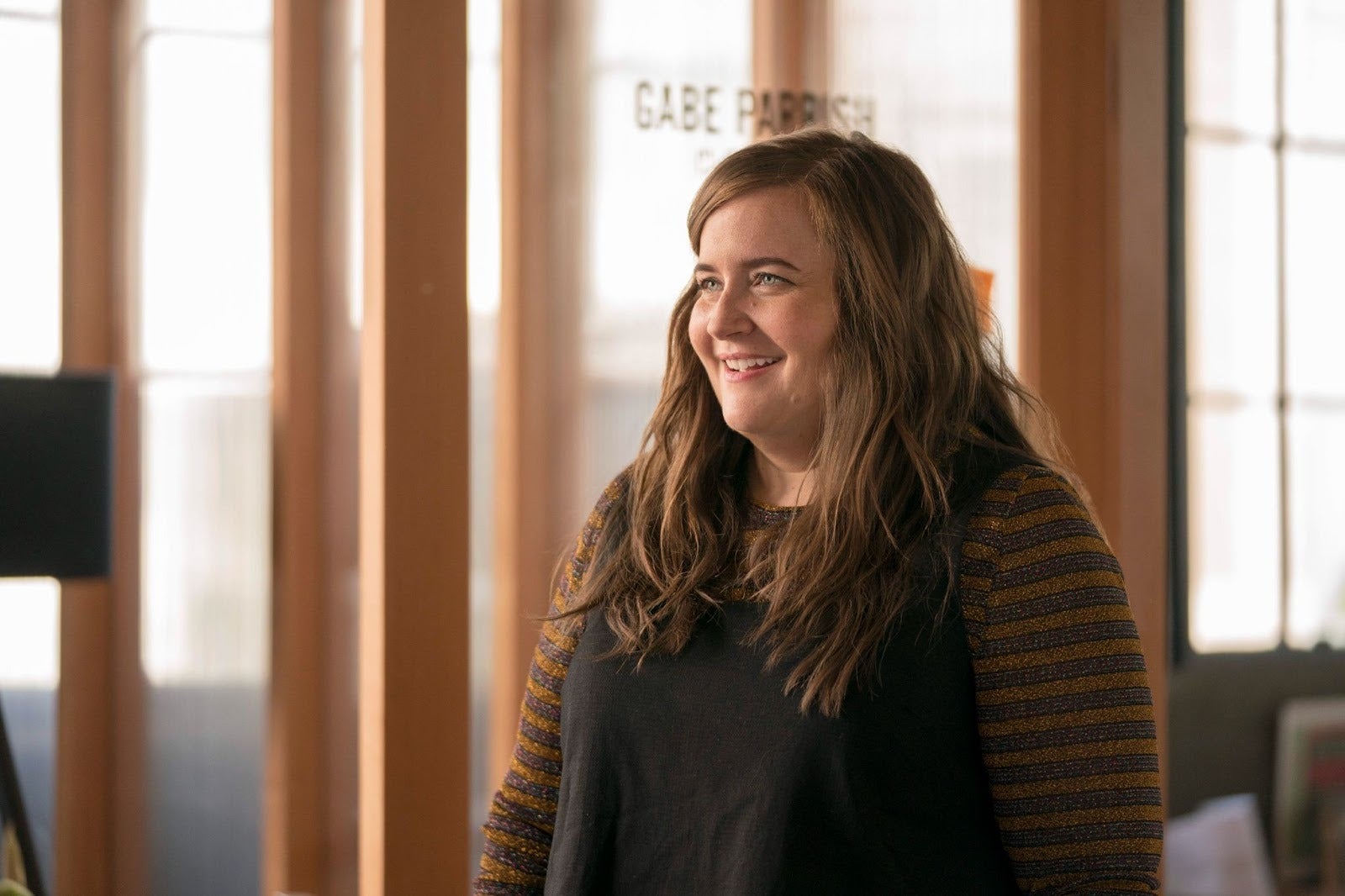
West’s new book is full of more great writing about self-discovery.
But one big part of the book has had people talking, critiquing, and maybe … judging.
West discusses polyamory, and how she and her husband, Ahamefule Oluo, have negotiated the openness of their relationship over years.
I don’t want to spoil all the details, but basically, they are in a polyamorous unit with a third person. After reading the account of this, many of West’s fans and followers were asking, wait, is this what she really wants?
… Or is she accepting this form of non-monogamy because she feels she must?
Basically, they’re questioning whether West is really happy, despite her telling us that she is.
As I read critiques and analysis of the book in places like The New York Times, Harper’s, and, most controversially, Slate – which features the headline: “Lindy West’s How-Not-To Guide to Polyamory” – I thought of my friend Margaret.
Margaret H. Willison is a pop culture critic, reader, librarian type, and teacher (she offers a very literary class about Taylor Swift).
She came on the Love Letters podcast a few years ago to talk about her own experience with polyamory, and how it turned out … not so great.
It wasn’t a bad relationship because of the polyamory. Margaret’s experience was unpleasant because her boyfriend, a man we call “Jack” in the episode, didn’t do polyamory right.
As Margaret says, he was practicing unethical non-monogamy.
I figured Margaret would have plenty to say about “Adult Braces” because she’s such a good reader – and also because she has personal experience with this kind of thing. I was planning to call her to discuss, and then I thought, why not share the conversation?
Today I give you a bonus podcast episode where Margaret explains the controversy surrounding Lindy West’s book. We’ll also have an update on Margaret and the kind of relationship she enjoys now.
My favorite part: Margaret explains why West has been so important to some millennial women. If you’ve never heard of West, this is a great way to learn – and to consider what people expect of their feminist heroes (hint: perhaps too much).
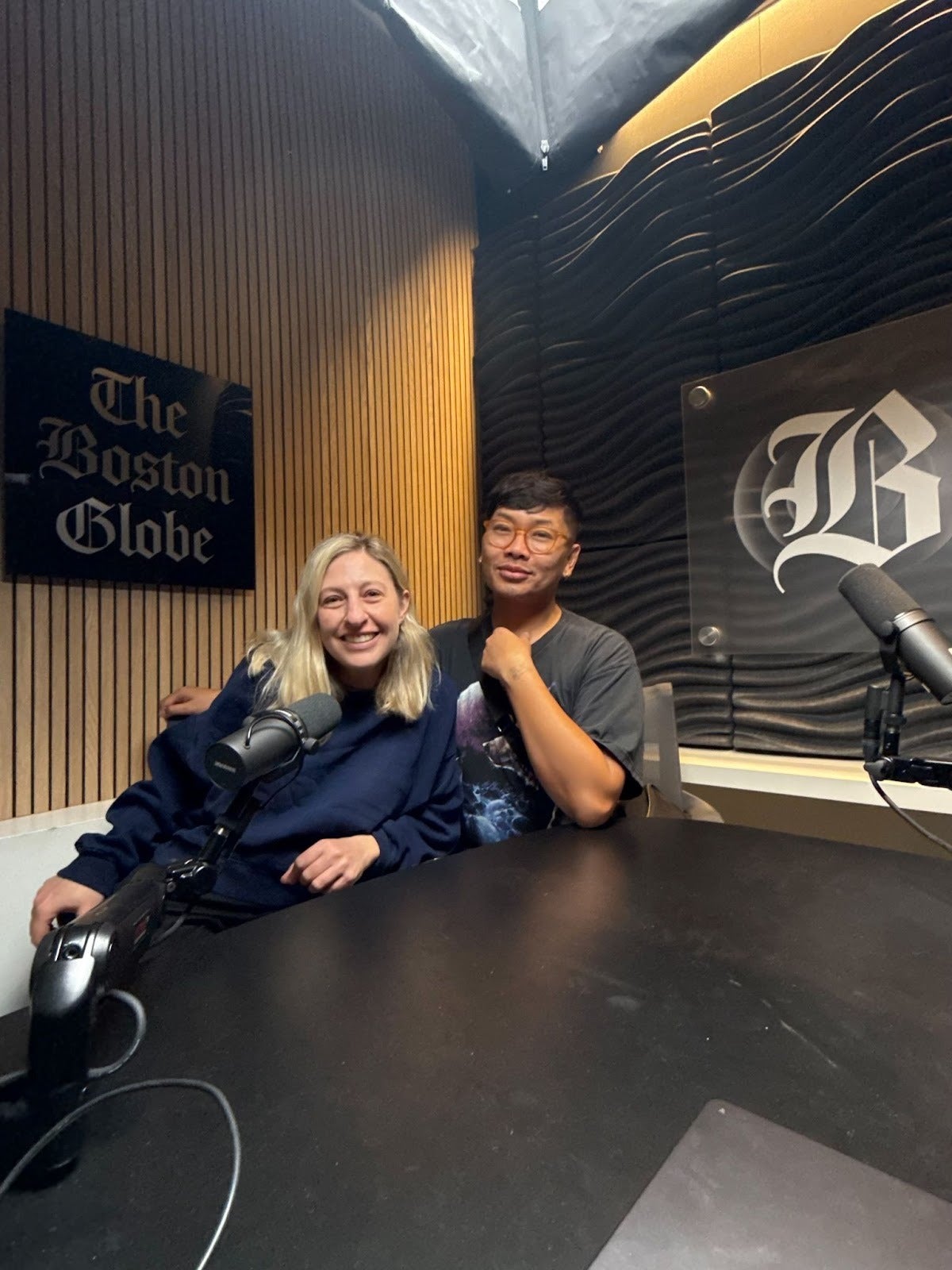
I’ll leave you with a photo from a podcast recording we did yesterday. Some may recognize this upcoming guest. If you don’t, check out this trailer and you can figure it out.
– Meredith
Sign up for the Love Letters newsletter for announcements, hand-picked letters, and other great updates from the desk of Meredith Goldstein


Be civil. Be kind.
Read our full community guidelines.To comment, please create a screen name in your profile
To comment, please verify your email address