
Get a little love in your inbox!
Sign up for the Love Letters newsletter for announcements, hand-picked letters, and other great updates from the desk of Meredith Goldstein
You’re reading Love Letters. Sign up to get thoughts and advice on dating, relationships, marriage, divorce, and everything in between, in your inbox every week.
I don’t want to say too much about our new podcast episode until after you’ve listened to it. It’s all about the plasticity of the brain and how difficult it can be to change. Check it out, and then next week I’ll say more about the lessons … and about Reese Witherspoon.
If you’ve already listened to Season 10, Ep. 2 – the one about Kelly, who moved to Italy – enjoy this discussion with Christine Ahanotu, podcast producer. Christine actually lives in Italy for part of the year … and in Boston for the rest. We talk about whether she’s actually different when she’s elsewhere.
And yes, you can find the podcast on YouTube now.
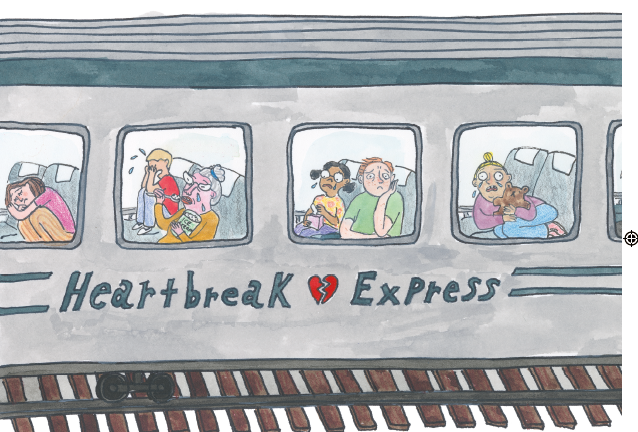
For those who really don’t want to deal with a romantic holiday because they’re still a mess about a breakup, I have a special treat today – an interview with the mother-daughter team behind, “What To Do When You Get Dumped: A Guide to Unbreaking Your Heart,” a graphic guide with memoir.
Writer Suzy Hopkins’s husband left her after three decades of marriage. He’d reconnected with someone from his past and decided he needed to pursue that new/old love.
Suzy was a mess, understandably.
After some time dealing with breakup shock, Suzy and her daughter, illustrator Hallie Bateman, channeled a bunch of hurt feelings into a thoughtful book about how it feels to be abandoned this way.

The book works for people of all ages, in all stages of breakups. It’s good for those who are dealing with new heartache, those who are five years past the breakup but still feeling loss, and even people who are trying to help the dumped. Because sometimes it’s difficult to know what to say.
Please note that I used a Bookshop.org link for the book, not Amazon. Let’s commit to supporting local bookstores. You can tag yours on Bookshop.org to make sure the money goes to your favorite place.
Anyway, here’s some of my conversation with Suzy and Hallie.
Suzy: People don’t want you to be this broken. It’s the reason the book exists. I was 58 when this happened. I had a big volume of life experience, and I’d also had friends that divorced. I, like everybody, just didn’t look at it [breakup grief] as a type of grief that warranted. But it felt like a death. … It felt cataclysmic. And I would have thought I had much better resilience than I did. I just thought, if other people feel this way, how come I haven’t understood this? And I think it’s because we just give short shrift to it societally.
Suzy: The books that did work were [about] death. Those books came closest to being slightly helpful. I wanted somebody to say “your life isn’t going to go into a dark hole that’s going to last for 20 years.” The most helpful thing, once I decided to start the book, was when I interviewed strangers. Each conversation was a couple of hours, because I said, “Hey, you don’t know me, but this is my idea, and I just want to know if it’s worthy or not,” and then they told me their whole heartbreak story in tremendous detail. In some cases, they would cry during the interview. [The breakup] might have happened five or 10 years earlier – and that was the big eye-opener. Because I go, “I’m three years in, and I think I’m slow on the uptake to get better,” but these people are saying that this grief is unlike any other we acknowledge. You know, people aren’t bringing you casseroles when your husband leaves, right?
Hallie: I knew that it was painful – because it was painful for our entire family. I think it was this thing that I was really craving – to fully understand what this meant for her. … I felt like we were forensically researching what happened – and what happens to the human heart in this way. In the course of conversation, being able to say, “Mom, is this how it felt?” And then she’s like, “No, no, no, it’s actually more like this.” … So it was really satisfying – and certainly harder for my mom. I don’t think it’s fun to spend time there. But I also felt honored that I got to be her partner in that. I’m still close with my dad. My position, I think, allowed us to have, maybe, a more rounded perspective. There’s the person going through it, and then there’s the person who loves the person who’s going through it, and then I’m also the person who loves the guy that made her go through it.
To read more of the interview, check it out here.
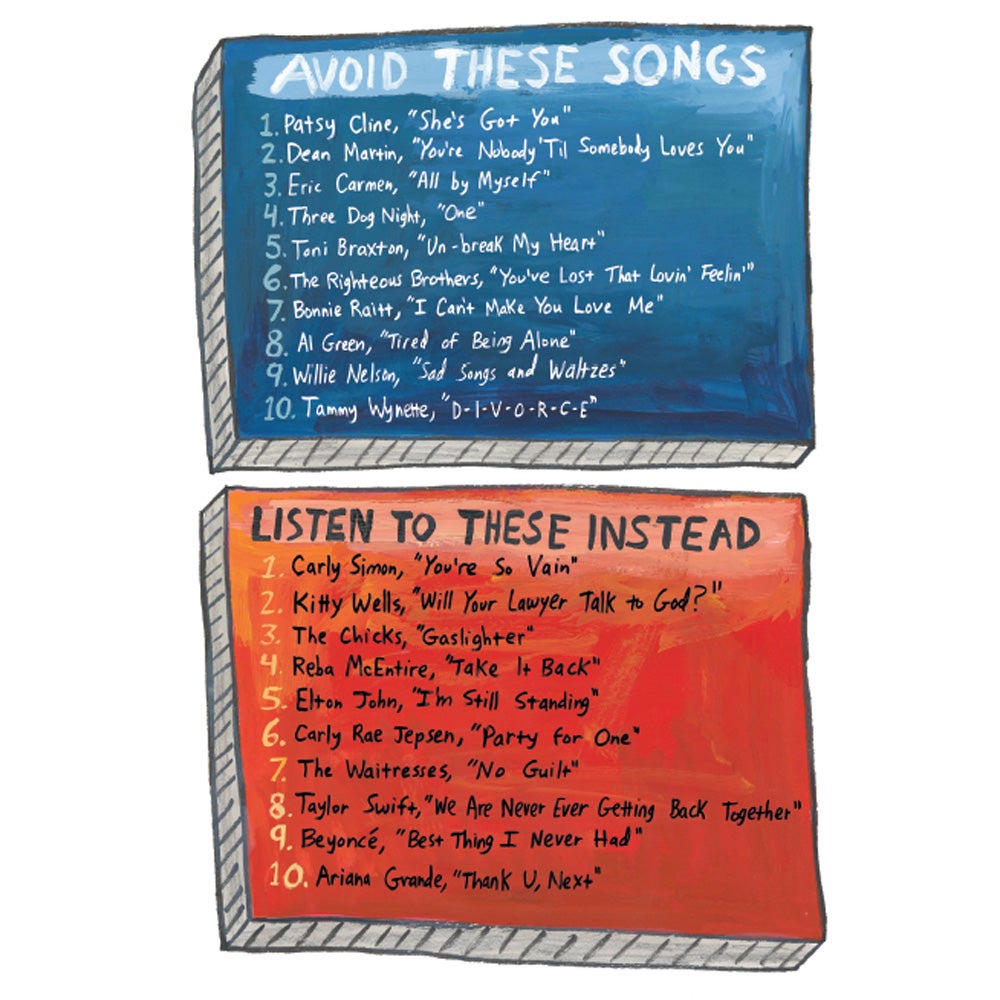
You can see more of the book on Hallie’s Instagram.
Send a letter: I’m looking for letters about friendships, too. I feel like … so many people have friendships that are primary partnerships, and I never want
I’ll leave you with a pic that is EVIDENCE that Valentine’s Day means nothing – or everything – depending on what you want it to be. It has no real message, no mission, no point. It can be joyful and amazing … or a simple Friday.
It is a blurry concept that has evolved into nonsense words I only like when they come out of Paul Rudd’s mouth.
Anyway, have a good weekend.
– Meredith

Sign up for the Love Letters newsletter for announcements, hand-picked letters, and other great updates from the desk of Meredith Goldstein




To comment, please create a screen name in your profile
To comment, please verify your email address
Conversation
This discussion has ended. Please join elsewhere on Boston.com