

Get a little love in your inbox!
Sign up for the Love Letters newsletter for announcements, hand-picked letters, and other great updates from the desk of Meredith Goldstein

You’re reading Meredith Goldstein’s Love Letters newsletter. Each week, Meredith shares tales of human connection, thoughts on public policy and relationships, and behind-the-scenes stories about the Love Letters column and podcast. Sign up to get the dispatch.
First thing’s first. Since Feb. 13, people have left more than 400 messages on the Love Letters Tell-A-Booth at the Boston Public Library.
That’s so many messages, especially when you consider that the booth is only available during library hours.
I’ll begin answering the bigger questions in the Love Letters column soon, but here are two random messages to give you a sense of things people say:
This message was left Saturday.
Hi Meredith. I’m here in the library right now, and I guess I’m basically like … in love with my best friend right now. I don’t really know what to do about it because I feel like I’m exactly her type, but it’s also very hard. It’s just hard to navigate my feelings right now because I feel like we would be perfect together, but she always talks about other people in front of me, so I know that she doesn’t like me. It’s really hard to talk about my feelings because this was all of a sudden. Like, we’ve been friends for a really long time and then all of a sudden I just like got feelings for her. I really love her – like, I’ve never liked someone as much as I like her. I’m not used to liking her this much or like liking anybody this much but yeah. Anyway, yeah.
This one was left the day after Valentine’s Day.
Hi. I don’t have any problems or anything. Everything’s pretty good. I just want to say yesterday was great. I hung out with my boyfriend and I really love him. He’s a great person and I hope that everyone else gets to find the kind of love that I have. OK thanks. Sorry, my friend’s looking at me and I don’t know if she can hear me or not. Can you hear me? Oh. OK. Cool. Bye.
Some people have asked massive, philosophical questions. Others have shared hopes and dreams. There have been more than a few confessions.
It’s been an honor to listen to so many stream-of-consciousness recordings.
If you live in New England and haven’t been to the library, please visit and pick up the phone.
After you use the Tell-A-Booth, you can go to one of my favorite places, the Map Room Lounge, a.k.a. the bar in the library.
I’ve long been interested in the Kinsey Institute at Indiana University.
It’s named for Alfred Kinsey, a sexologist and biologist who wanted to know more about people’s sexual habits and desires.
His work was groundbreaking and controversial. It forced many people – including researchers – to drop their assumptions about human relationships. His Kinsey Scale, for instance, said people didn’t have to be gay or straight; on a spectrum of sexuality, there was a LOT of middle.
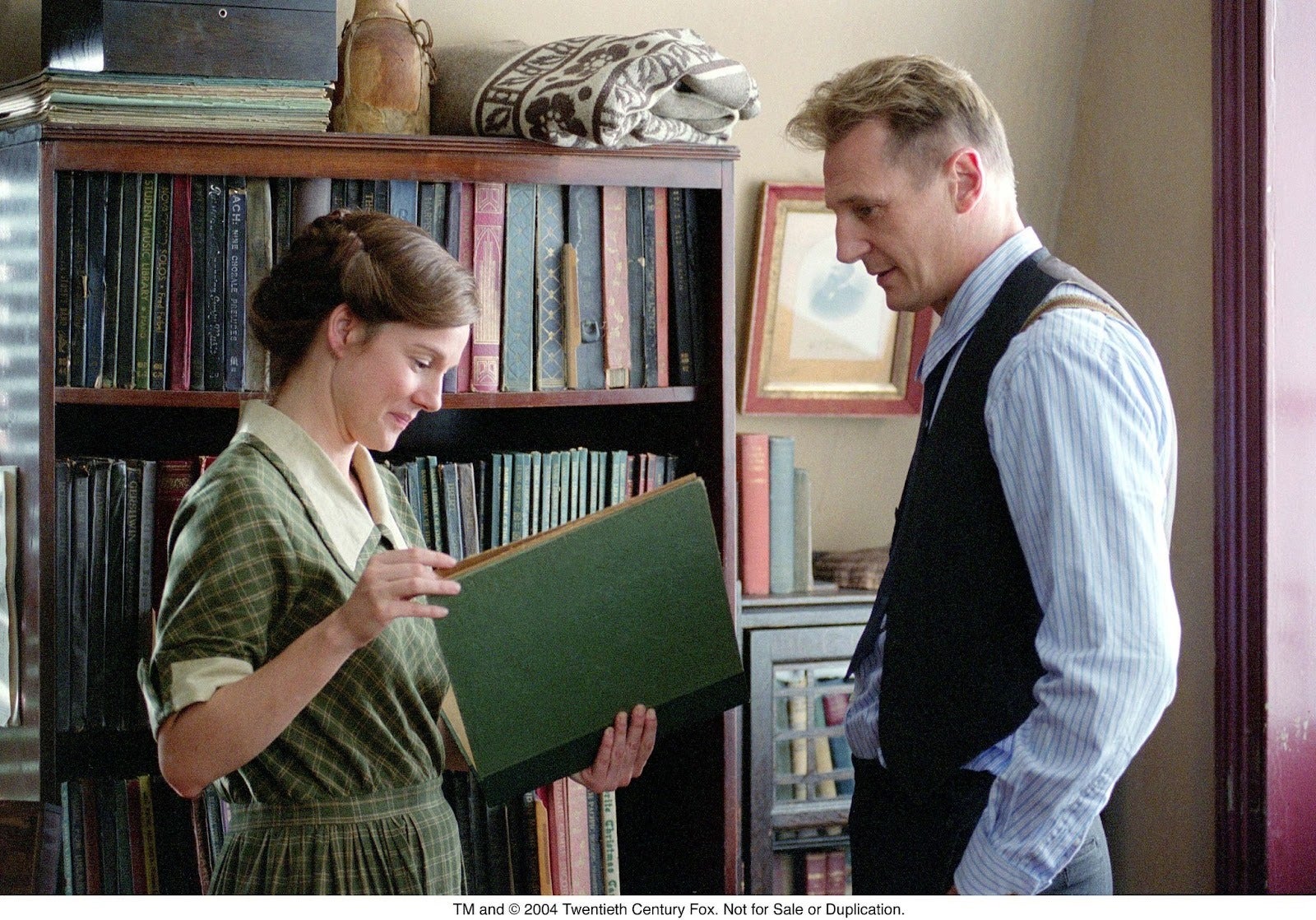
If you’ve never heard of Kinsey – who was 62 when he died in 1956 – I recommend the 2004 movie “Kinsey” starring Liam Neeson.
The current executive director of the Kinsey Institute is Justin Garcia, an evolutionary biologist who has focused his research on sex and relationships.
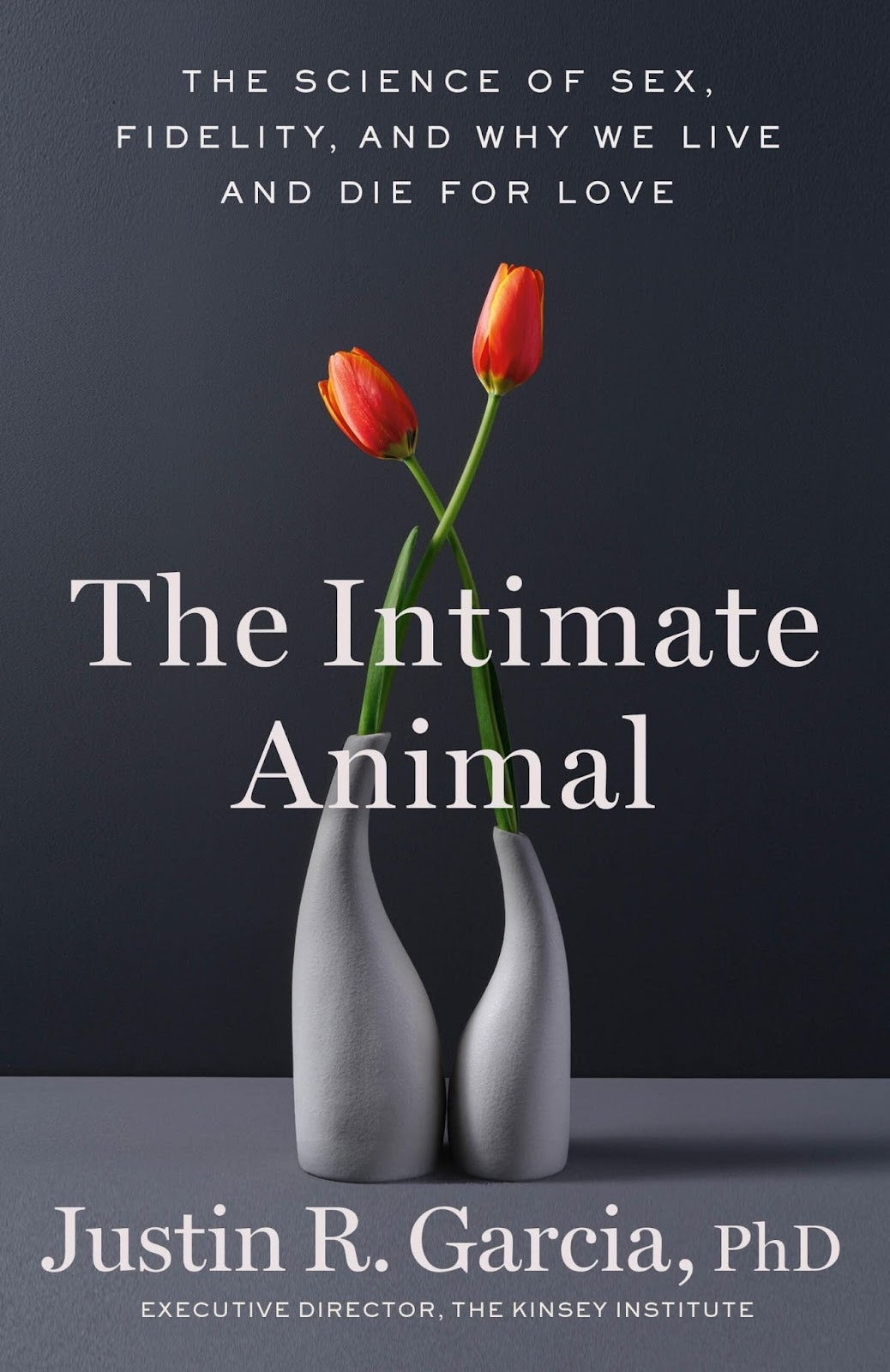
In January, Justin released a book, “The Intimate Animal: The Science of Sex, Fidelity, and Why We Live and Die for Love.” I read it in one sitting.
Then I asked to talk to him.
In the latest episode of the Love Letters podcast, I ask Justin about the book and his research, in general.
Our discussion addresses human needs, misperceptions of biology, and how modern young people pace their relationships.
It also includes a very important lesson Justin learned while visiting a legal brothel in Las Vegas.
I’ll drop an edited piece of our conversation here, as a teaser.
Not the brothel part. You’ll have to listen to get that story.
This is Justin’s take on the origin of his book, which is about the human need for intimacy, not just sex:
When I first came [to Kinsey], my training was in anthropology and biology. My dissertation dealt with issues of the evolution of monogamy. I came in with a lens, as a biologist, that monogamy is not just one thing; it was two different mechanisms. There’s social monogamy, which is the relationship structure, and sexual monogamy, which is sexual fidelity/exclusivity. They’re different mechanisms in the brain, different selection pressures. Pressure to maintain a long-term bond for mutual territory defense, mutual raising of offspring … and a different [pressure] for desiring sexual novelty and variation. If we look at two different levers for monogamy, social monogamy and sexual monogamy, we can understand that when they’re in conflict, it can bring a lot of chaos and trouble to our relationships. When they’re aligned, it can bring a lot of joy and satisfaction.

I asked Justin about all the headlines and surveys that tell us that young people are less interested in sex, relationships, marriage, etc. Justin explains in his book that what we’re actually seeing is what he calls “slow love.” I asked him to describe it.
“Slow love” is this idea that although we see changes in behavior – [people say] we’re in a so-called sex recession – what we more see is a pattern of caution. When [we] look under the hood of what’s going on and ask young people, we find that they are still looking for connection … but how they do it is different. Where their parents or grandparents may have dated a short period and then married, young people today want to know everything about someone. Maybe they’re hanging out in groups for a few months, then they’re dating for a few more months. Then they may eventually be boyfriend and girlfriend. That could happen for years. Then they could be engaged for years. This is a slower process of courtship, a prolonged process of courtship. The idea of marriage for young people today, it’s not the beginning of the adventure; marriage is the grand finale for young people today. It’s a reordering of the process of really getting to know someone.
I told Justin I have seen no evidence that slow love is bad. His response?
That’s right, there isn’t [any]. Particularly for young people … they talk about vibes, right? If you’re around young people today, Gen Z, they’re always talking about their vibes. They want positive vibes. They want to feel safe and comfortable with someone.
In Justin’s book, the happiest long-term couples seem to be the ones that make an effort. They have emotional intimacy with someone they’ve been with for years, but they also find ways to add novelty to their relationship. I asked Justin: how hard do these couples have to work to keep their relationship fresh?
When we think of relationships, particularly relationships we would characterize as healthy or highly satisfied, we know there’s a friendship dynamic that’s there. A sense of passion. I’m not convinced it takes ‘work.’ I think it does take cultivation. In one of our studies with my colleague, David Frederick, for instance, we found that [couples] that had high degrees of relationship satisfaction – high passion – had a suite of things. There was communication. There was kissing. Then there were these things like lighting candles and dimming lights and lingerie. It was all about intention. It wasn’t about the particular smell of the candle or the size of the candle or how many, it was about, “I’m going to go out of my way to [do] something special.” It’s easy to stop cultivating that. It’s like having a garden that you spent a few years on, and it bloomed and it was beautiful, and then one season you just couldn’t bother to de-weed it or you didn’t replant. It’s easy to then not keep cultivating, not keep fertilizing and watering and weeding. But I think we can get back to that. When we’re aware of it and we realize it, then we can say, OK, let’s get back to doing those special things.
Justin says many other smart things in his book and in our episode.
Again, you can find the discussion here.
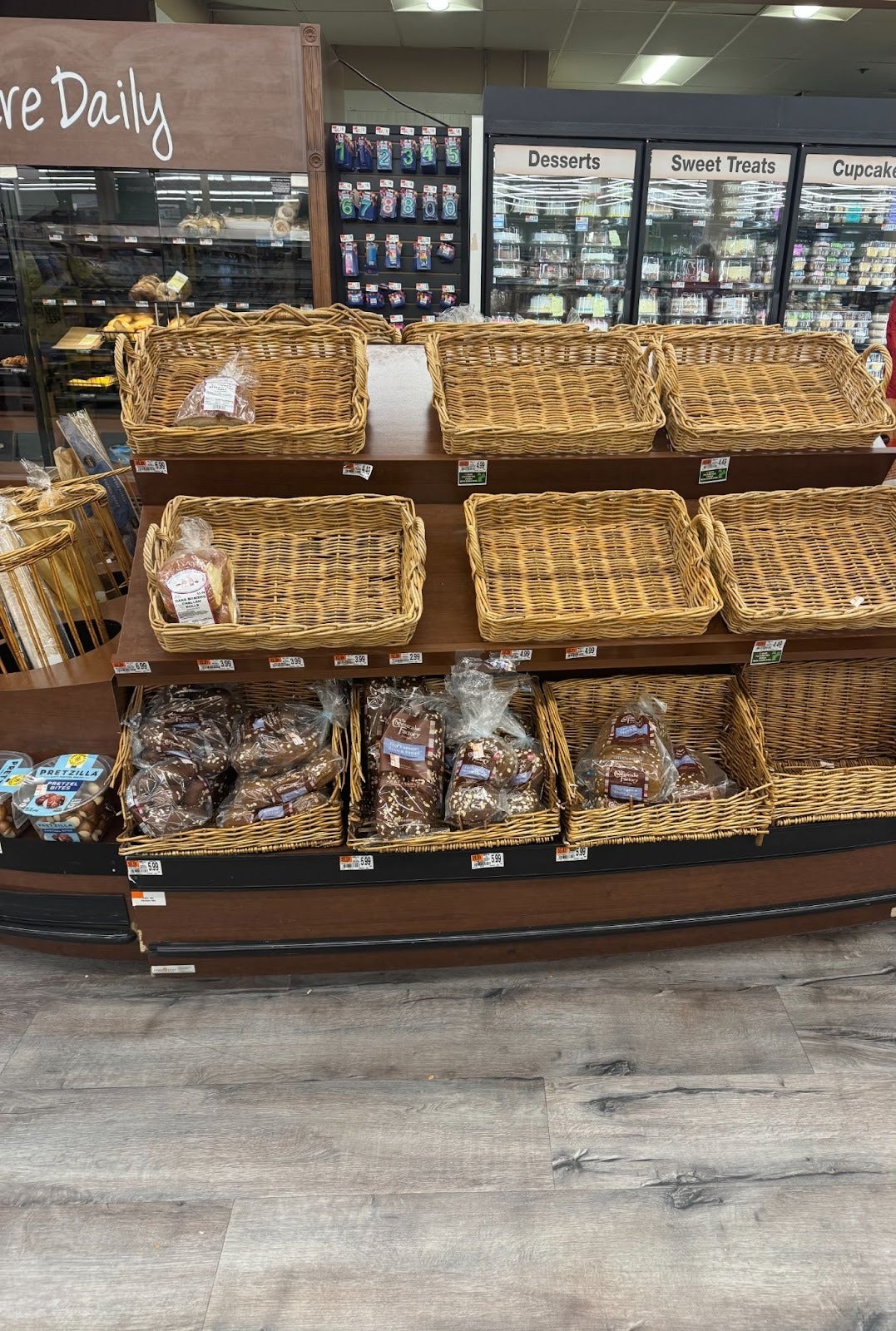
I’ll leave you with a photo from the grocery store before the big storm.
All the bread was gone … except for the Cheesecake Factory brown bread.
As a die-hard fan of the Cheesecake Factory, I choose to believe that people understand the perfection of this bread, but chose to bypass it in a grocery store because it’s meant to be consumed … inside of the Factory.
– Meredith
Sign up for the Love Letters newsletter for announcements, hand-picked letters, and other great updates from the desk of Meredith Goldstein




To comment, please create a screen name in your profile
To comment, please verify your email address
Conversation
This discussion has ended. Please join elsewhere on Boston.com