
Sweet Native Strawberry Recipes from Boston Area Chefs
-

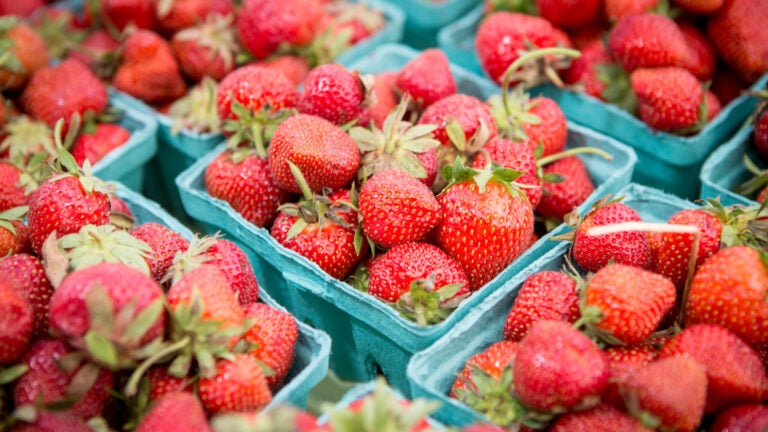
It’s strawberry season in New England, and local chefs in the Boston area are celebrating with dishes featuring the tasty fruit. Check out these sweet recipes by chefs from Heirloom Kitchen, Bistro du Midi, and Deuxave.
-
Executive Chef Robert Sisca, Bistro du Midi

Tips for cooking with native strawberries at home:
“Don’t add too many flavors to local strawberries,’’ says Bistro du Midi executive chef Robert Sisca. “Their natural flavor is already so good that you want to be able to taste the strawberry. Most of our preparations with local strawberries are uncooked. Just wash, slice, and serve as a garnish on your summer dishes.’’
Seared Foie Gras with Rhubarb and Strawberry Coulis
Serves 6
For the coulis
1 lb. rhubarb
2 oz. strawberries
1 tbsp butter
1 tbsp granulated sugar
Pinch of salt
1 cup port wine
Five spice to taste
Wash the rhubarb and cut off the stems. Dice rhubarb and strawberries into small pieces. Place in pot and add sugar, wine, spice and salt. Cook on low to medium heat until fully cooked and liquid has evaporated. Finish with butter and taste for seasoning.
For the foie gras
18 oz. grade A duck foie gras (cut into 3 oz. portions for each person)
Salt
Pepper
Slice the foie into 3 oz. individual portion and season with salt and pepper. Sear the foie on one side for 5 minutes and let rest for 5 minutes before plating.
To plate
Fresh strawberries, sliced Spoon the coulis onto a plate and place the foie gras on top. Garnish with sliced berries. Leftover coulis can be served warm or cool and is an ideal accompaniment for chicken breast, duck breast, and many other savory proteins that call for a summer touch.
-
Executive Pastry Chef Jaime Davis, Deuxave

Tips for cooking with native strawberries at home:
“I would suggest not washing them until you are ready to use them to help preserve their shelf life,’’ says Deuxave Executive Pastry Chef Jaime Davis. “If you must wash them ahead of time, lay them out on paper towels so the water can drain off. Strawberries are really versatile: they are great raw, macerated, cooked in jam, puréed in ice cream. It is hard to go wrong cooking with local berries, but a sure winner is strawberry shortcake, which is one of my family’s summertime favorites.’’
Tres Leches Cake with Native Strawberries
Yields 8’’ square pan or 8-10 muffins
For tres leches cake
2/3 cups sugar
3 whole eggs
1 cup flour
1 tsp baking powder
Pinch of salt
¼ cup whole milk
1 tsp vanilla extract (or 1/2 vanilla bean, scraped)
Milk Mix
1 can sweetened condensed milk
1 can evaporated milk
1 cup whole milk
1 cup sour cream
For the topping
Fresh strawberries (as many as you like)
1½ tsp vanilla extract (or 1/2 vanilla bean, scraped)
2-3 tbs granulated sugar (or to taste)
Pint of strawberry sorbet (optional)
Preheat oven to 350°F. Place eggs, sugar, and vanilla bean (if using) in the bowl of a stand mixer with whip attachment and whip on medium speed until eggs are light and fluffy.
Sift flour, baking powder and salt together until thoroughly combined, then fold into egg mixture with a spatula a little a time. If using, then fold in the milk and vanilla extract (if using).
Pour the batter into a sprayed or buttered pan and bake at 350°F for 20 minutes or until done (when a toothpick inserted into the middle of the cake comes out clean). Let cool.
While the cake cools, make the milk mix by combining sweetened condensed milk, evaporated milk, whole milk, and sour cream. Cover and set aside in the refrigerator. Once the cake is cool, soak it in the milk mix until ready to serve. While the cake is soaking (or up to a day in advance), make the macerated strawberries by combining chopped berries, sugar to taste, and the vanilla in a bowl. Cover and let sit for at least 30 minutes on the counter or in the refrigerator.
Serve with vanilla macerated strawberries and as many fresh strawberries as you like. A scoop of store-bought strawberry sorbet is a refreshingly cool addition to the dish.
-
Chef Ed Hoffey, Heirloom Kitchen

Tips for cooking with native strawberries at home:
“Use them as often as you can before the season ends,’’ says Heirloom Kitchen Chef Ed Hoffey. “Don’t be afraid to get creative—their sweetness is equally welcome on top of pancakes, muddled into a cocktail, tossed into a salad, or macerated and served with cream for dessert.’’
Strawberry Spoon Cookies
For the Preserves
1 quart local strawberries
1 lemon, zest and juice
½ cup water
Combine all ingredients in a small saucepot over high heat. Let the mixture come to a full boil, then remove from heat and pour into a sealable container. Refrigerate, sealed, overnight.
For the Cookies
Yield, apx. 30 cookies
1 cup unsalted butter, melted and cooled
¾ cup granulated sugar
2 tsp vanilla extract
2 cups all-purpose flour
1 tsp baking soda
1/8 tsp salt
1/3 cup strawberry preserves
Melt the butter in a saucepot over medium heat, stirring occasionally until the butter turns golden and has a nutlike fragrance. Pour into a heatproof container and set aside.
Once the butter has completely cooled, stir in the sugar and vanilla. In a separate bowl, whisk together the flour, baking soda and salt, then stir into the butter mixture until a dough forms.
Shape the dough into a ball, wrap in plastic and let stand at room temperature 1-2 hours to allow the flavors to develop.
Then, press dough into a teaspoon until flat, then slide out onto a baking tray flat side down. Bake in an oven preheated to 325°F until the cookies are pale golden in color, about 8-15 minutes. Remove the cookies from the oven and allow to cool completely, about 30 minutes.
Spread a dollop of preserves on flat side of cookie, then press another cookie flat side down to spread preserves evenly, making sandwiches.





To comment, please create a screen name in your profile
To comment, please verify your email address
Conversation
This discussion has ended. Please join elsewhere on Boston.com