
Recipe for homemade yogurt
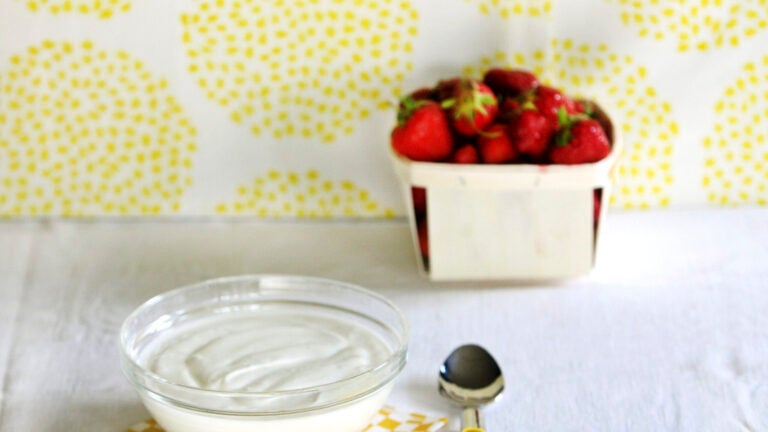
Makes 8 cups unstrained yogurt,
about 3 cups Greek yogurt
No special equipment is necessary to make homemade yogurt except for a thermometer. The real trick is finding the incubation method that keeps the cultured milk near the ideal temperature range as long as possible so that it will set properly. Many recipes call for putting the cultured milk in a warm spot away from drafts, perhaps with a towel wrapped around it. In the Northeast, except during a summer heat wave, a better strategy is needed. Here are three foolproof methods, two of which use heated water as a thermal insulator and the third, my favorite, the heated walls of a crock pot. You’ll get tangier yogurt if you add the starter to the milk when it is on the warm side of the temperature window (113 to 116 degrees). Add it when the milk is on the cool side (110 to 112 degrees) and the yogurt will have a milder flavor and a thinner consistency. The longer you let yogurt incubate, the tangier and thicker it becomes; the shorter, the milder and thinner. Remember to set aside some of the yogurt for use as the starter for your next batch.
3tablespoons plain yogurt with active cultures (the “starter’’)8cups plus 2 tablespoons milk
1. Have on hand a thermometer and a large heatproof container (2 quart capacity).
2. In a small bowl, whisk together the yogurt and 2 tablespoons of the milk. Set aside at room temperature.
3. In a soup pot over medium heat, heat the 8 cups milk, stirring often, until it reaches 180 to 185 degrees. Steam will be rising steadily and there will be numerous large bubbles around the edges and on the surface. Be careful not to scorch the milk, as this will give an off flavor. If you think you may have scorched it, do not scrape the bottom of the pot.
4. When the milk is close to 180 degrees, turn the heat level on a crock pot to low (if you’re using one). If you’re using water as an insulator, bring a large pot of water to 110 to 116 degrees.
5. Transfer the milk to the container and set in an ice water bath to reduce the temperature to 110 to 116 degrees. You should be able to keep your finger in the milk and count to 10.
6. Crock pot method: Transfer the milk to the crock pot and turn off the heat. Let sit for a minute or two, stir, and recheck the temperature. The heated pot may cause the temperature of the milk to rise a few degrees. When the milk is 110 to 116 degrees, add the diluted yogurt and, with a metal spoon, stir thoroughly. Cover and wrap with a towel. Let sit undisturbed for 8 to 12 hours.
7. For the water-insulating method: Add the diluted yogurt to the container of milk and, with a metal spoon, stir thoroughly. Transfer the cultured milk to two (1-quart) wide-mouth, glass jars. Seal the jars and place in large pot, fill to the top of the jars with water that is the same temperature as the milk. Cover and place on the bottom rack of the oven and turn on the oven light, or place on the counter away from drafts and wrap with a towel. Alternatively, place the jars in a small cooler and fill with the heated water up to the top of jars, and cover. Let sit undisturbed for 8 to 12 hours.
8. When the yogurt is set, refrigerate for several hours before eating or straining it.
9. To strain yogurt: line a colander or sieve with two layers of dampened, fine cheesecloth and place it over a large container to catch the whey. To create very thick Greek yogurt, strain 2 hours. To create yogurt that is not as thick, but with a creamier texture than regular yogurt, strain for 30 minutes to 1 hour. The whey should be clear. If it has a milky or cloudy appearance, use an additional layer or two of cheesecloth. Discard the whey or use for cooking or baking. Holly Jennings





To comment, please create a screen name in your profile
To comment, please verify your email address
Conversation
This discussion has ended. Please join elsewhere on Boston.com